



Story and Photos by ITN European Reporter Herve’ Rebollo
Salut à toi my biker friend,
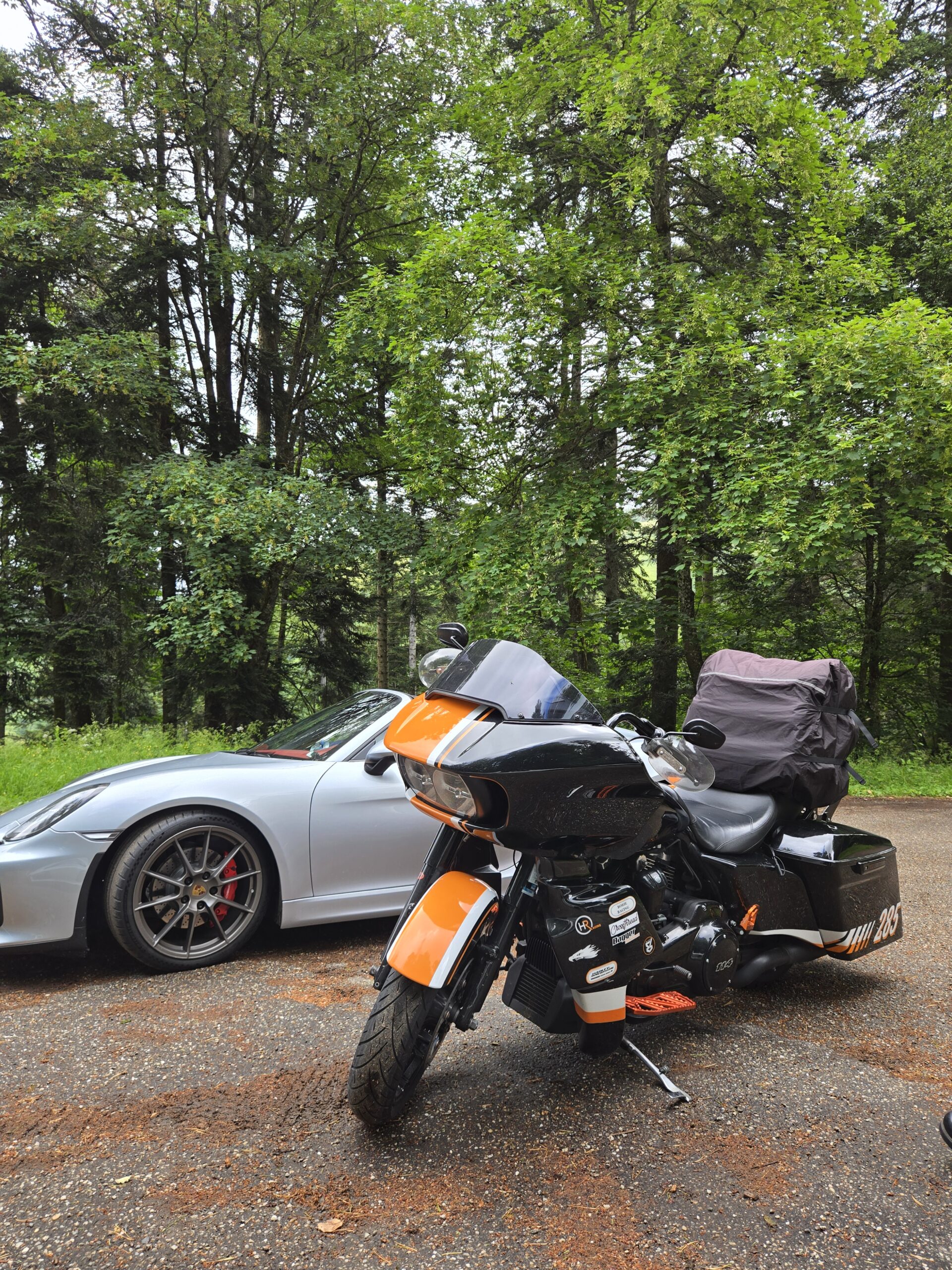
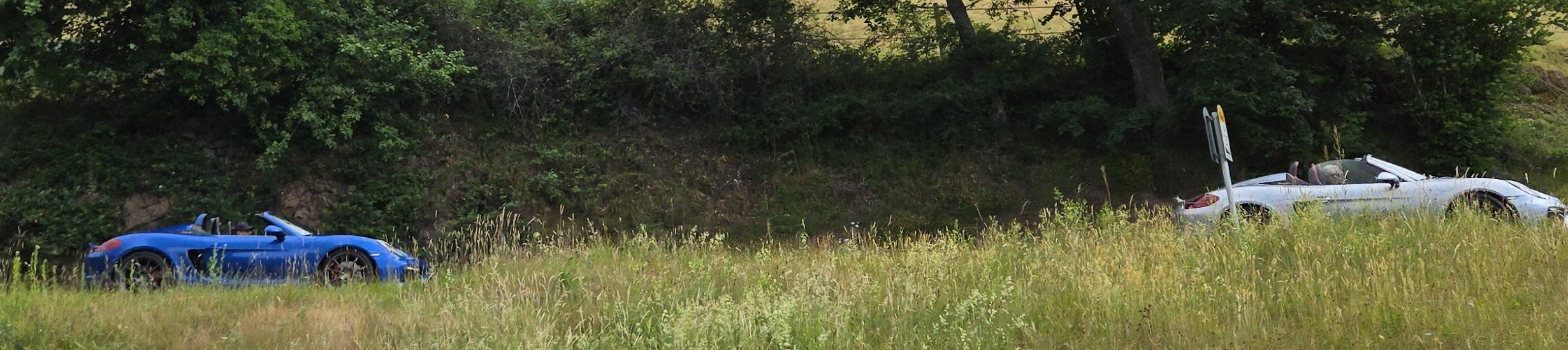
This past June, I had the opportunity to hit the road in eastern France—specifically in the Vosges mountains—with a group of enthusiasts dedicated to the famous Porsche Spyder, a truly exceptional vehicle.
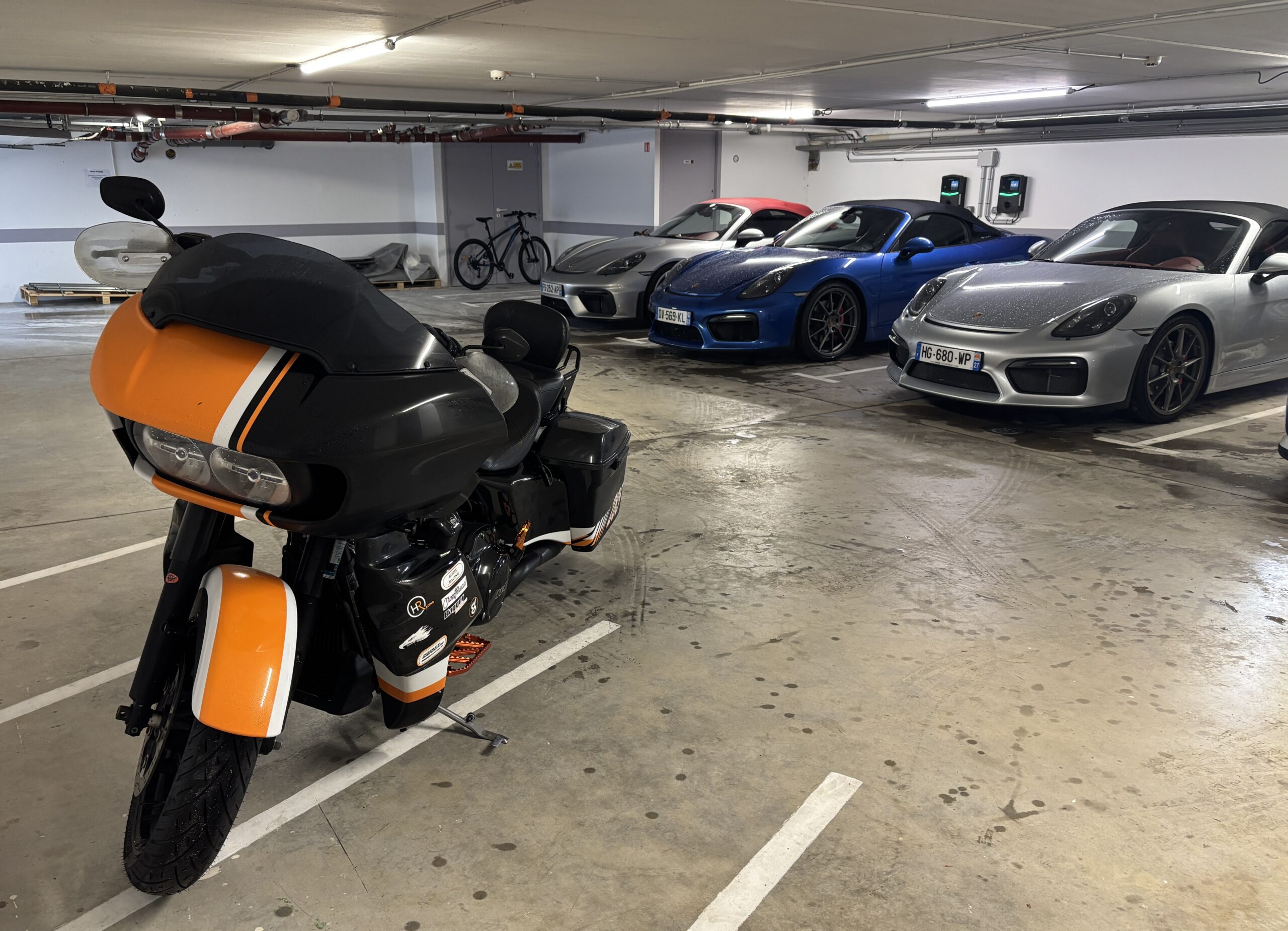
After leaving the fabulous Mulhouse automobile museum and its incredible collection of vintage vehicles (see RIDE WITH THE SPYDERS – Part 1) …
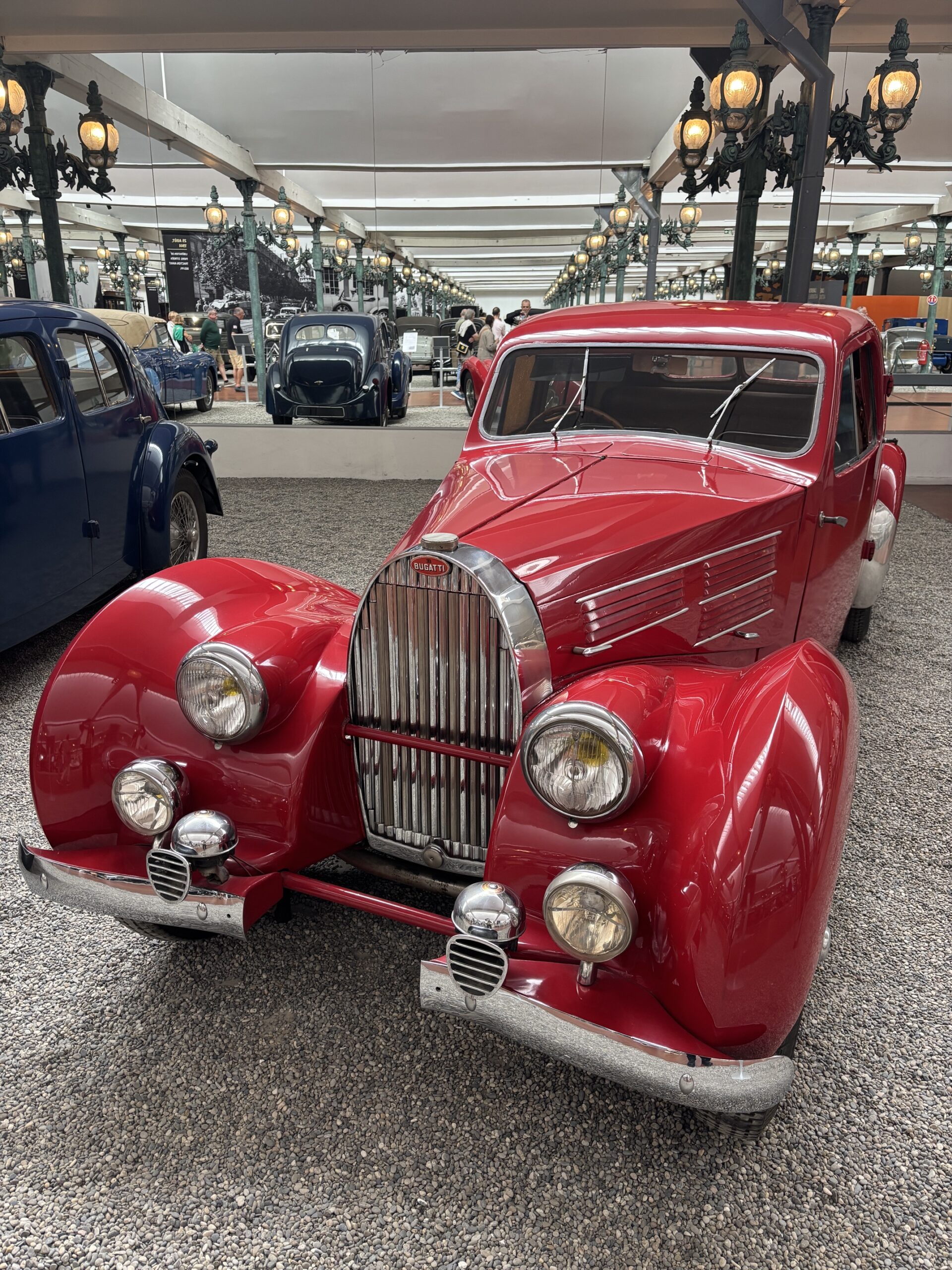
… it was time to do some sightseeing in the magnificent historic city center.
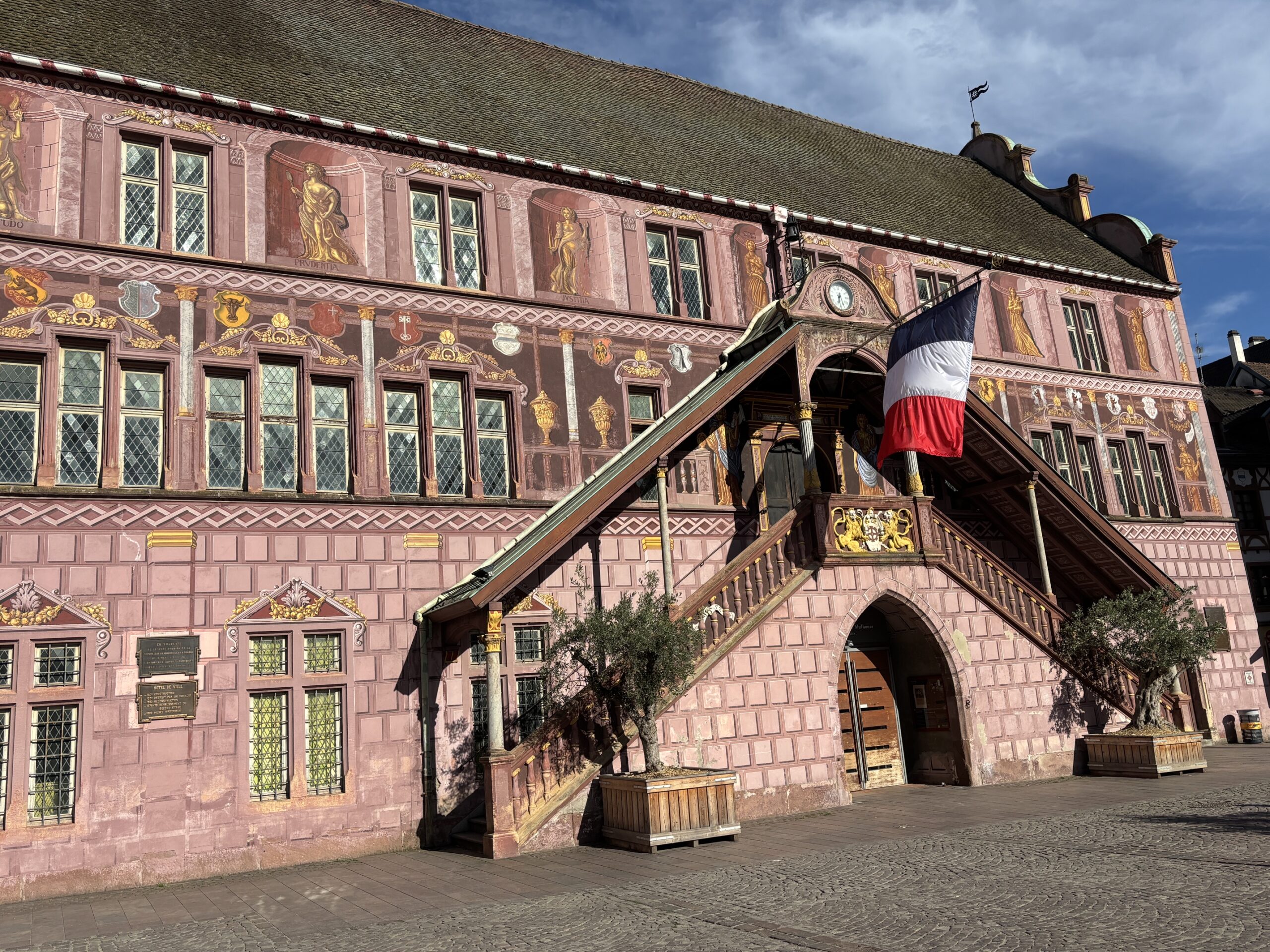
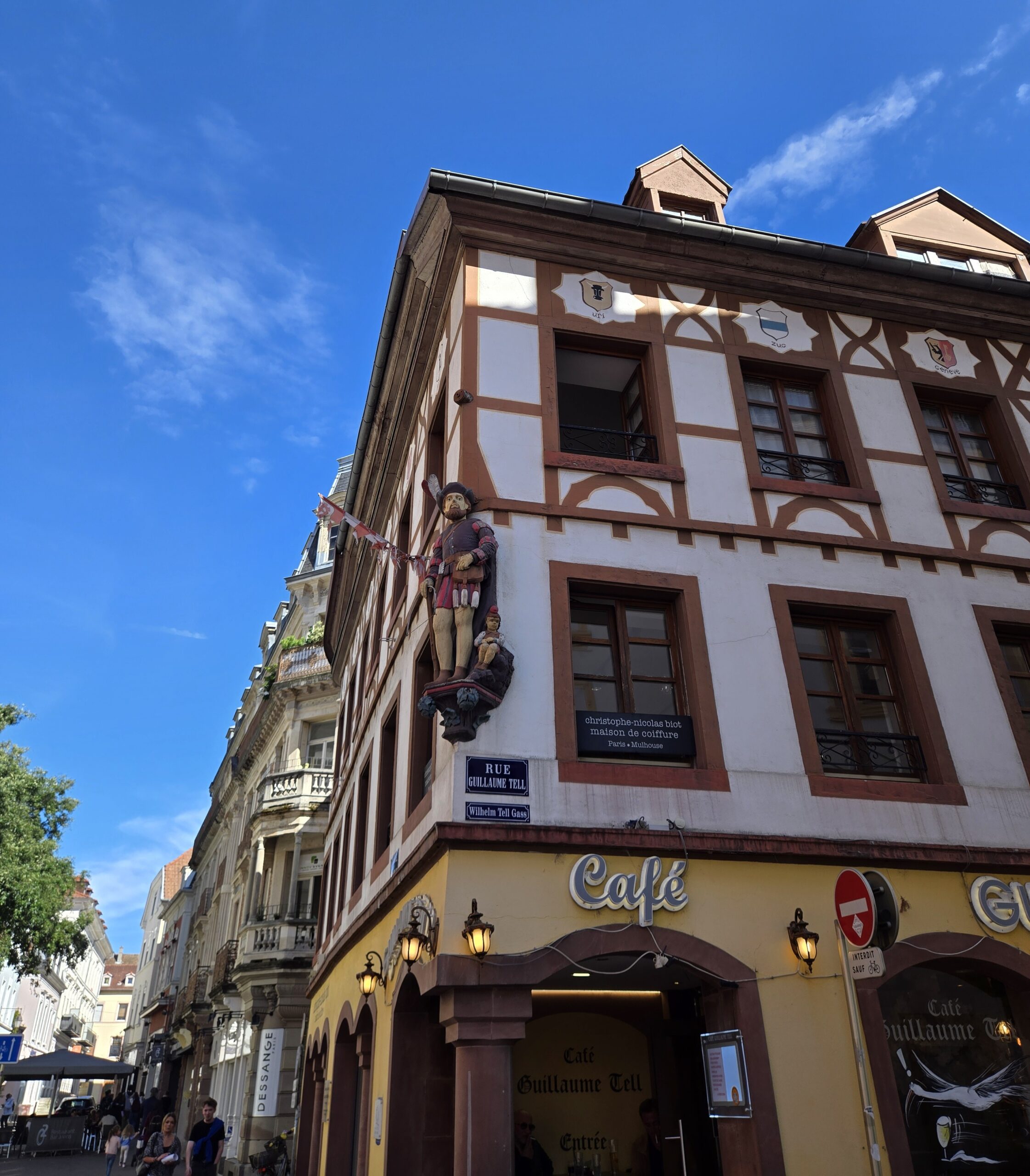
And settling down at a bistro terrace (as luck would have it, it was aperitif time)…
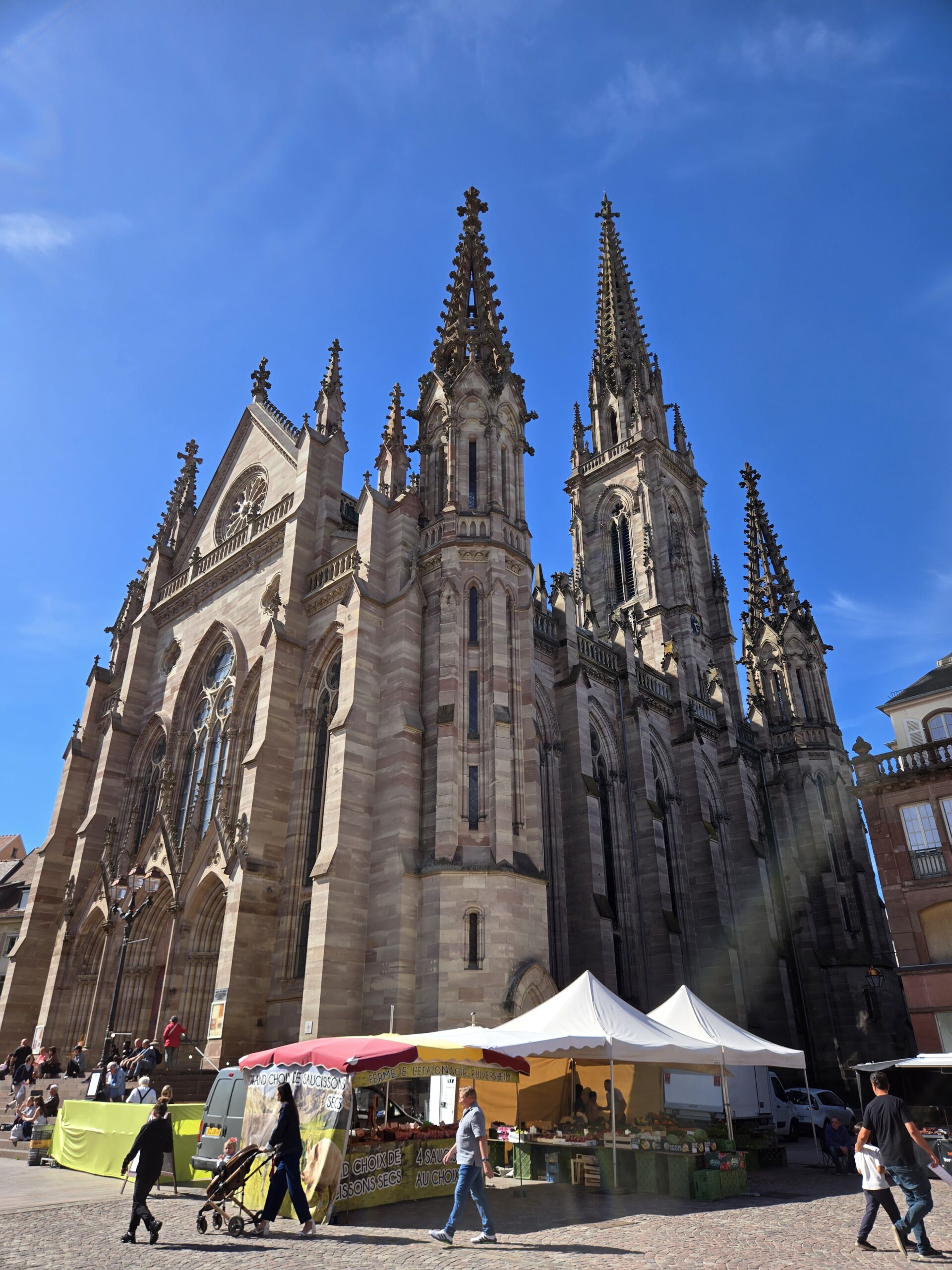
… to have a drink right across from the magnificent cathedral
After a good dinner (naturally, we are French) and a restful night’s sleep, we hit the road again.
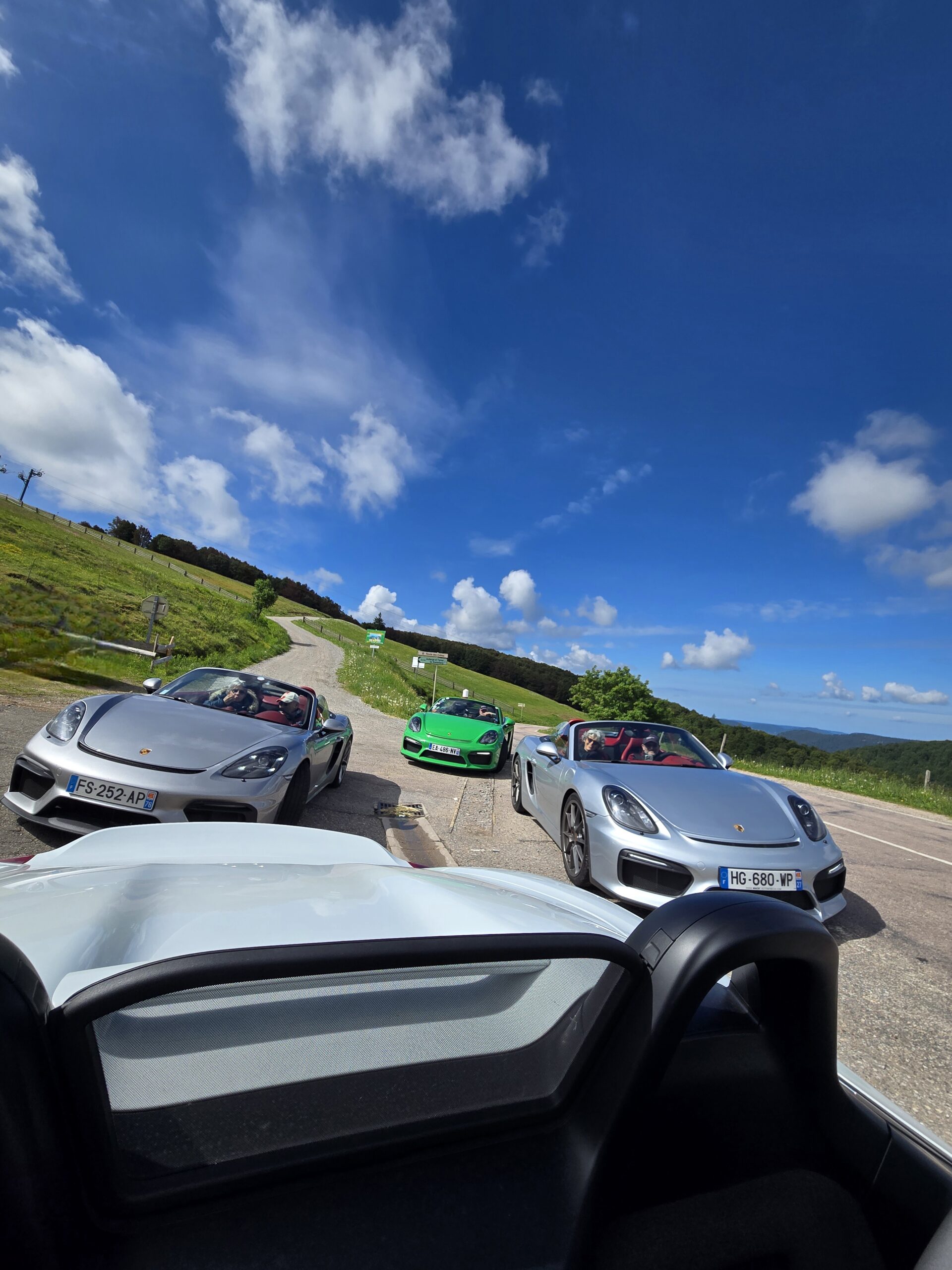
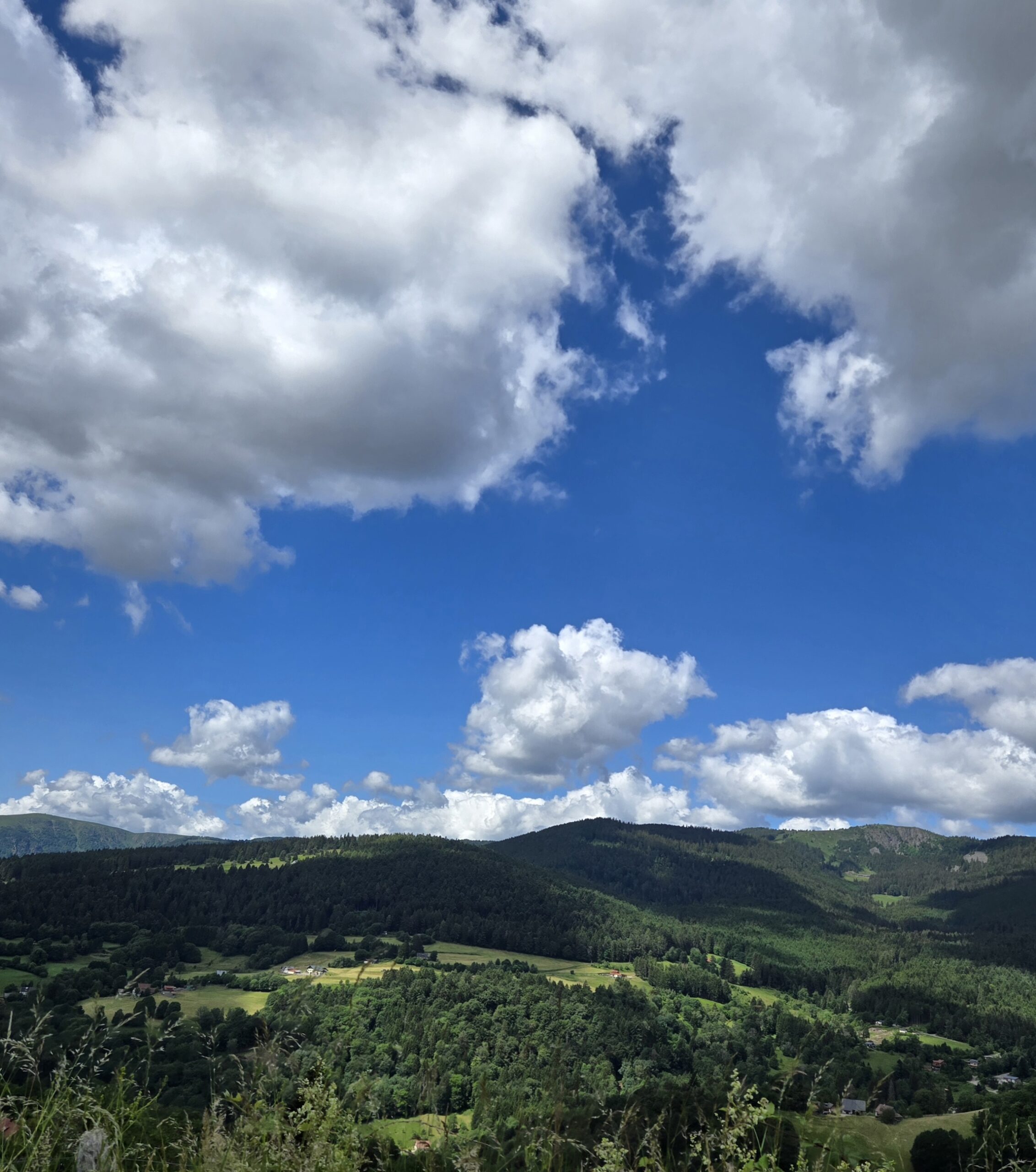
Where we rediscover the region’s stunning landscapes
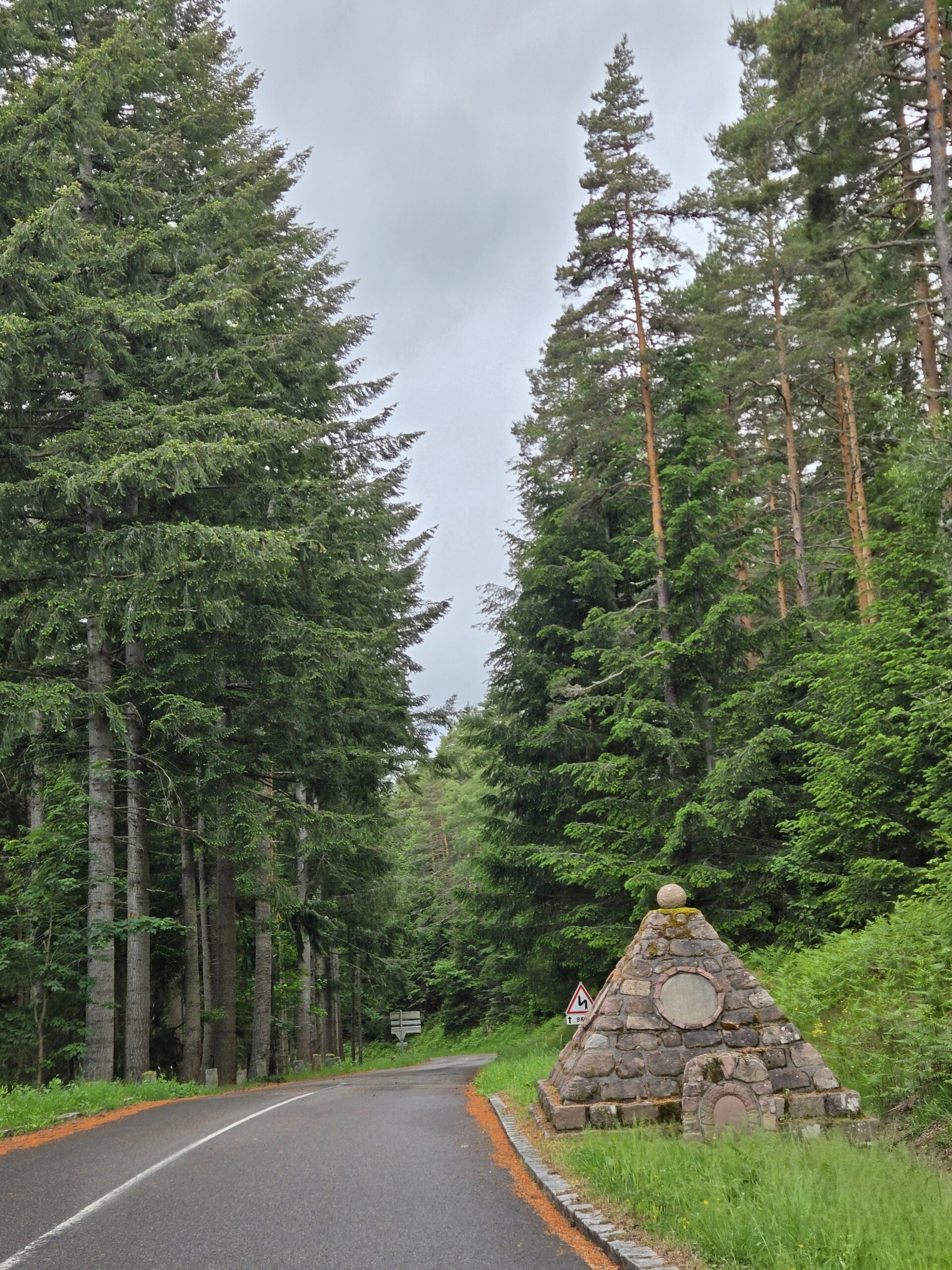
Besides being beautiful, the roads are always interesting for certain details.
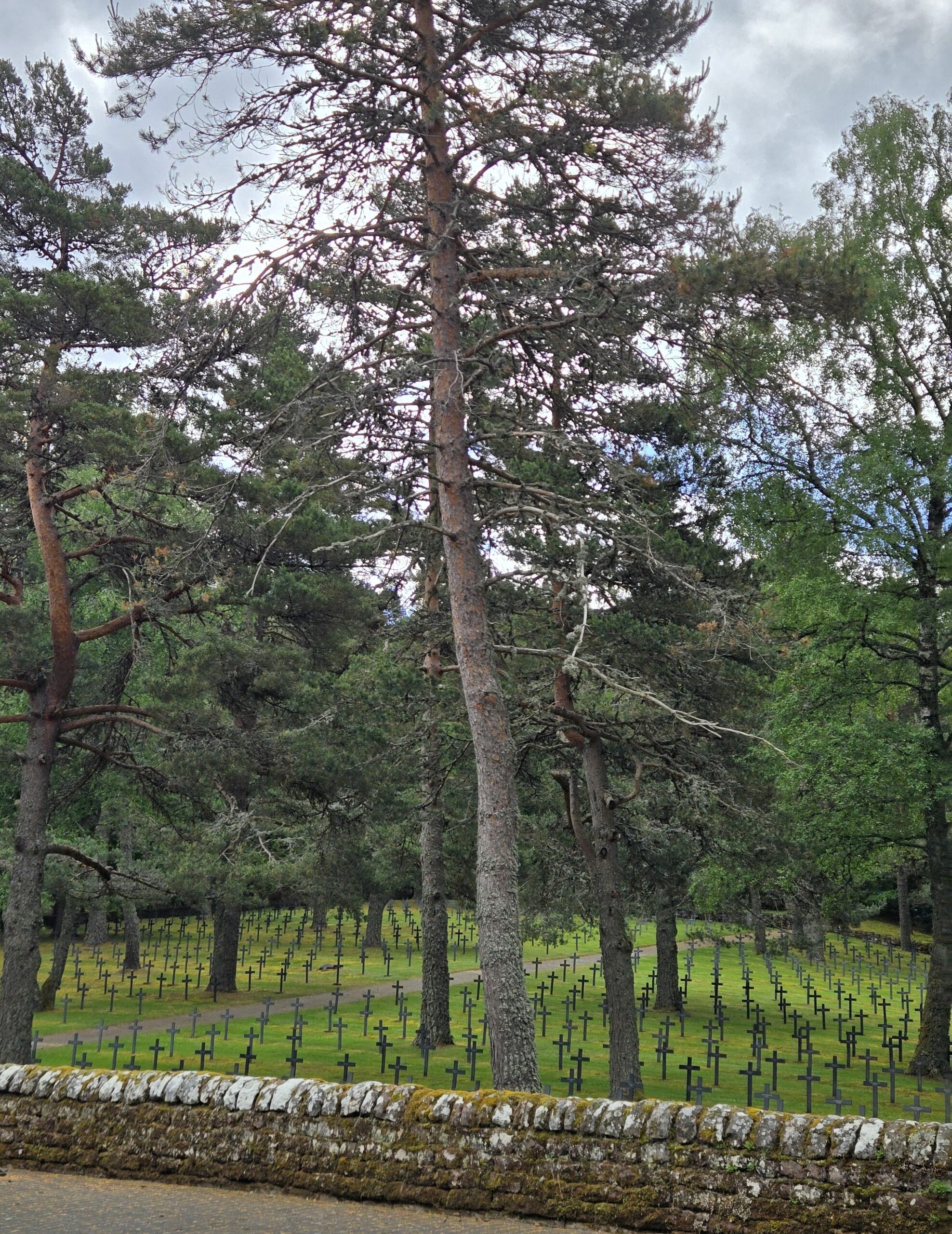
And the grand history of France and Europe—the story of its many wars—is never very far away.
Motorcyclists are, of course, still out in large numbers.
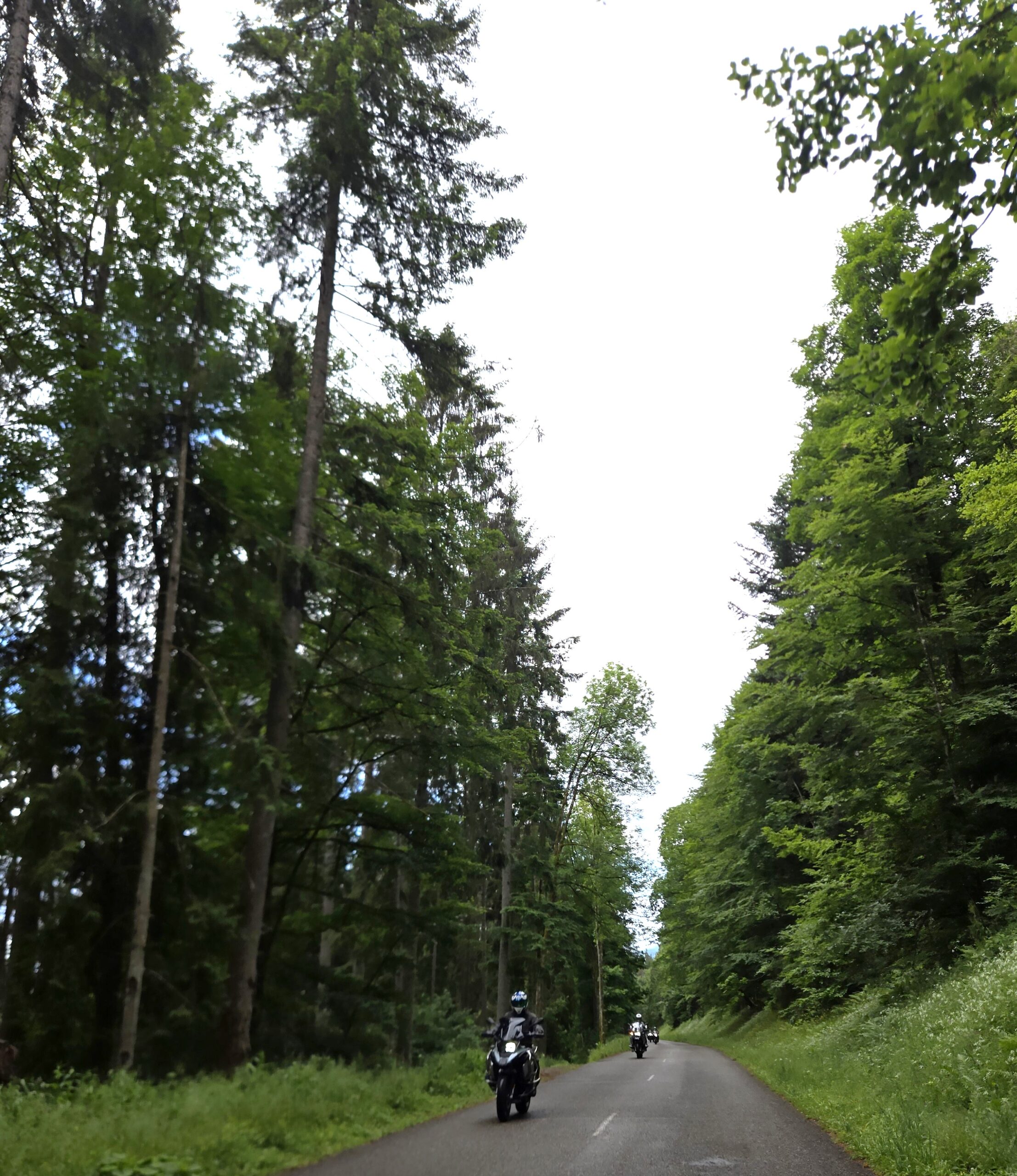
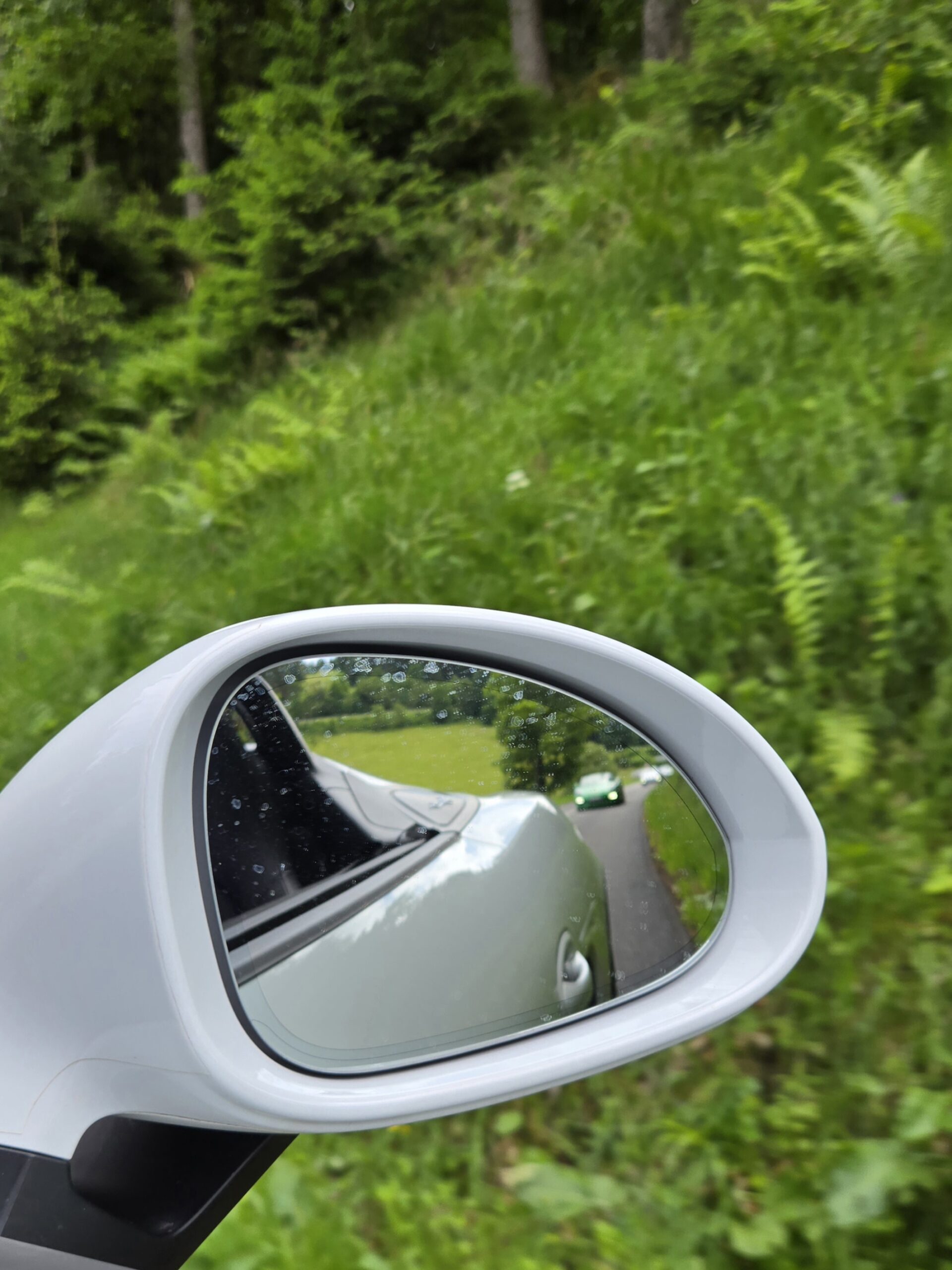
The roads are certainly beautiful, but they sometimes turn into little more than forest tracks, where road signs urge caution—or even advise turning back.
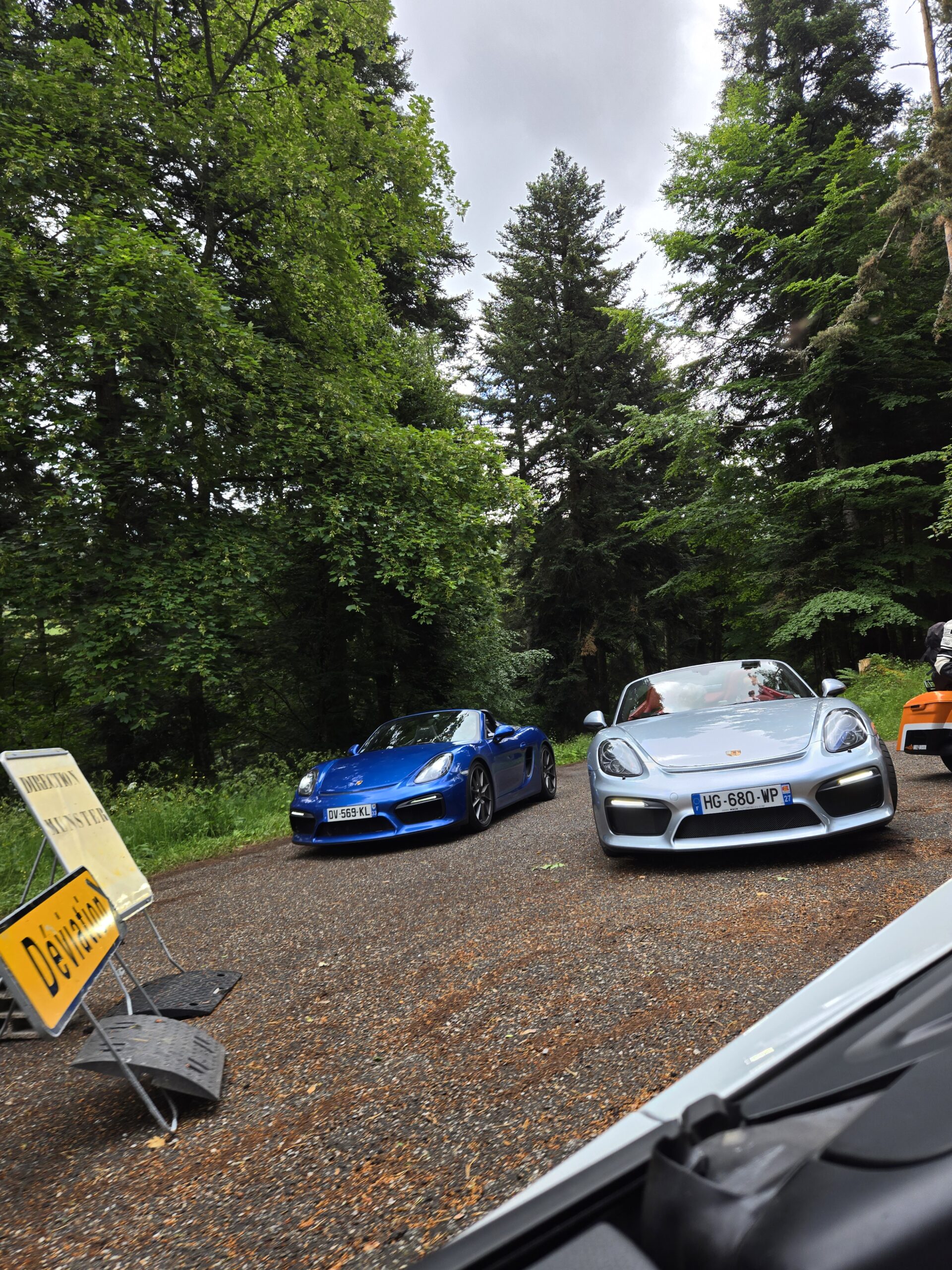
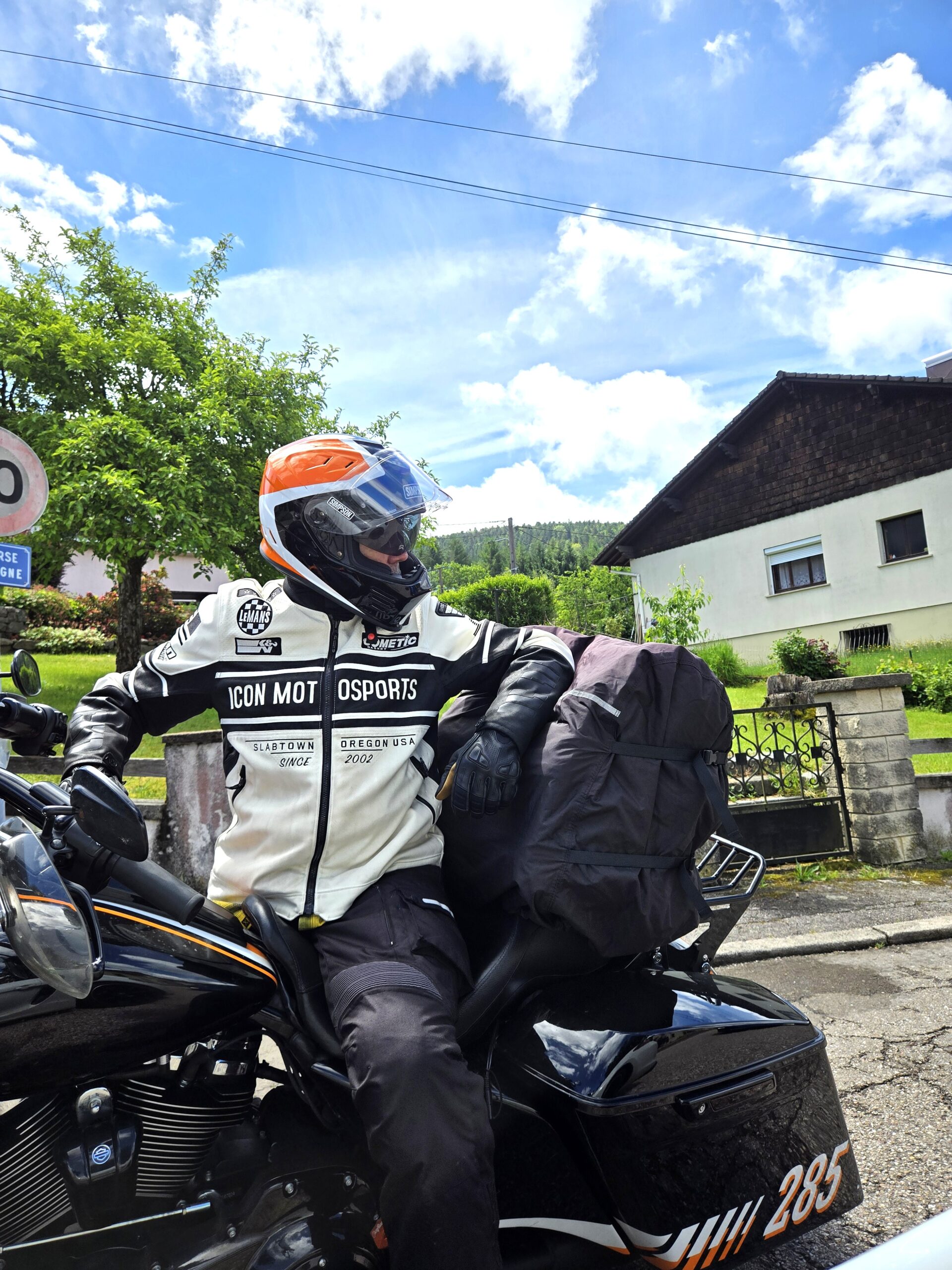
For my part, I still struggle just as much to keep up with those road-hugging speedsters, yet sometimes—without quite knowing how—I find myself out in front and have to stop and wait for them (that must have happened twice in four days).
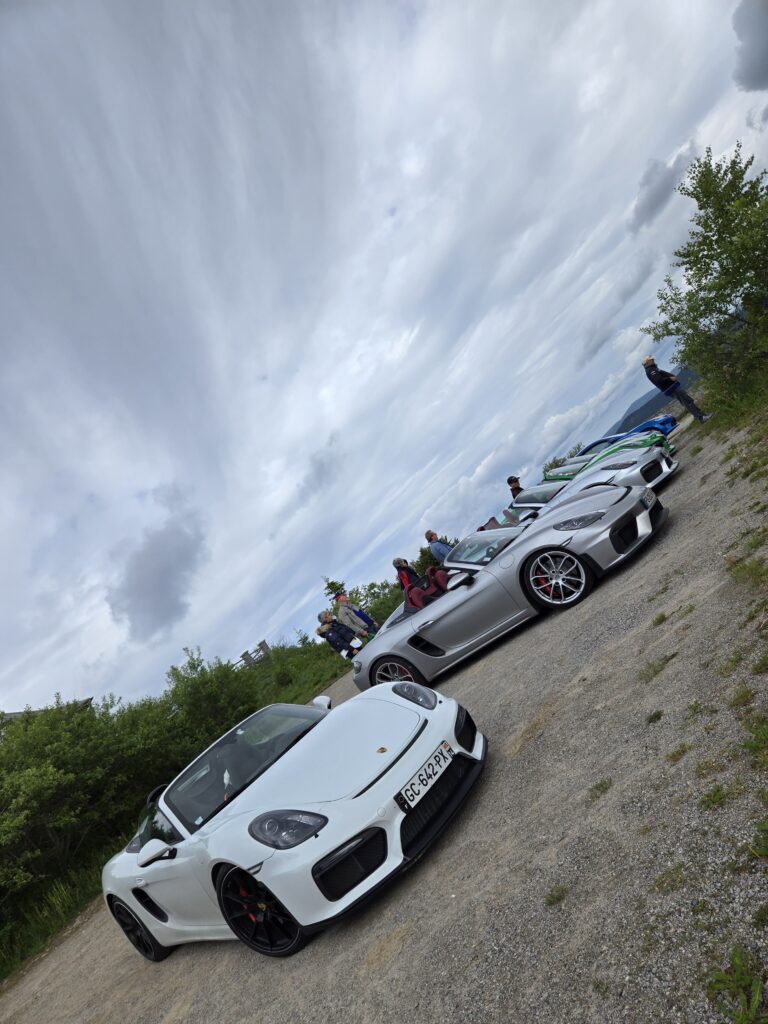
Pausing at a few beautiful viewpoints came quite naturally…
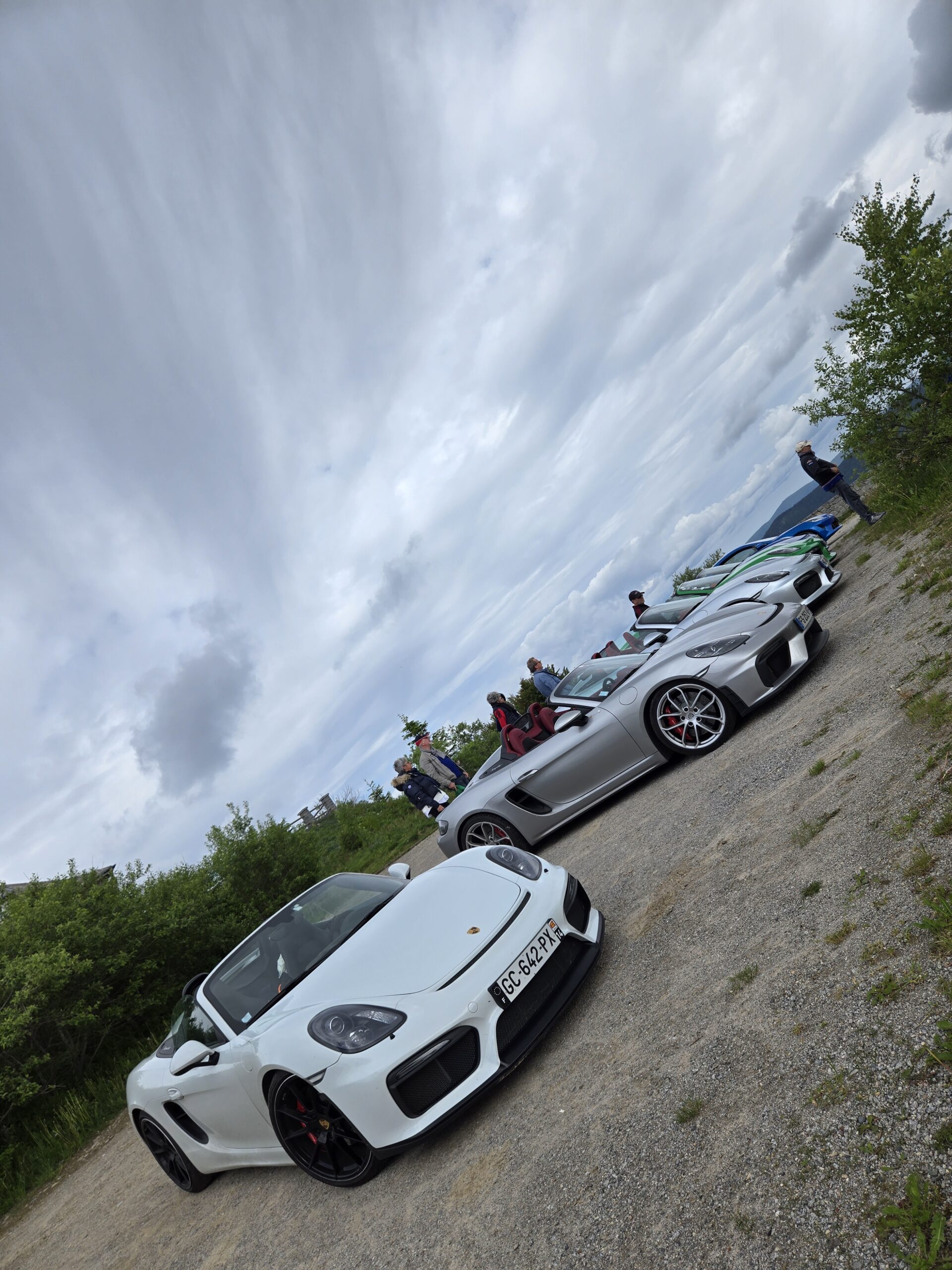
As for the weather, it fluctuated between very fine …
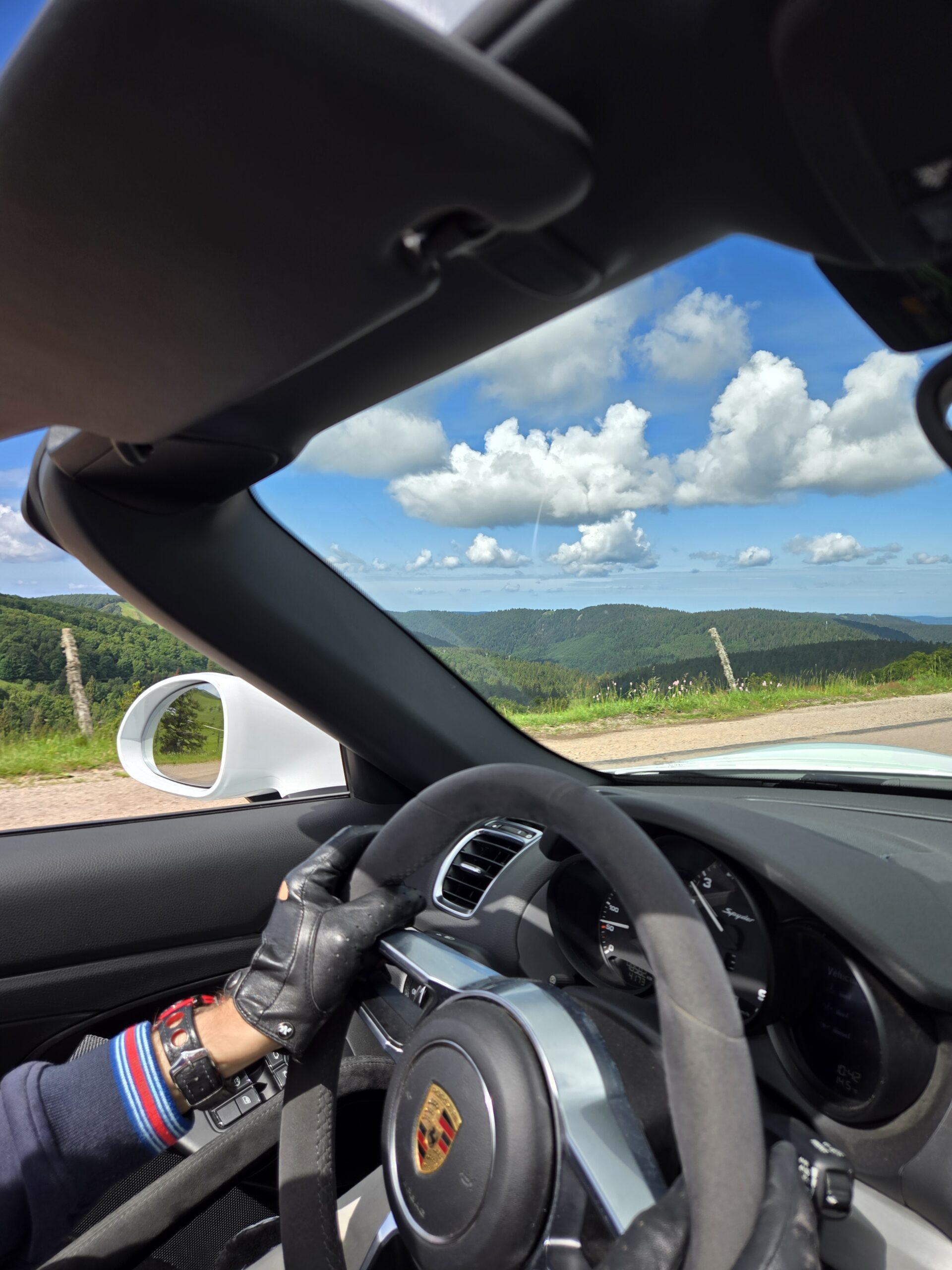
… and slightly rainy.
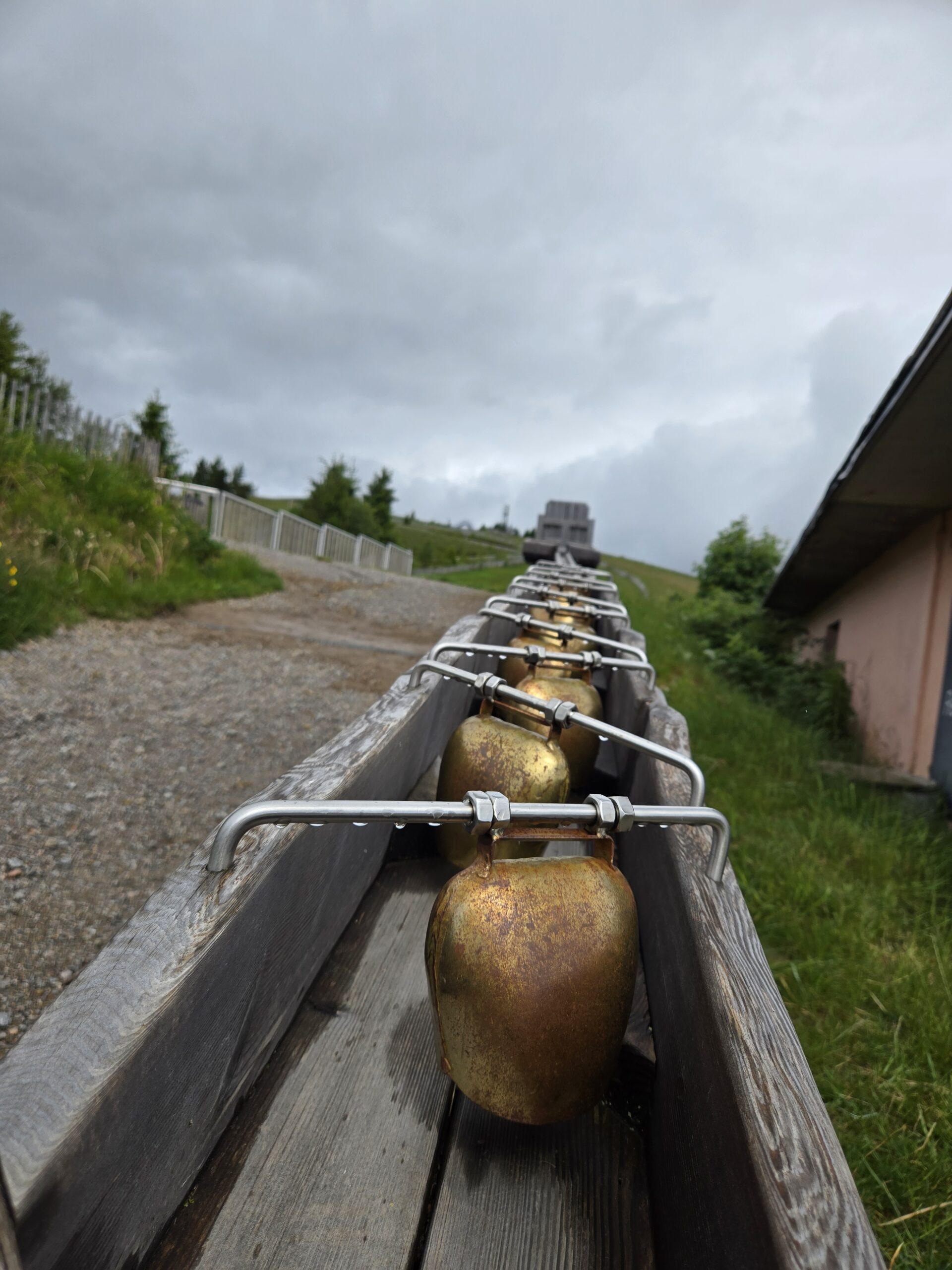
And from village to village …
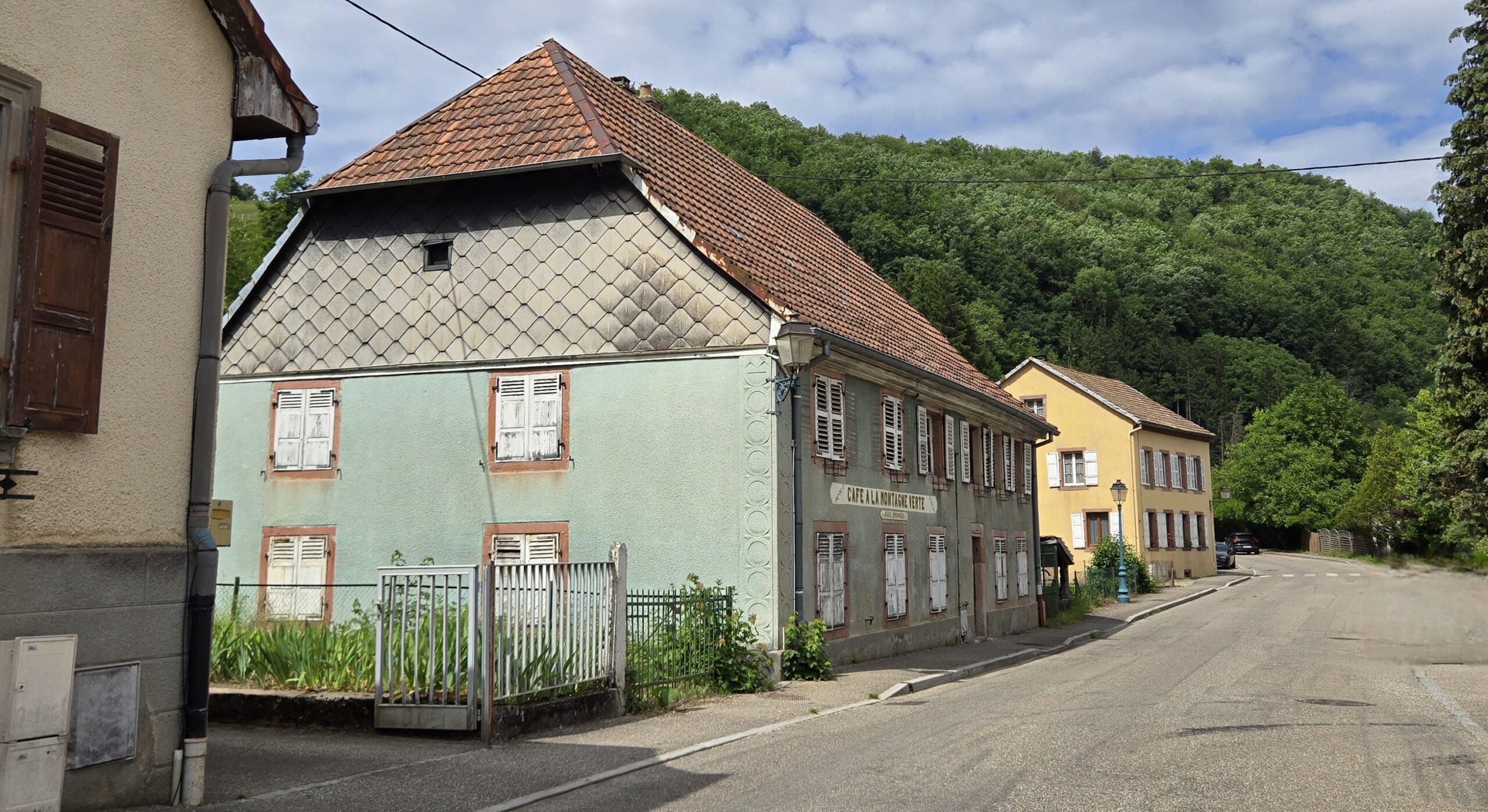
… after refueling our vehicles (no, I’m not running on natural gas yet) …
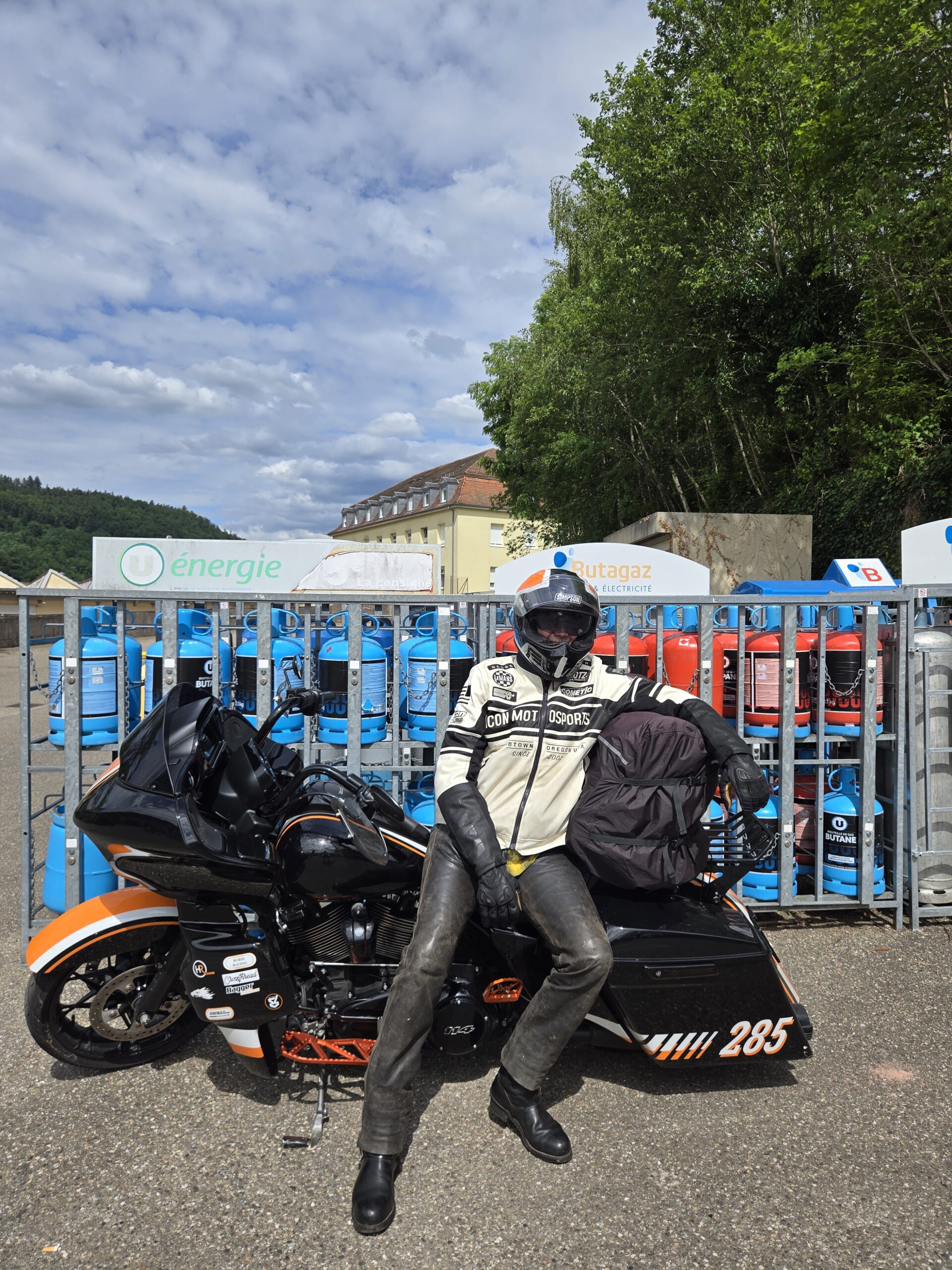
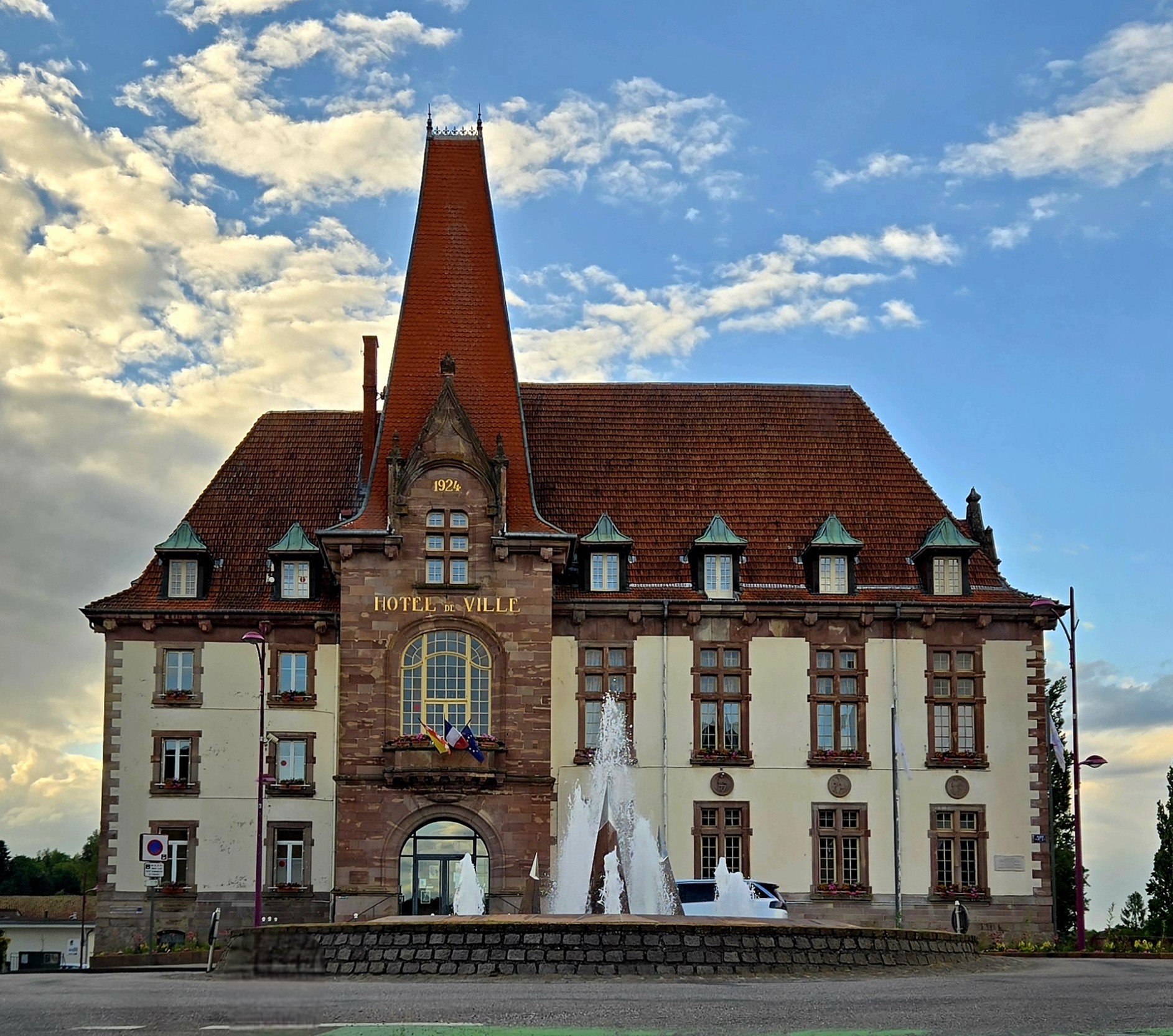
… it was time to head toward the day’s destination: The town of Baccarat.
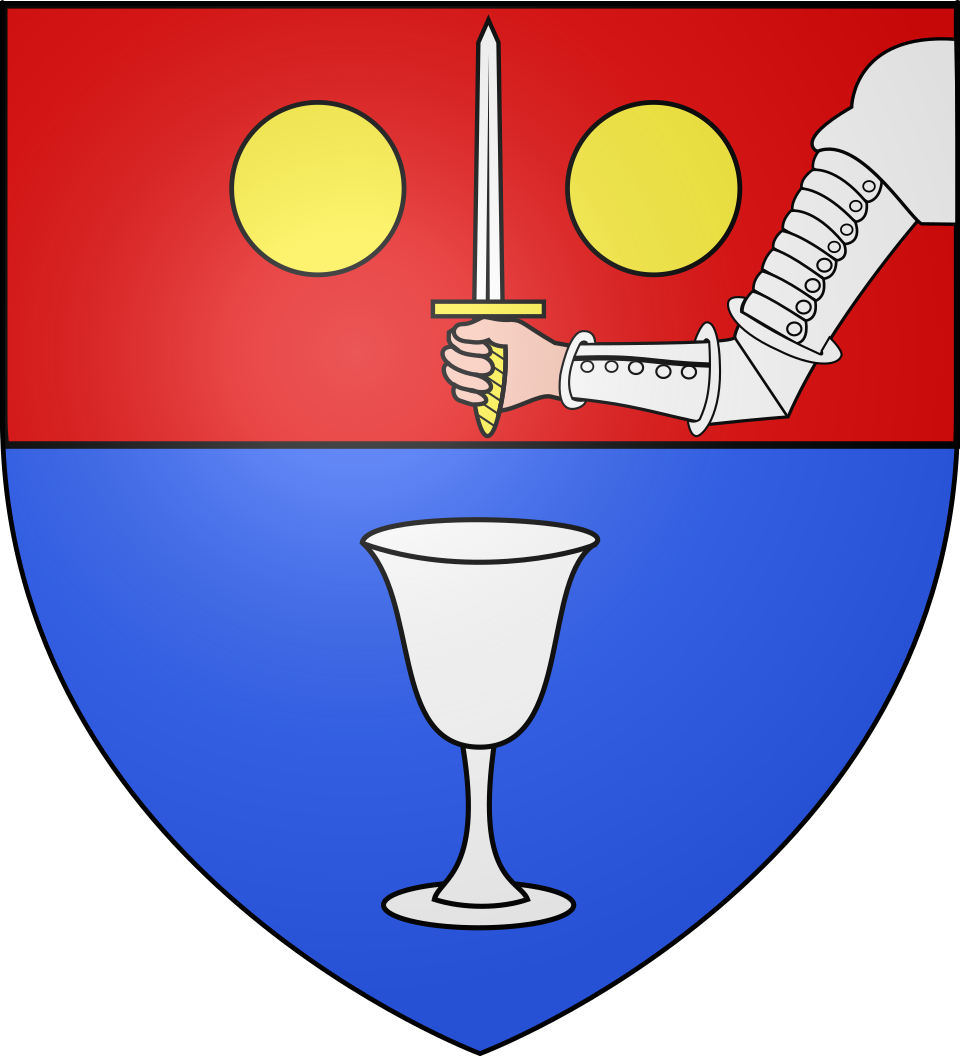
Baccarat is a town in northeastern France, in the south of the Meurthe-et-Moselle department. In medieval Latin, the place name is Baccaratum.
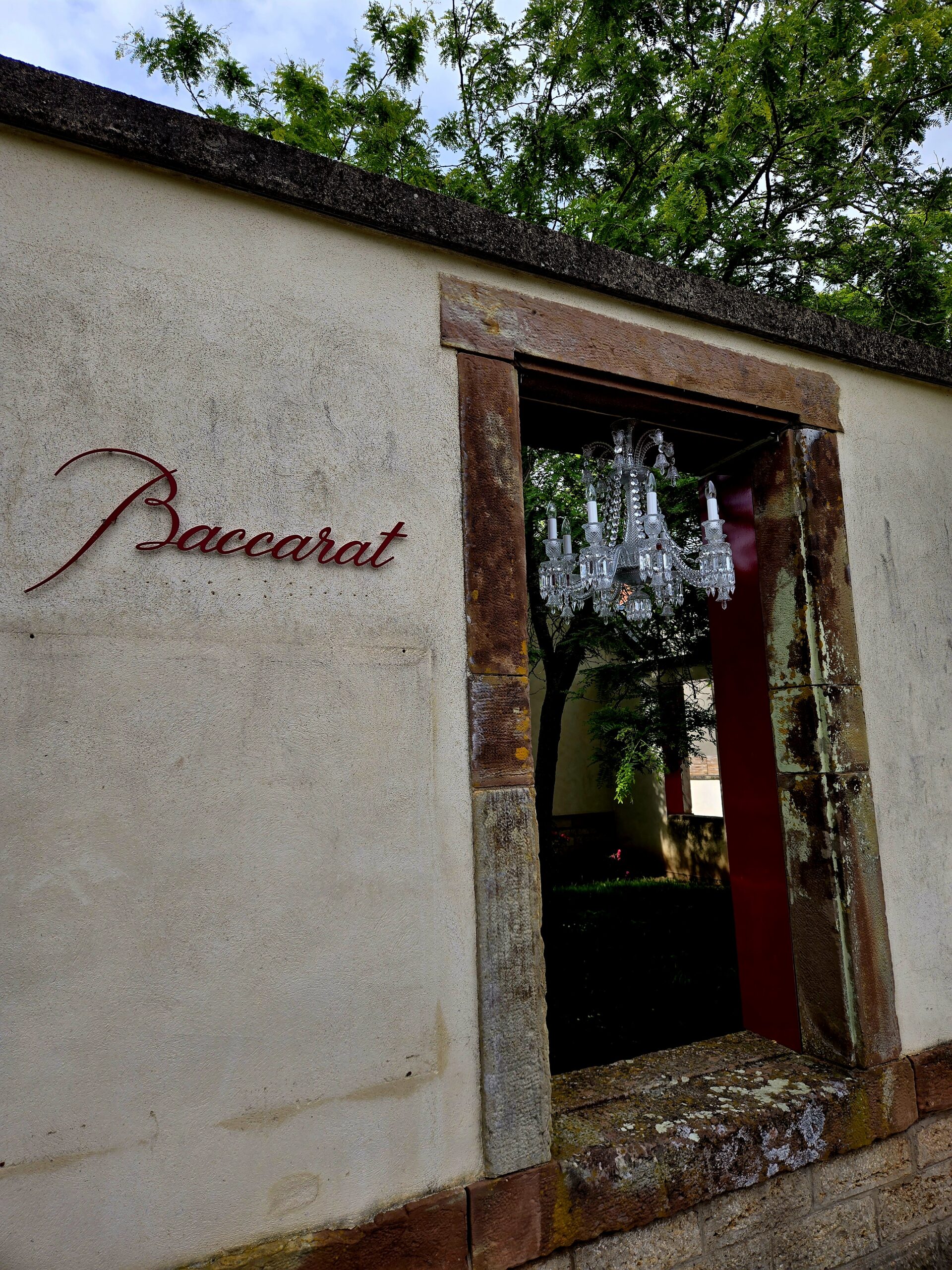
The town of Baccarat is famous for being home to the Baccarat crystal works, a world-renowned glass and crystal manufacturing company.
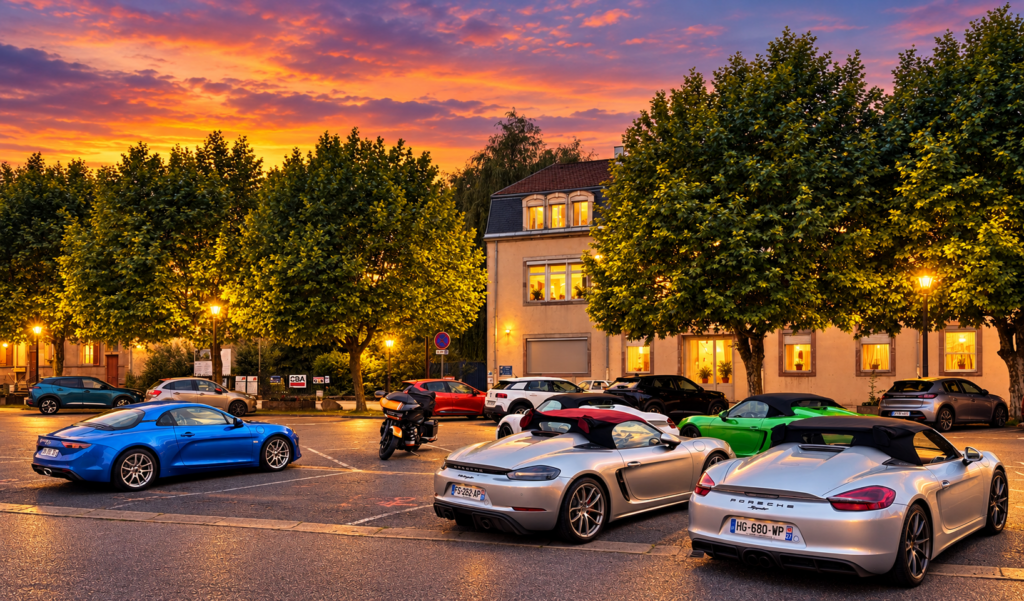
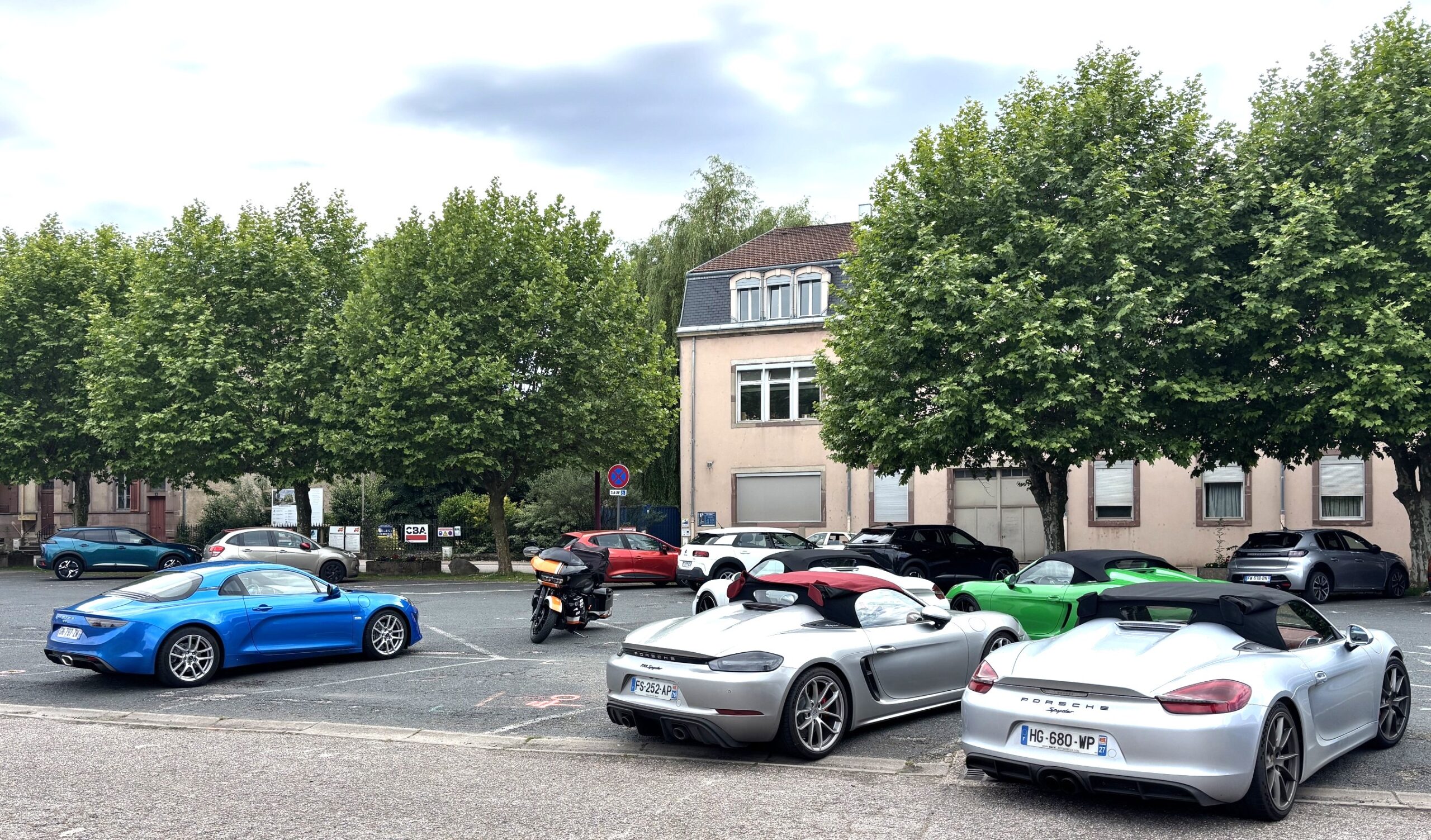
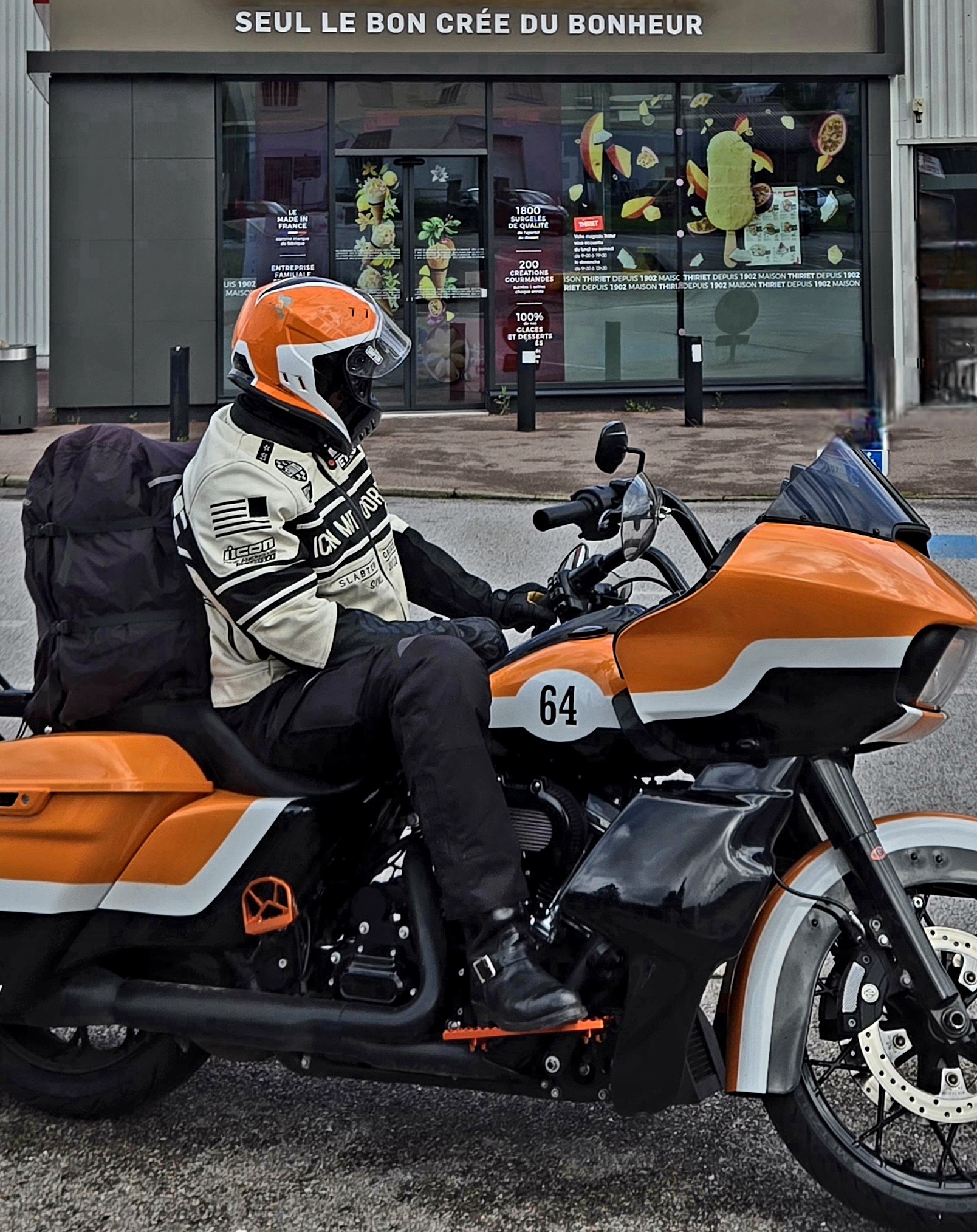
We head to the town center parking lot, where—very disciplined—we park the Porsches on one side and the Alpine on the other, all neatly separated by the Harley in the middle. Order reigns for once! (lol).
Our goal for the day was to visit the Baccarat Museum. It is the museum of the Baccarat crystal manufactory; it showcases exceptional pieces from the Baccarat heritage collection and tells the story and evolution of the brand.
It was in 1764 that King Louis XV of France granted the Bishop of Metz permission to establish a glassworks for flat glass and art glass in the town of Baccarat; the Bishop founded the *Verreries de Sainte-Anne* in partnership with a master glassmaker. Production was to include windowpanes, as well as mirrors (silvered with mercury) and glassware sets.
Following the closure of the museum at the manufacturing site, Baccarat unveiled the “Collection Baccarat”—a contemporary space in the heart of the town, near the workshops, that combines an exhibition gallery, a café, and a gift shop.
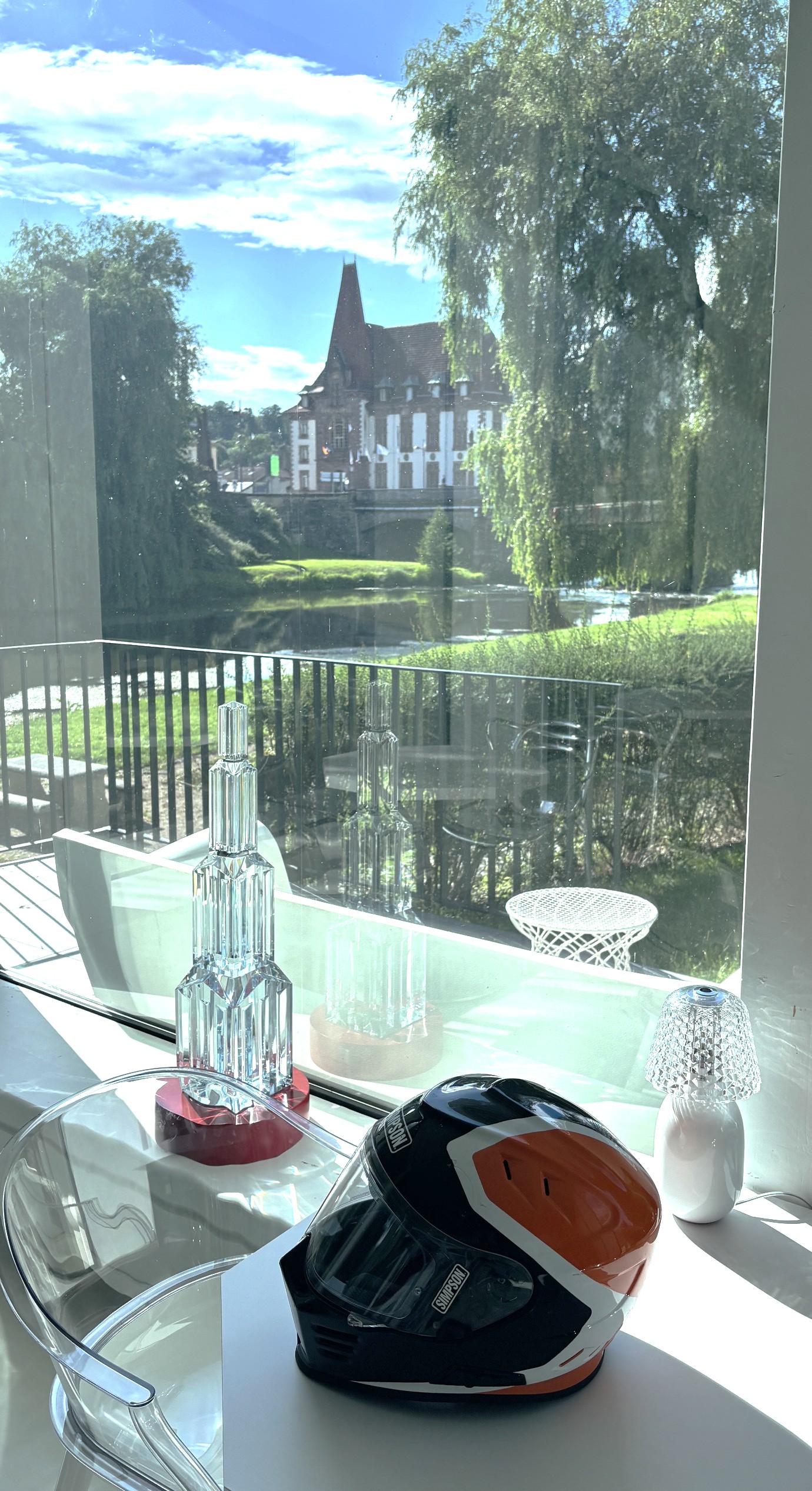
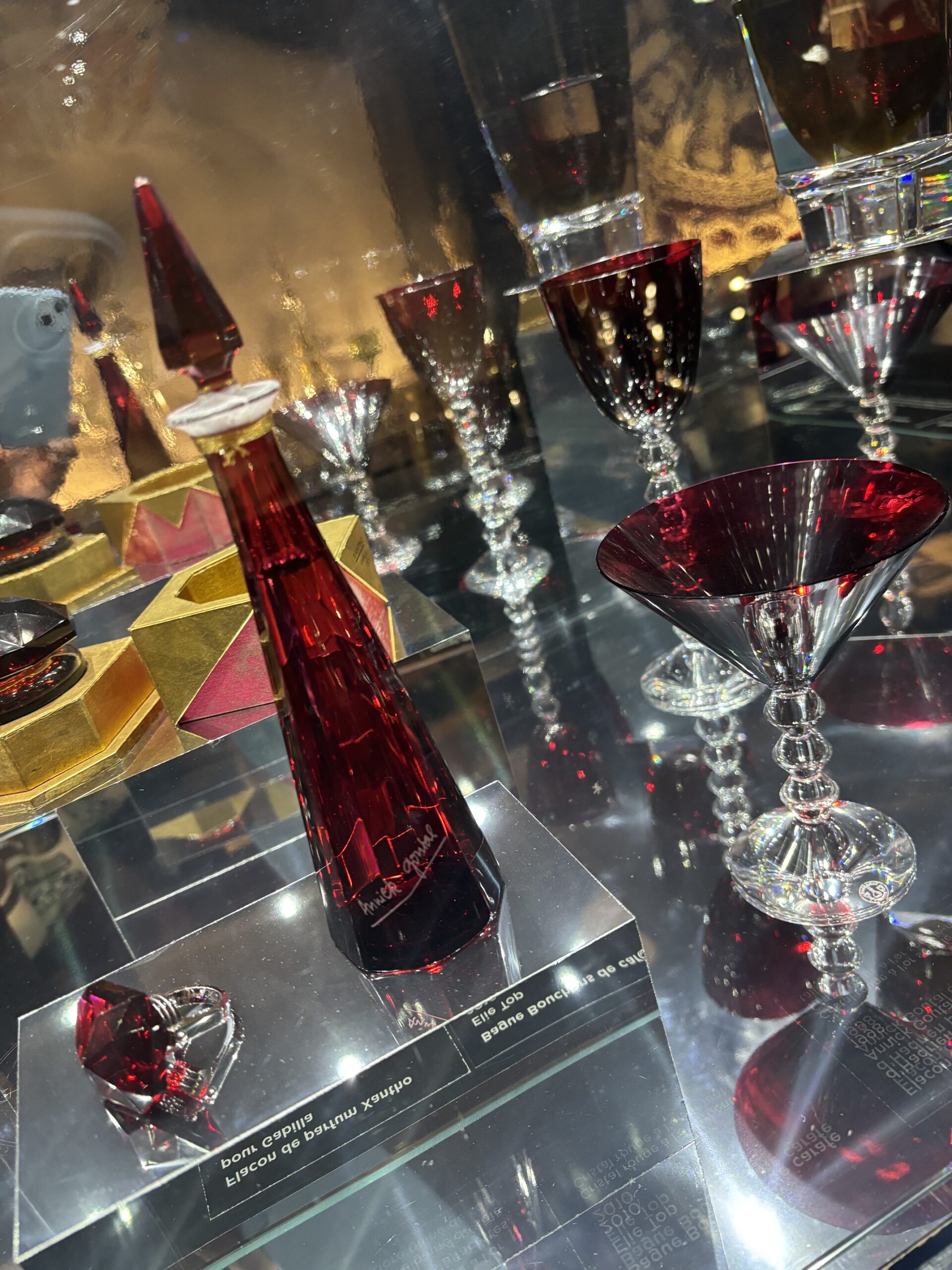
The Baccarat collection on display here showcases more than 600 works, including exclusive pieces from perfume bottle collections.
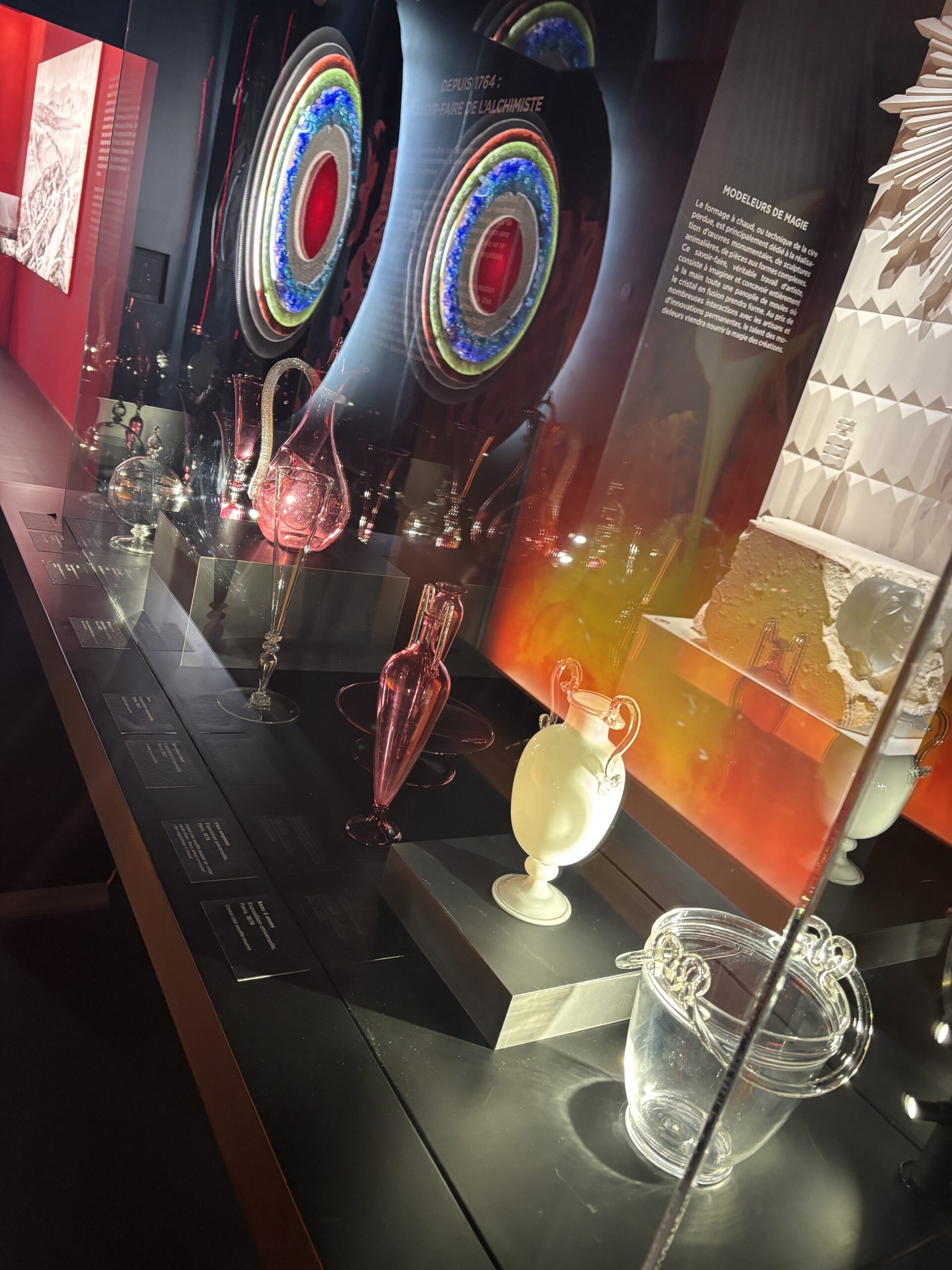
The exhibition highlights the unique craftsmanship of Baccarat’s artisans and pays tribute to the generations of men and women who have worked at the Manufacture, all united by a shared passion and a common sense of belonging.
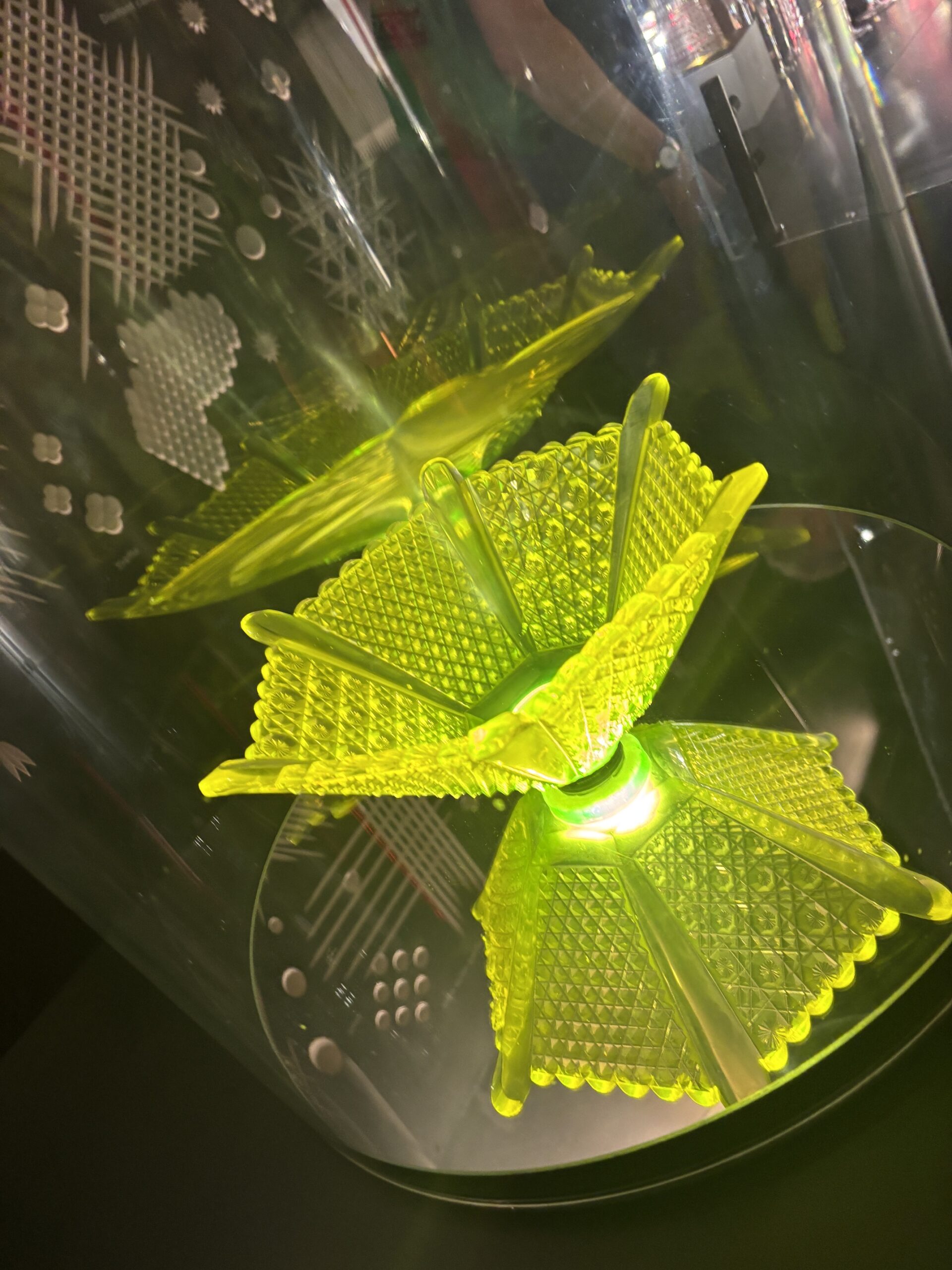
The exhibited pieces and their presentation are breathtakingly beautiful.
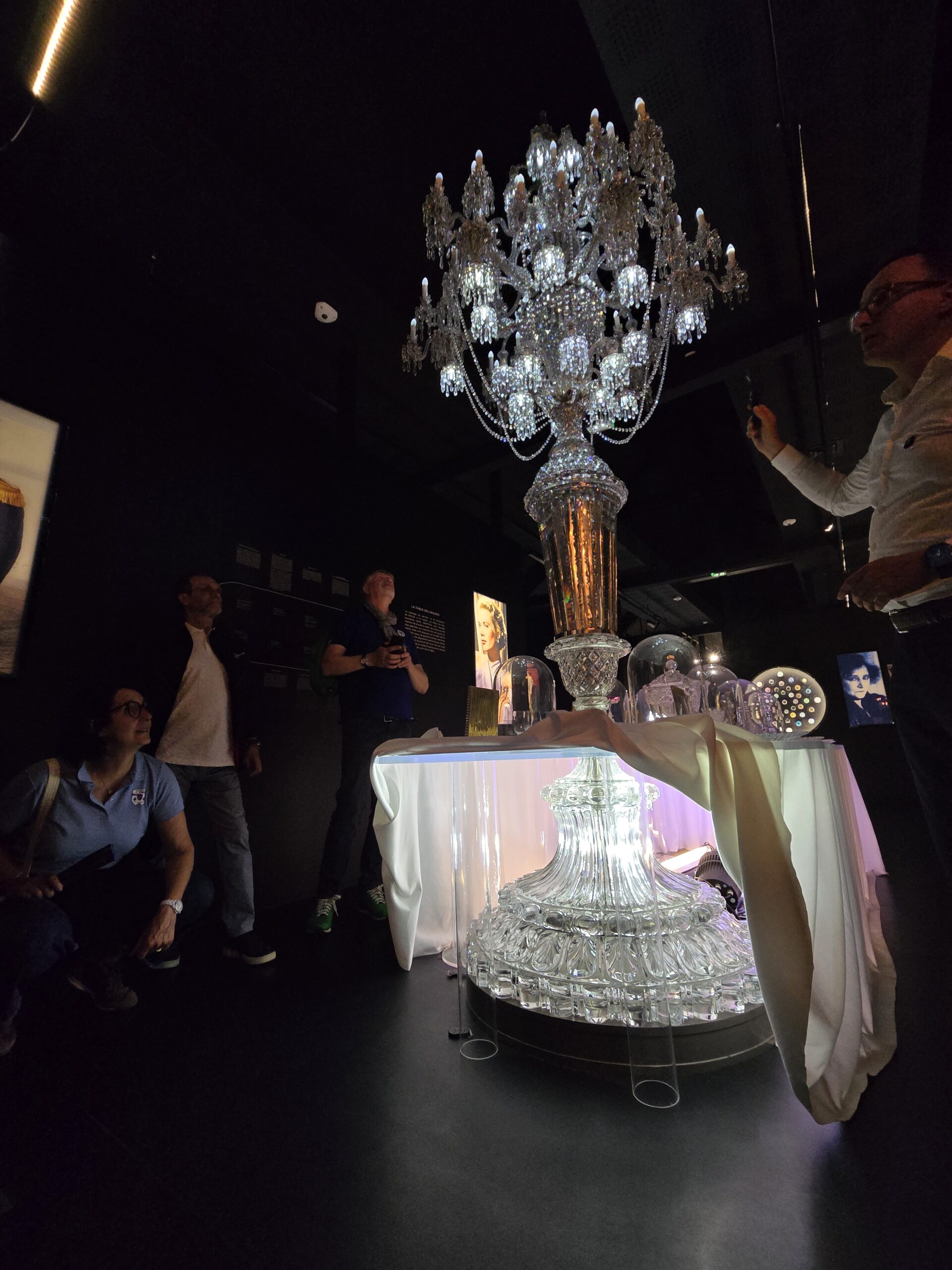
Featuring pieces that belonged to more than 70 notable figures, the exhibition trail reveals how royalty, celebrities, film stars, fashion icons, and music stars chose to celebrate life with Baccarat.
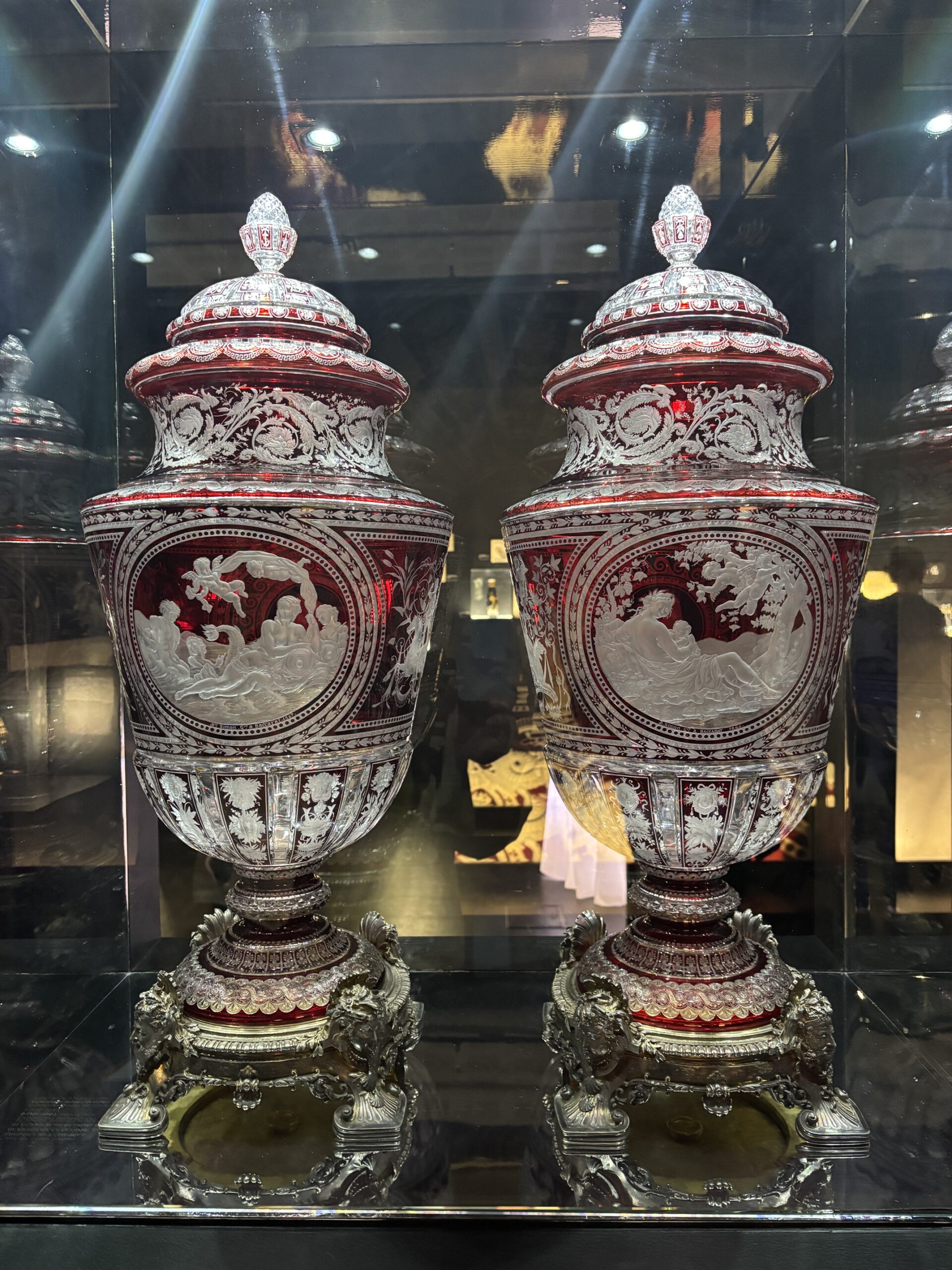
From Empress Eugénie to Josephine Baker, from the Princess of Monaco to Marilyn Monroe, from Karl Lagerfeld to Kris Jenner—their stories all intertwine with that of the House.
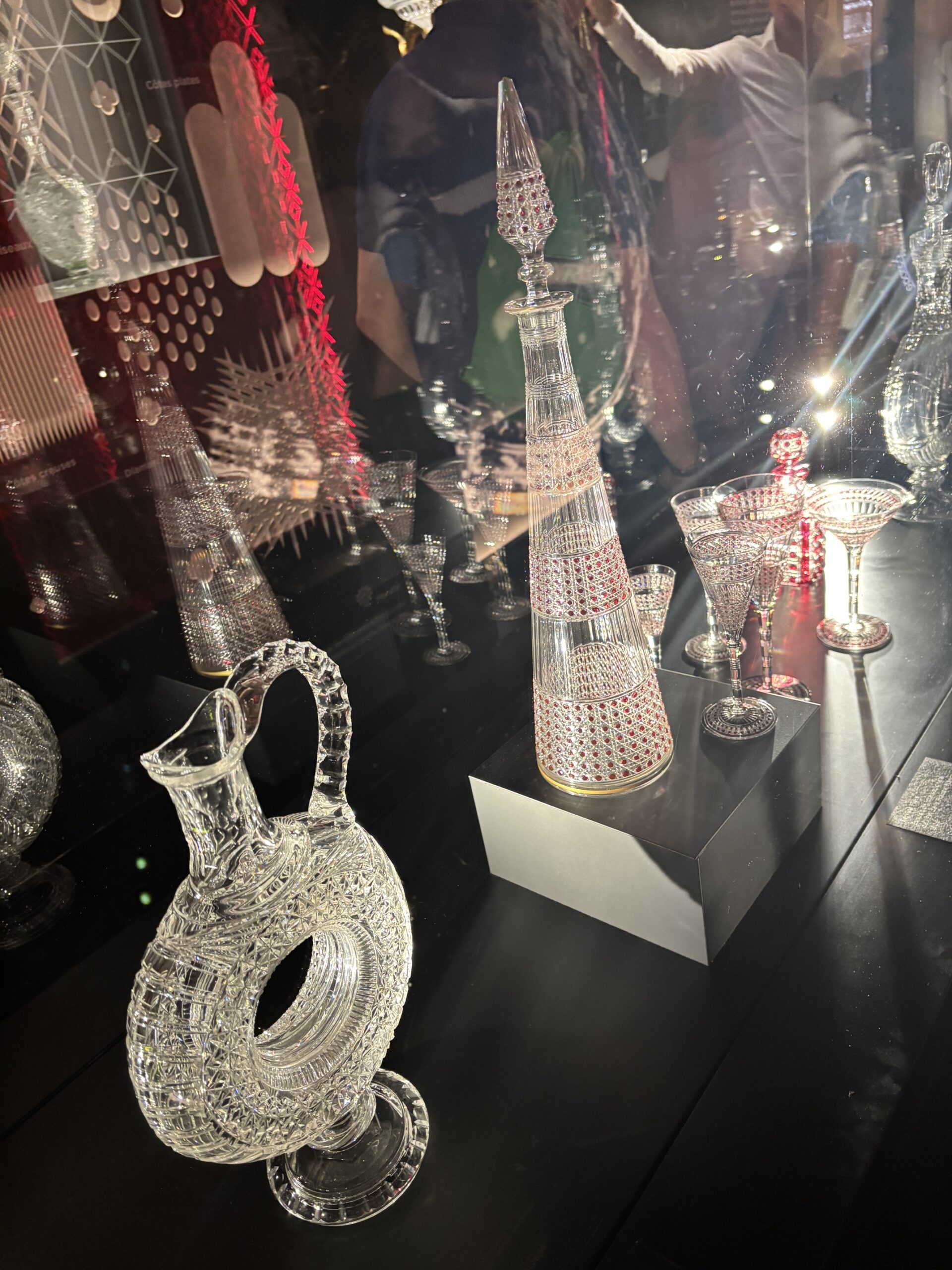
The exhibition also highlights contemporary creation.
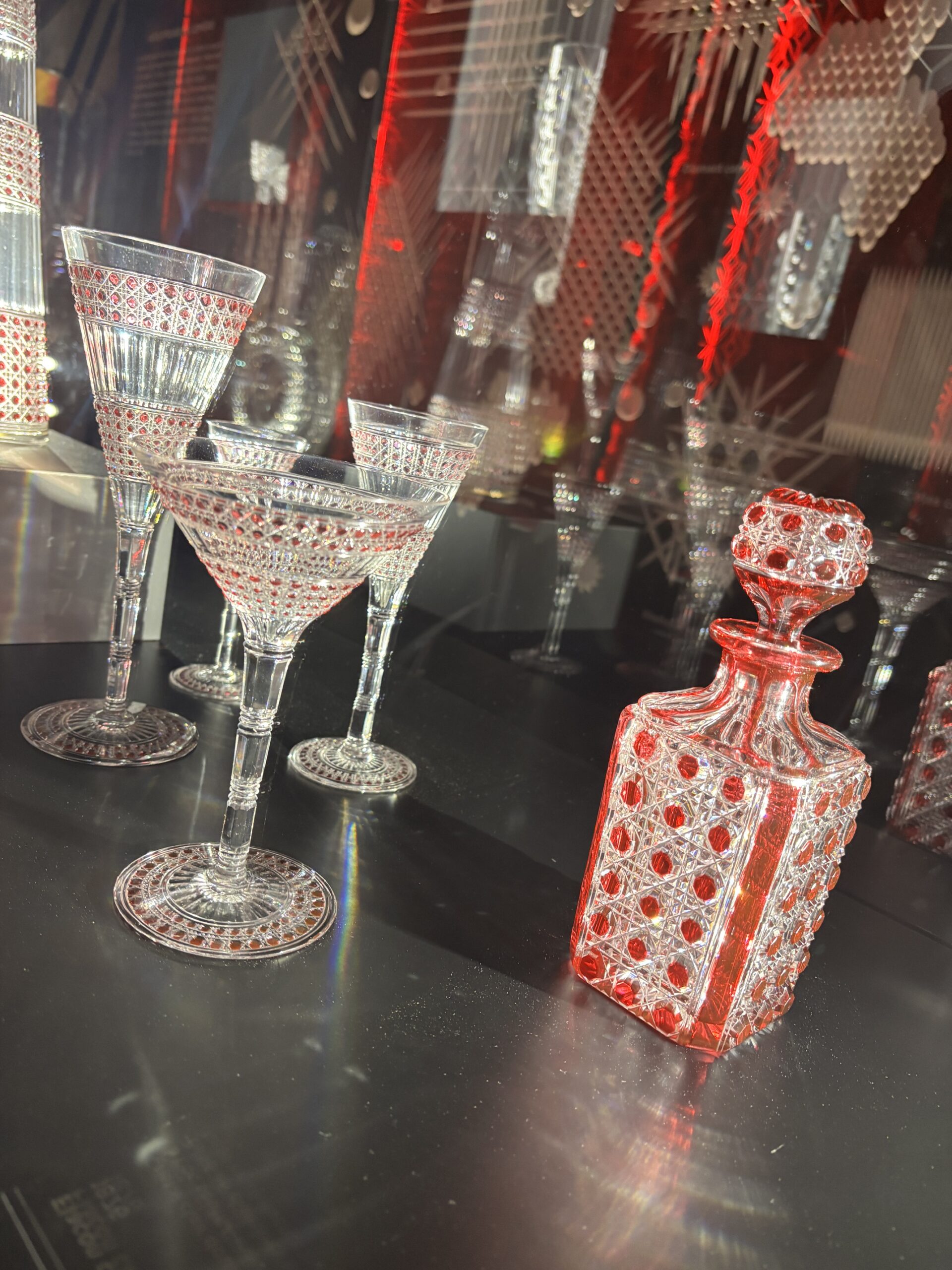
From the humorous genius of Philippe Starck to the avant-garde influence of Virgil Abloh, the most talented designers have brought a fresh perspective to Baccarat, breathing life into bold creations.
“Collection Baccarat” has engaged numerous local partners and enjoys the support of the Municipality of Baccarat, the Lunéville à Baccarat Inter-municipal Community, and the Meurthe-et-Moselle Department.
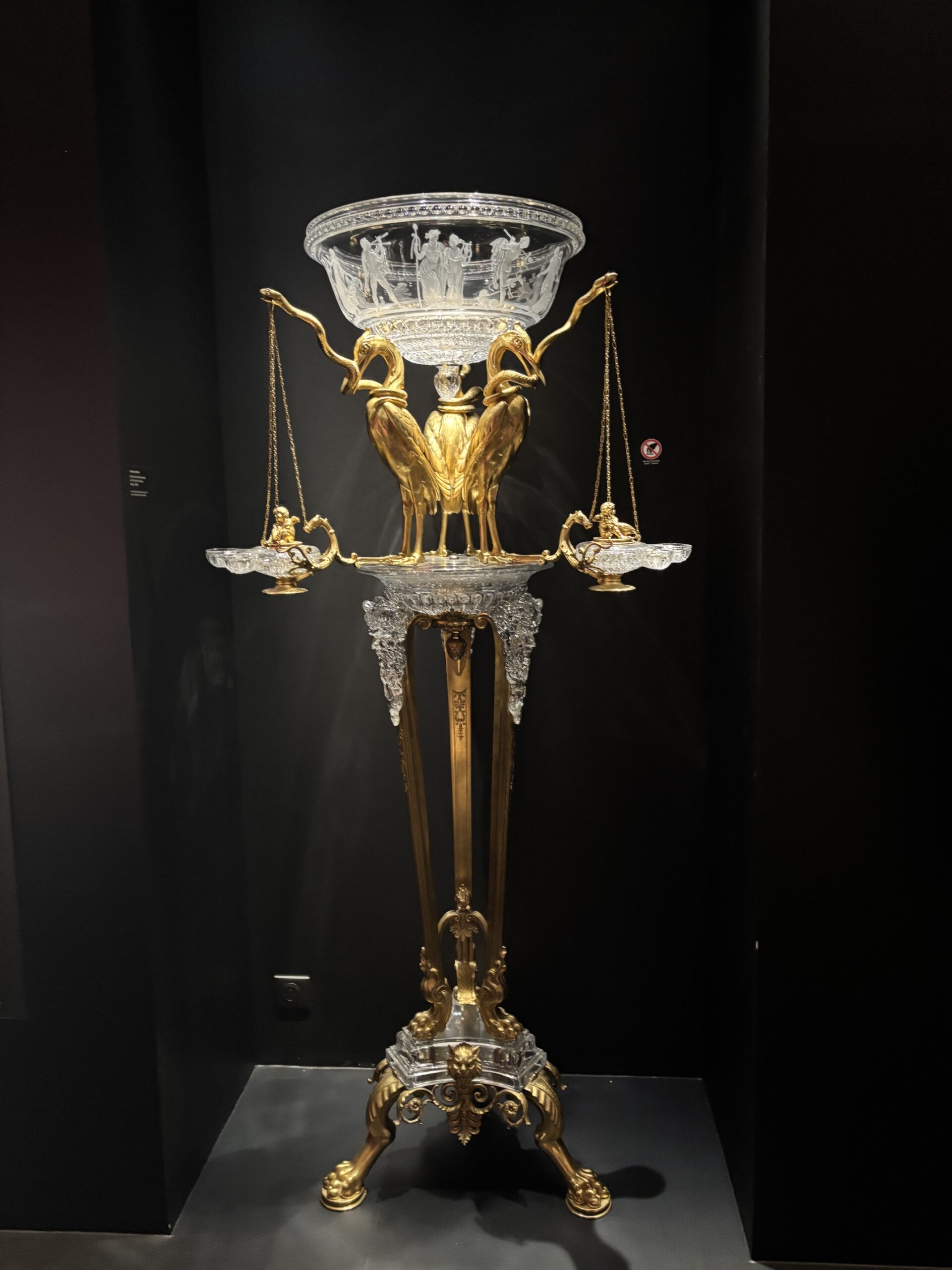
Bathed in semi-darkness and quiet, the exhibition site allows visitors to immerse themselves fully in a world of luxury, calm, and sensual pleasure.
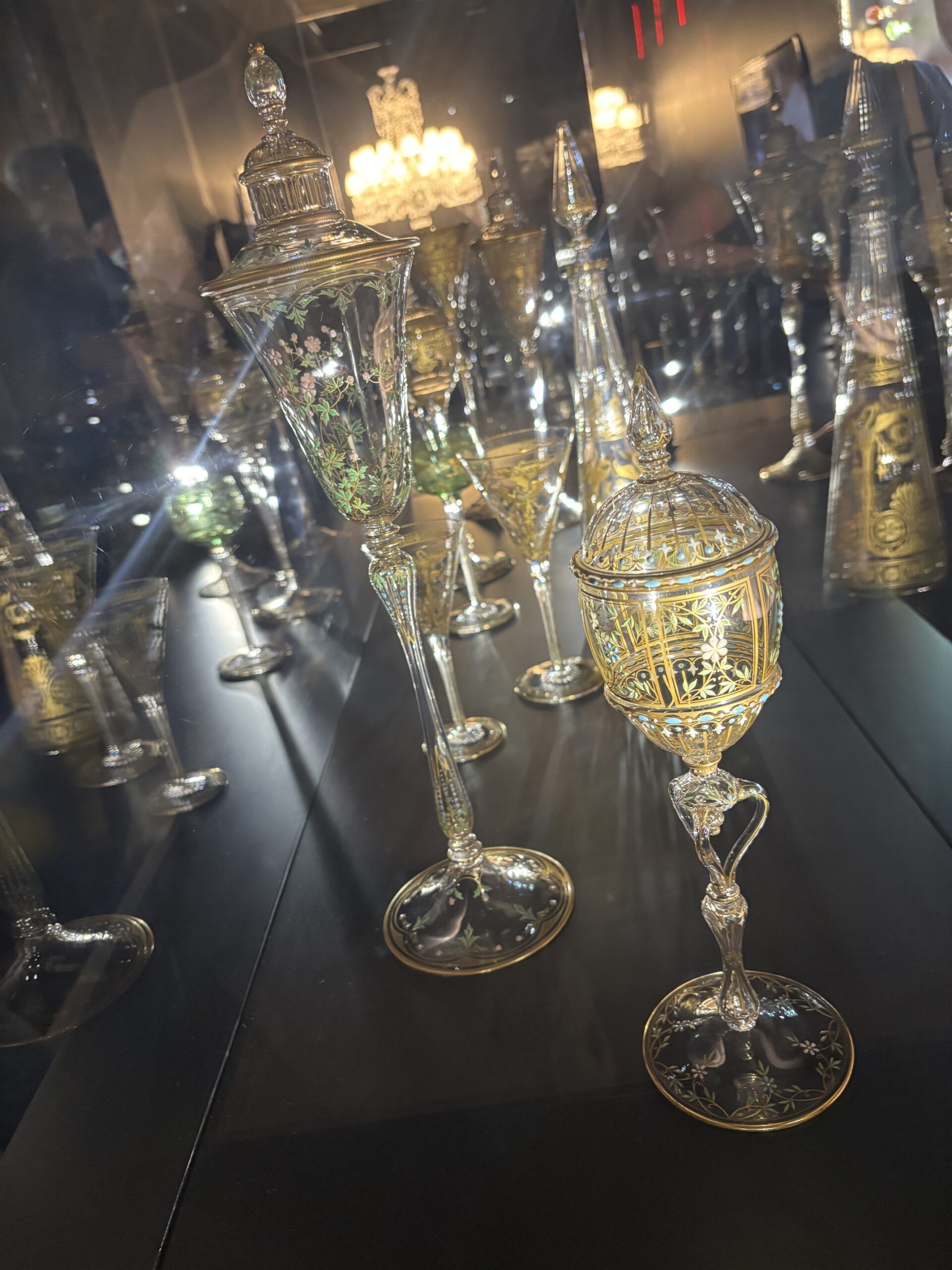
As visitor numbers were low that day, we were alone and could fully enjoy the guided tour.
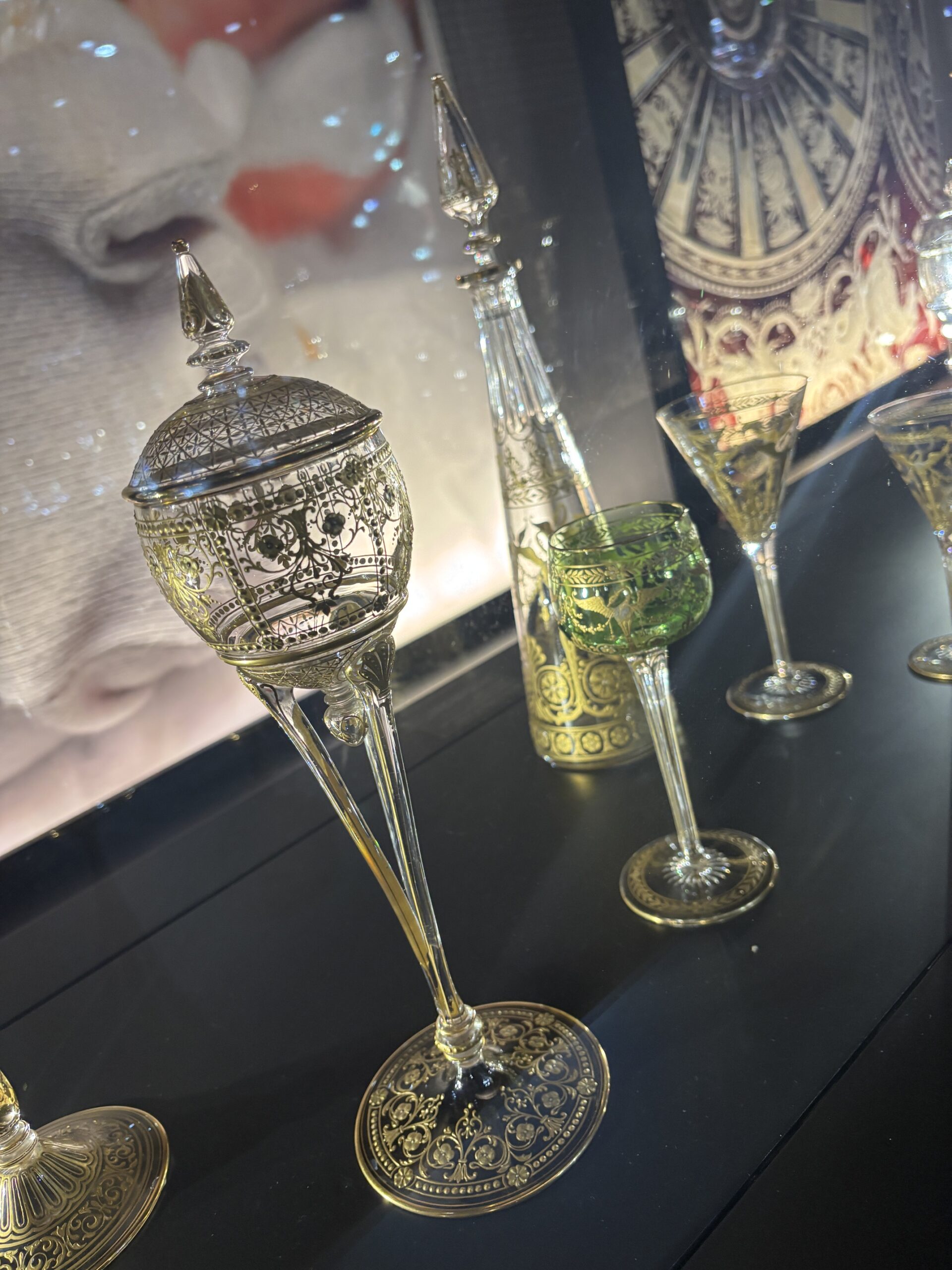
This exhibition is really worth the trip.
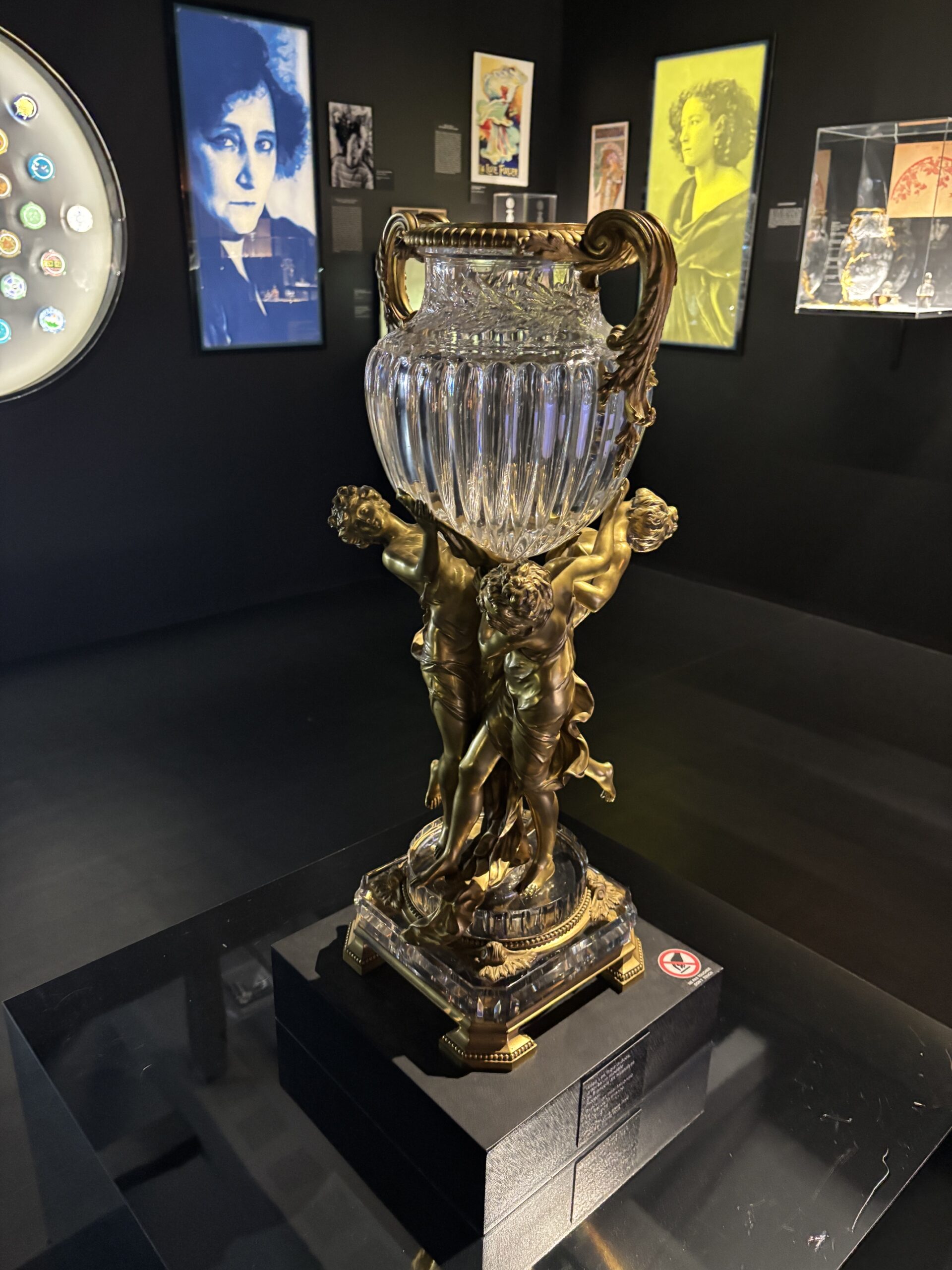
If you are passing through the area, stop by to see it. You can visit the site in an hour (it isn’t very big).
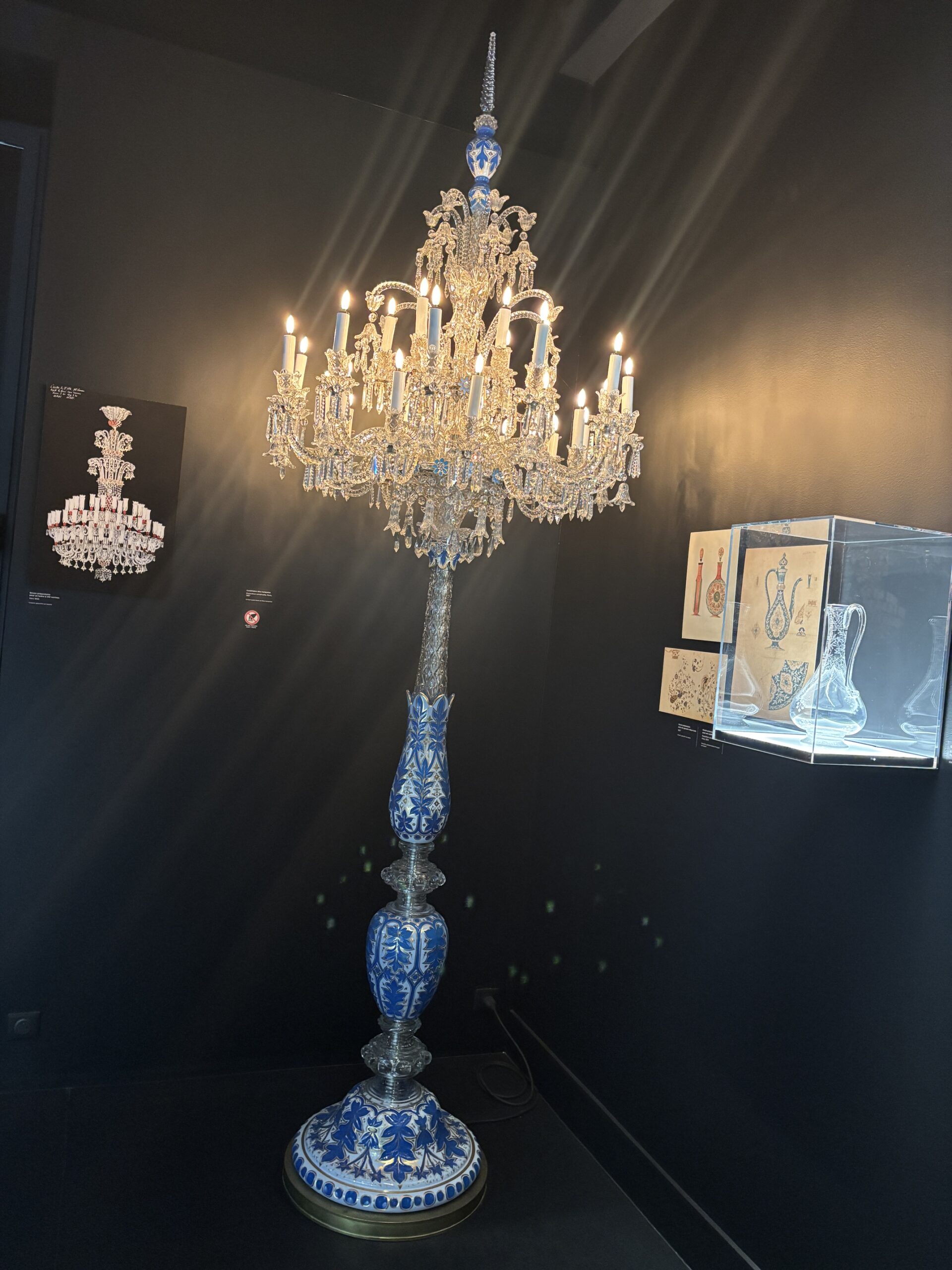
You are sure to be amazed by what you see there, and you will leave with the pleasant feeling of having encountered beauty.
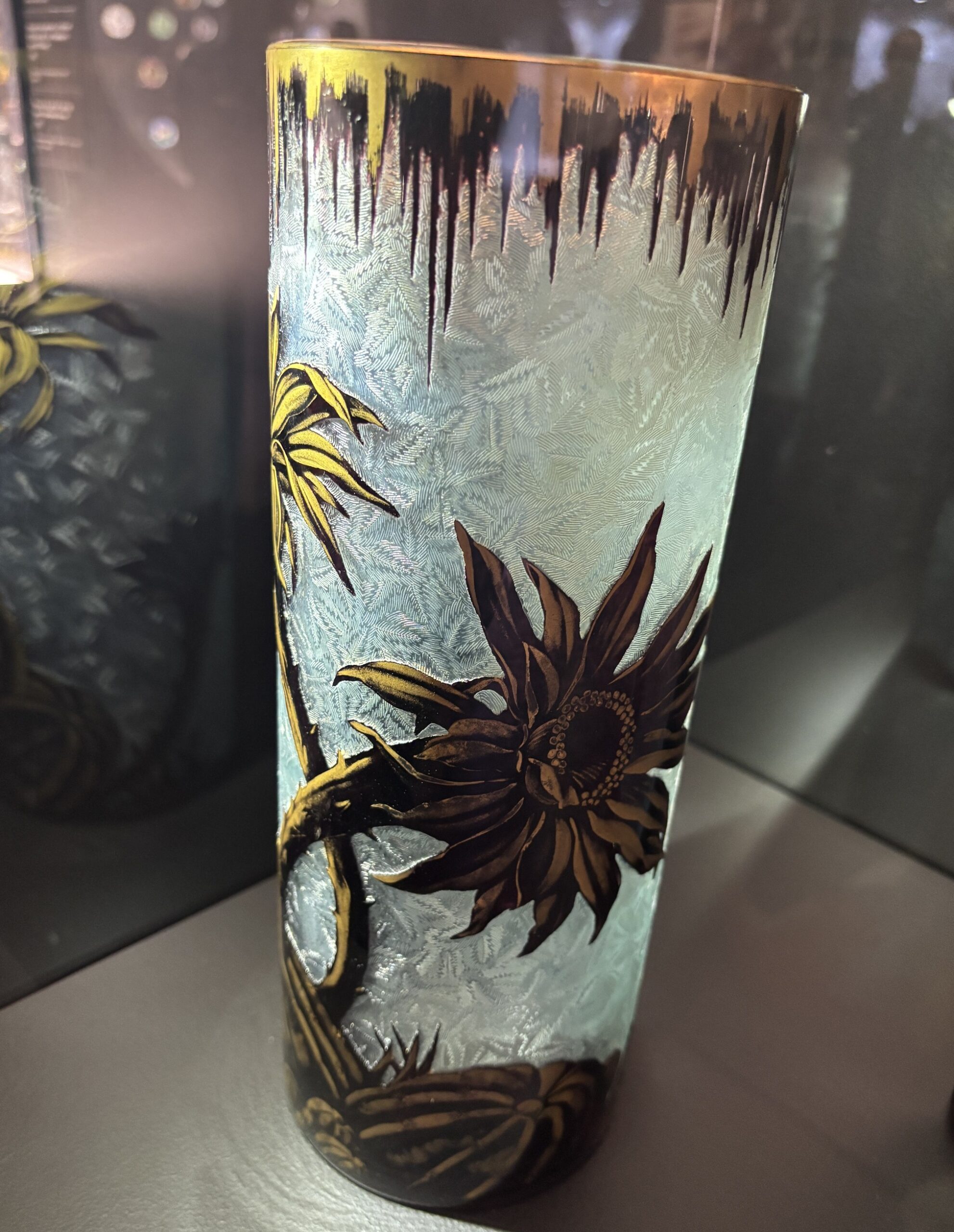
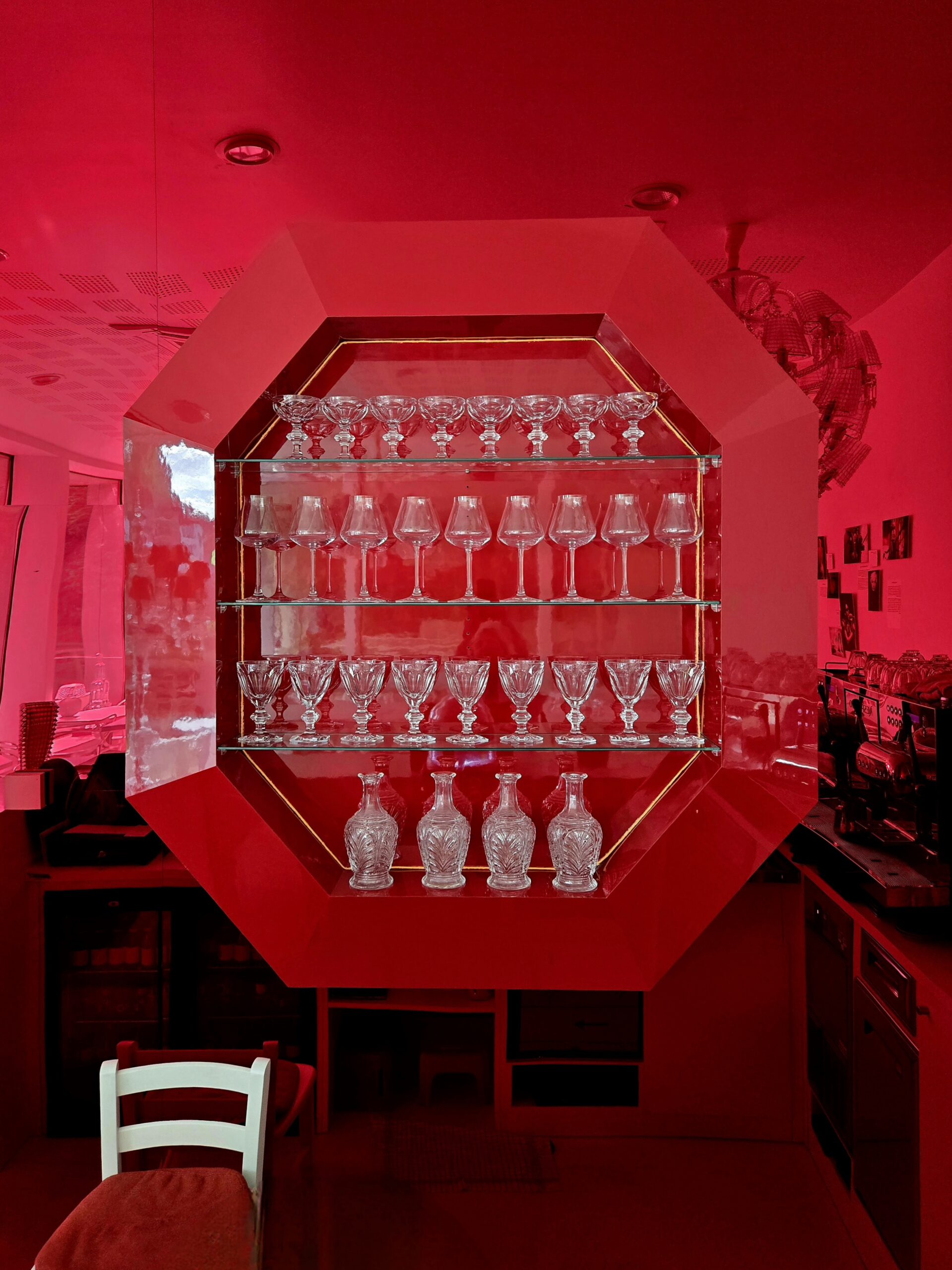
And if you’re lucky, upon leaving the exhibition, you can have a drink in a truly unique bar area (we didn’t have that pleasure; the bar was closed that day).
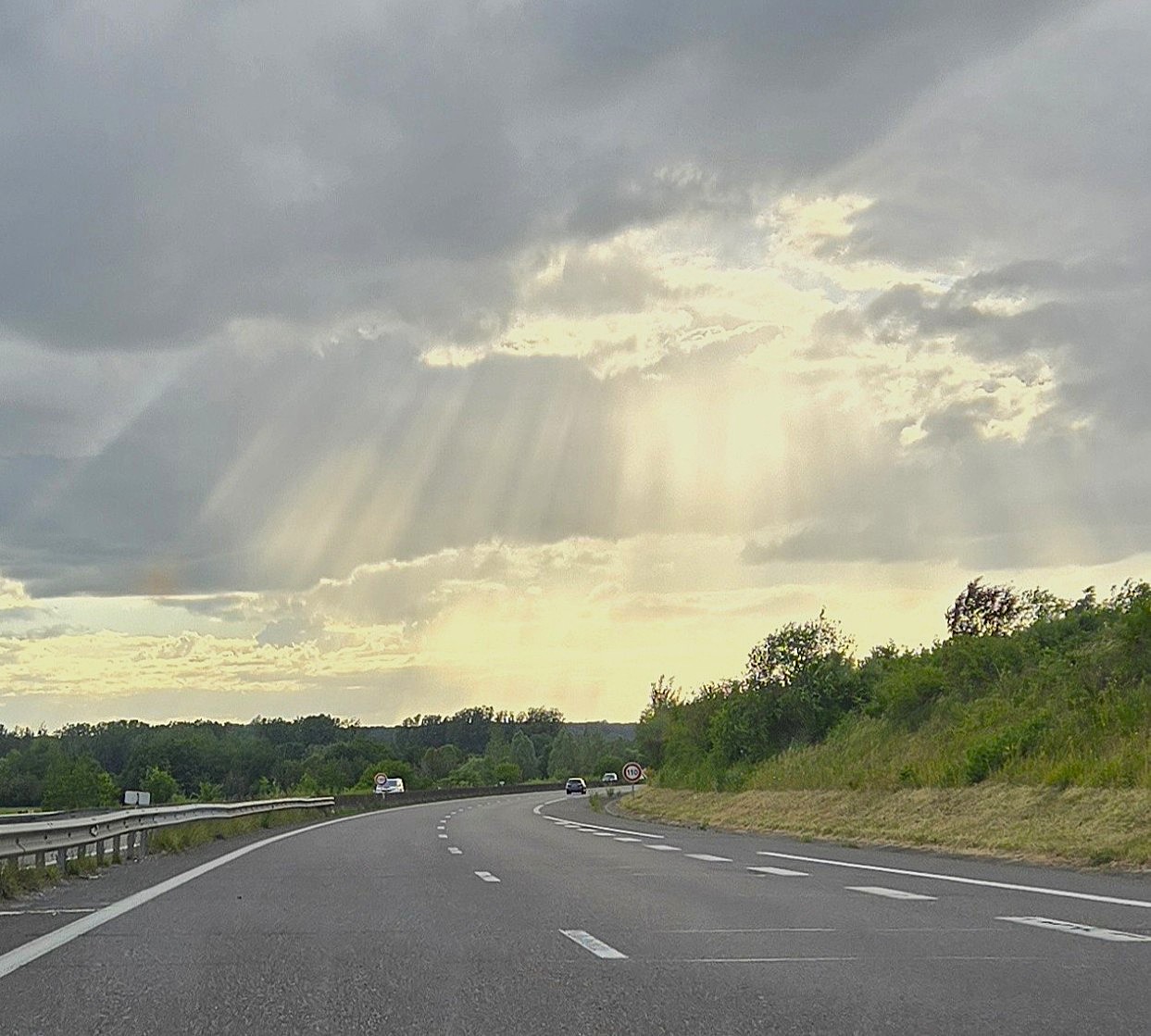
The day was drawing to a close; it was time to hit the road again—under uncertain weather conditions—to reach a new hotel …
… in the city of Nancy
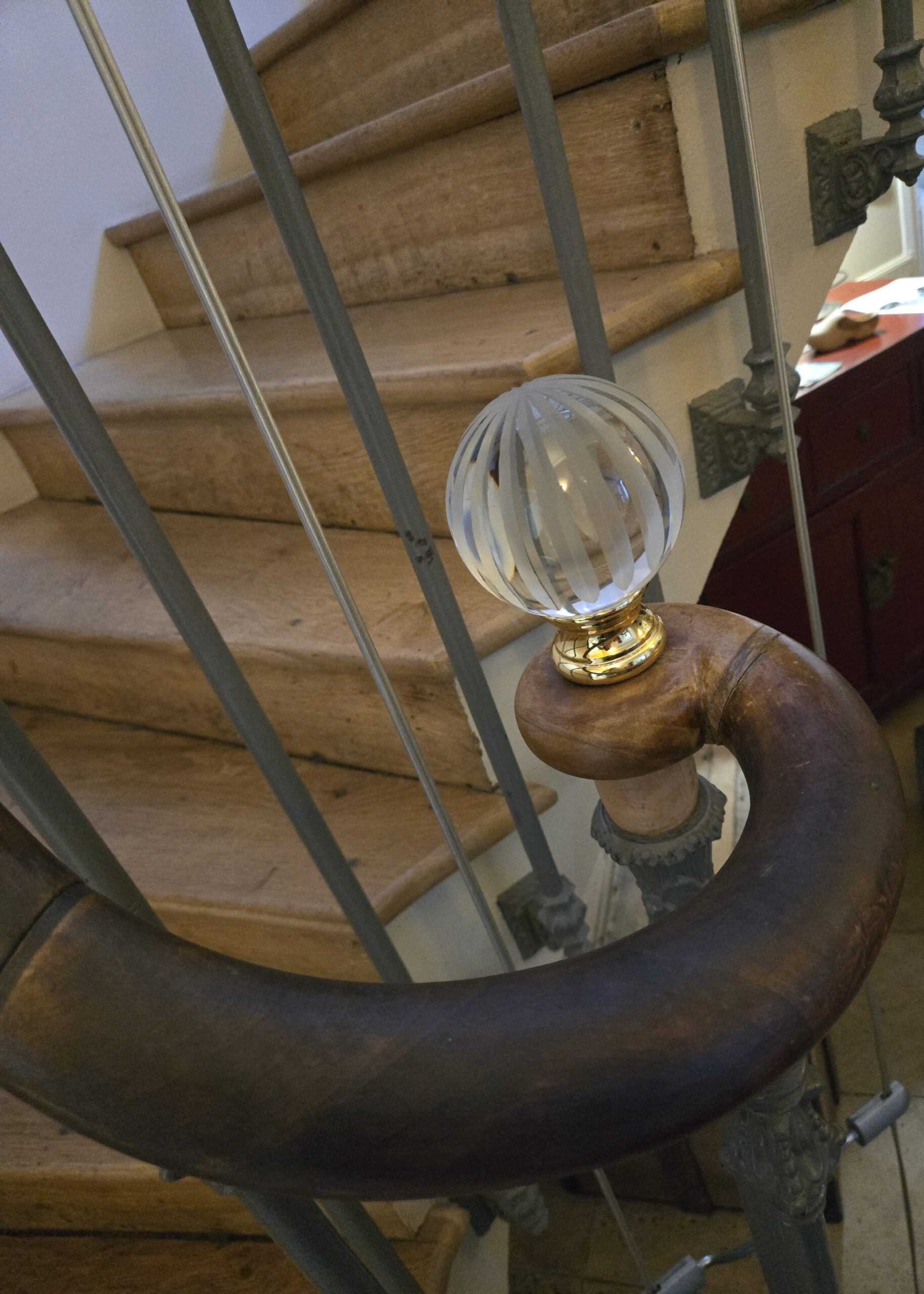
We chose an old bourgeois house converted into a hotel in the historic city center…
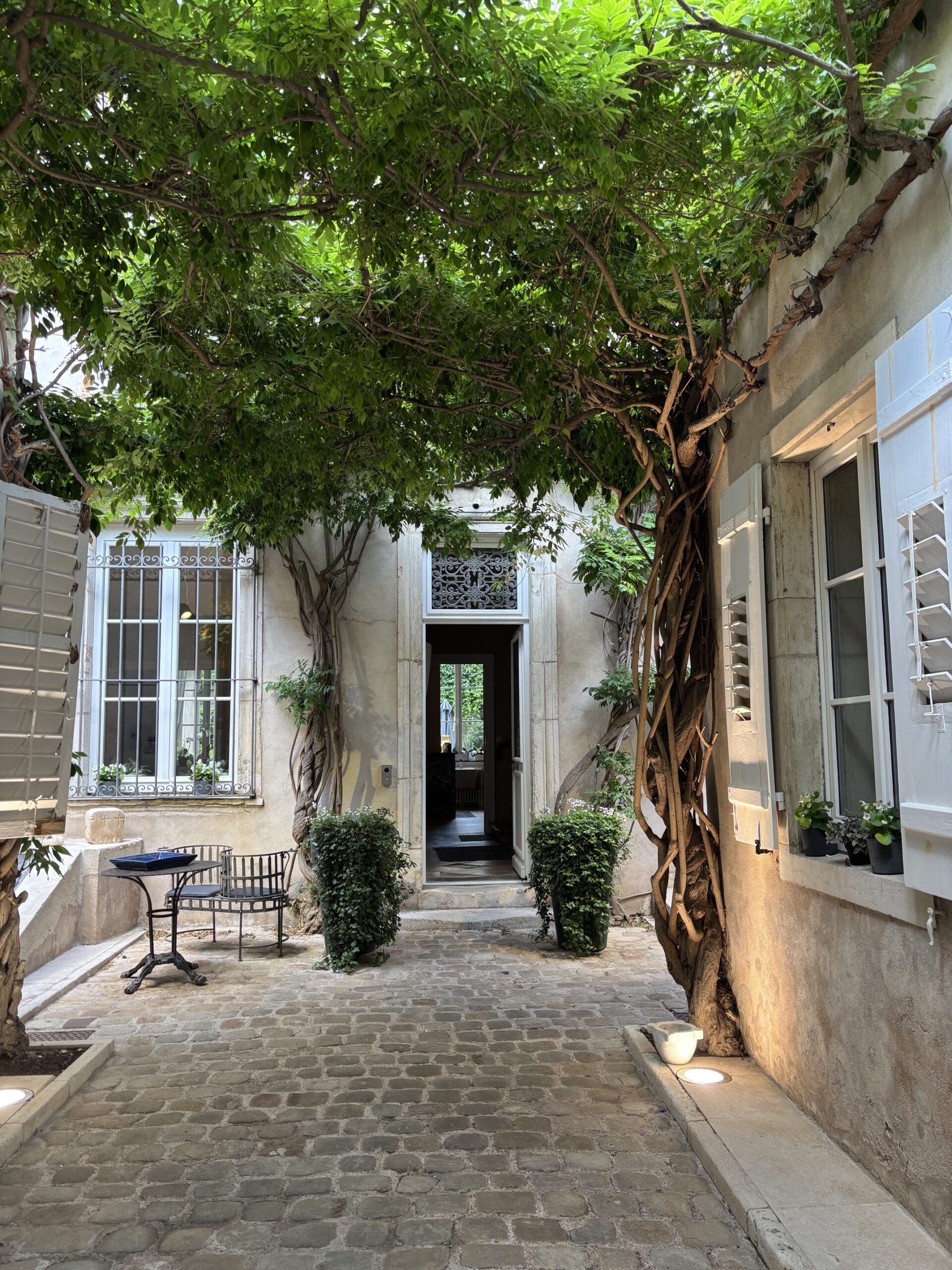
…a place with undeniable charm (yes, we are very attached to our famous French art of living).
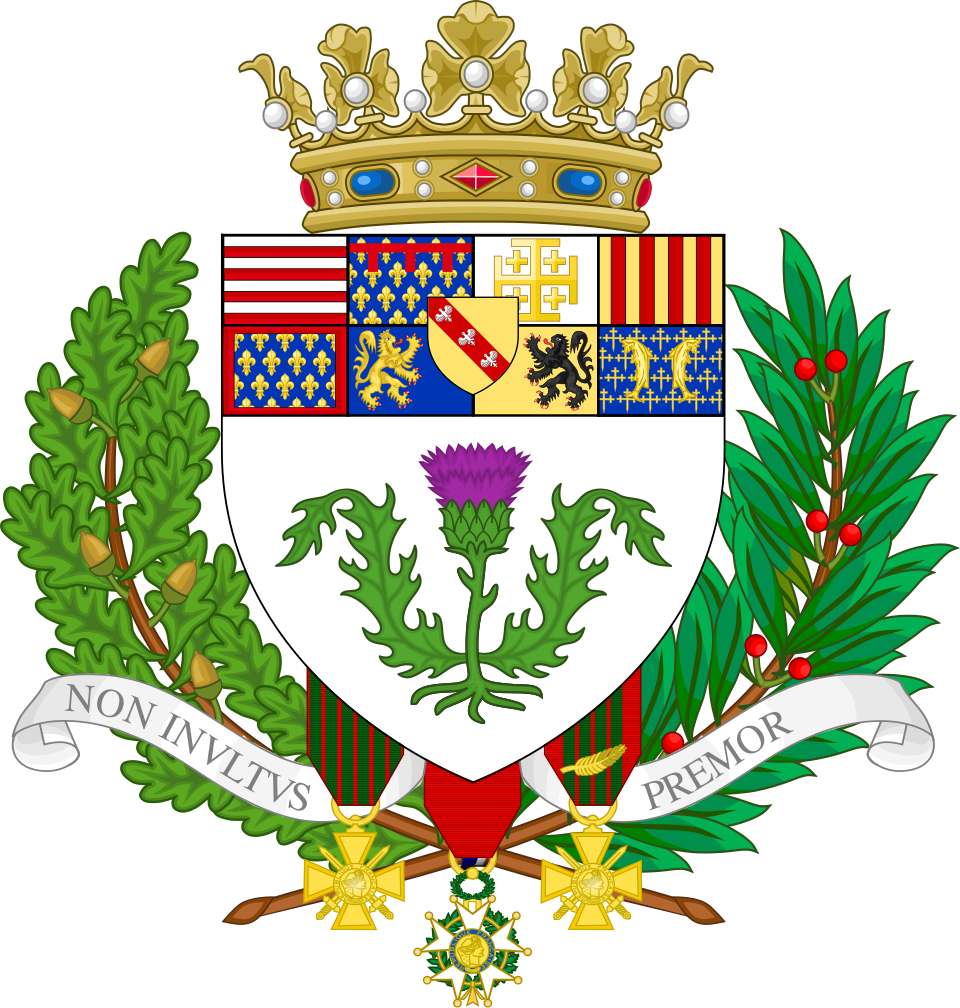
Nancy is located on the banks of the Meurthe. It is 47 km south of Metz, 75 km from the Vosges mountains, and 281 km (between 320 and 350 km depending on the route by car or train) east of Paris. It used to be the capital of the Duchy of Lorraine.
A fortified city founded in the early 11th century—and later the capital of the Duchy of Lorraine until its annexation by France in 1766—Nancy became the administrative center of the Meurthe department in 1790, and subsequently of Meurthe-et-Moselle in 1871.
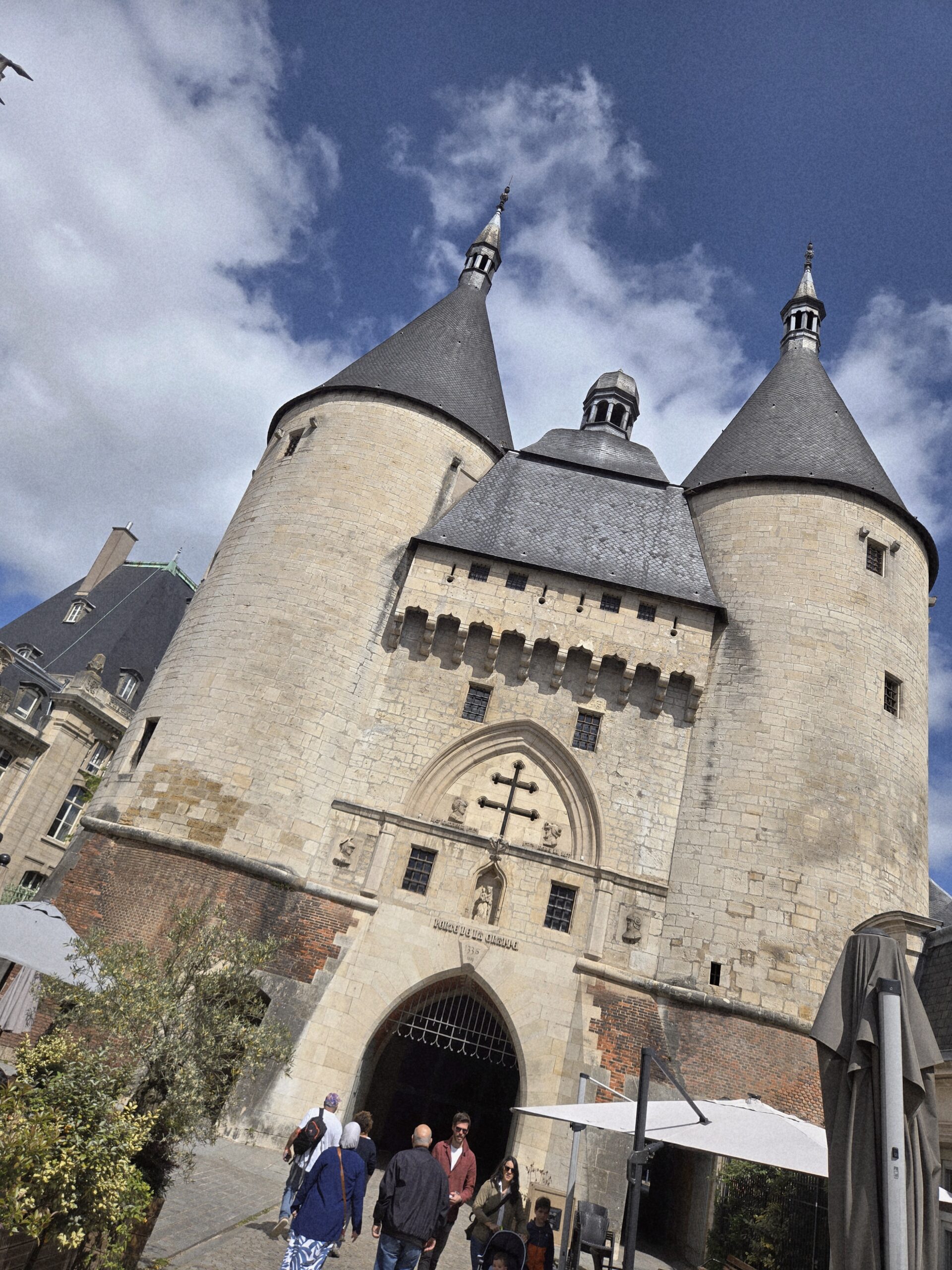
Thanks to its history as a ducal capital, Nancy is renowned today for its wealth of historical monuments, its many fortified gates (formerly part of the medieval city walls), and its three UNESCO World Heritage-listed squares—most notably Place Stanislas, named after the last Duke of Lorraine, Stanislas Leszczynski.
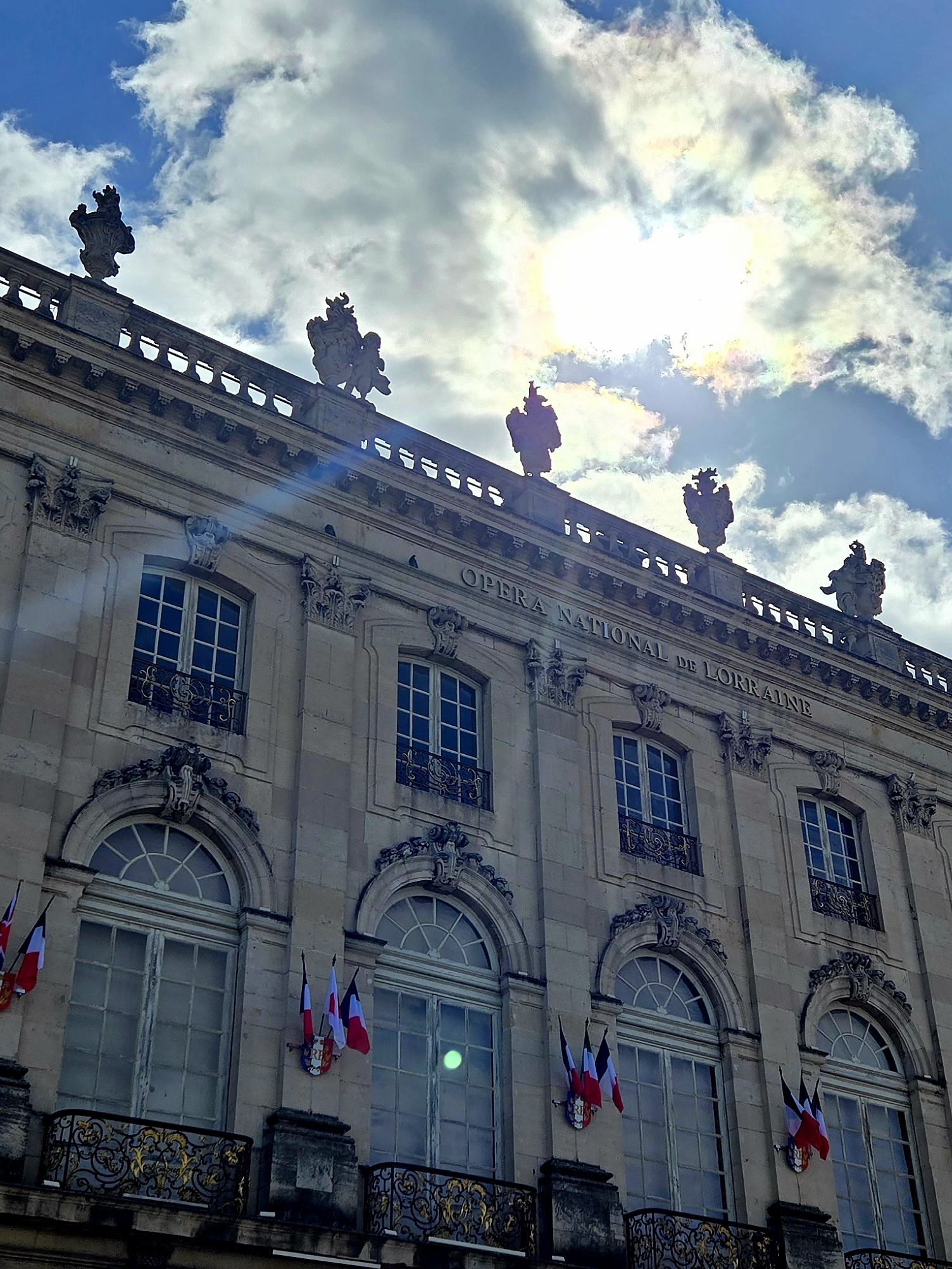
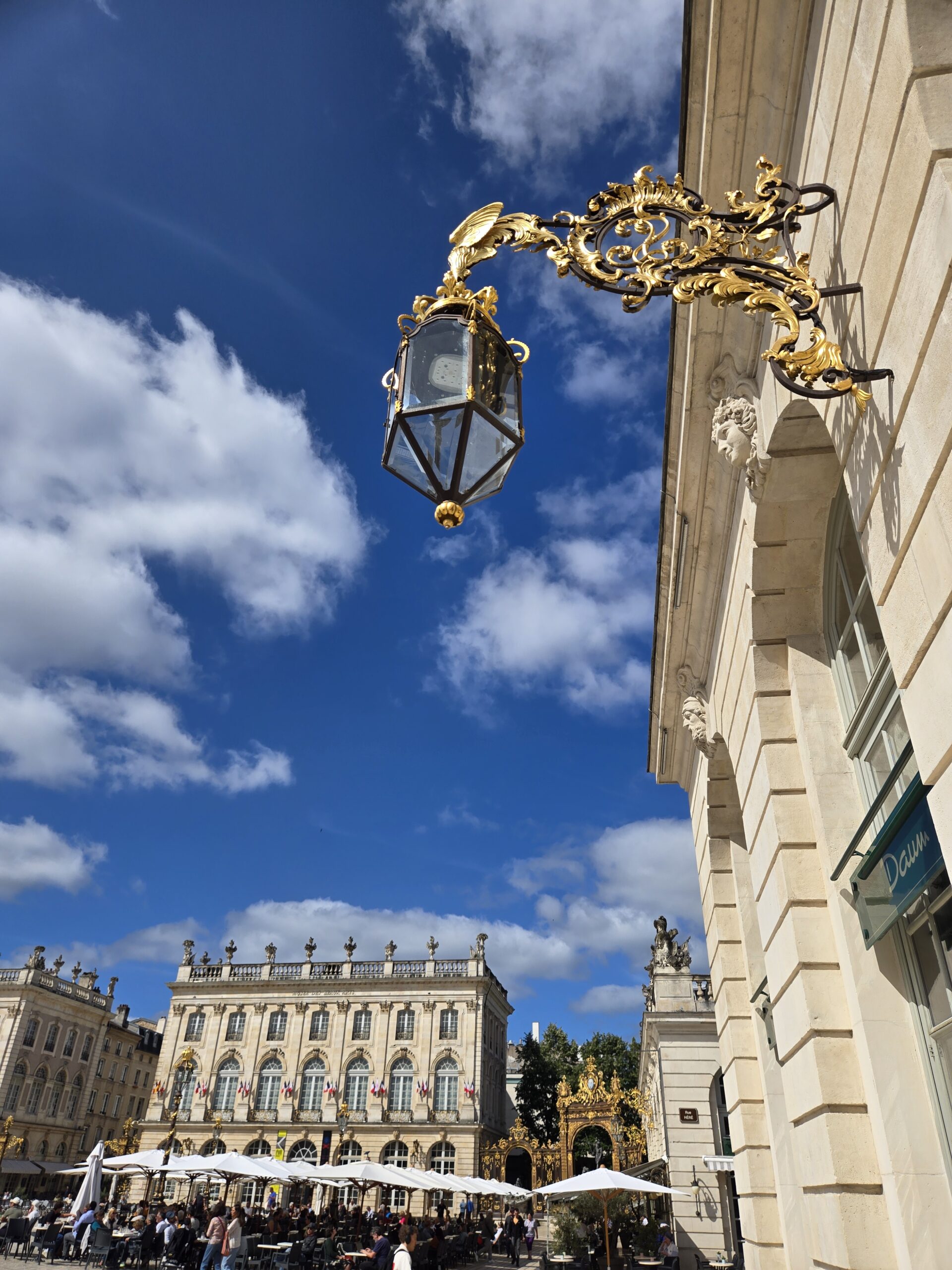
A city of art, it is one of the European cradles of Art Nouveau, thanks to the École de Nancy, which brought together figures such as the artist and industrialist Émile Gallé, the painter Victor Prouvé, and the Daum glassworks.
With the Opéra National de Lorraine, Nancy is home to one of France’s six national opera houses.
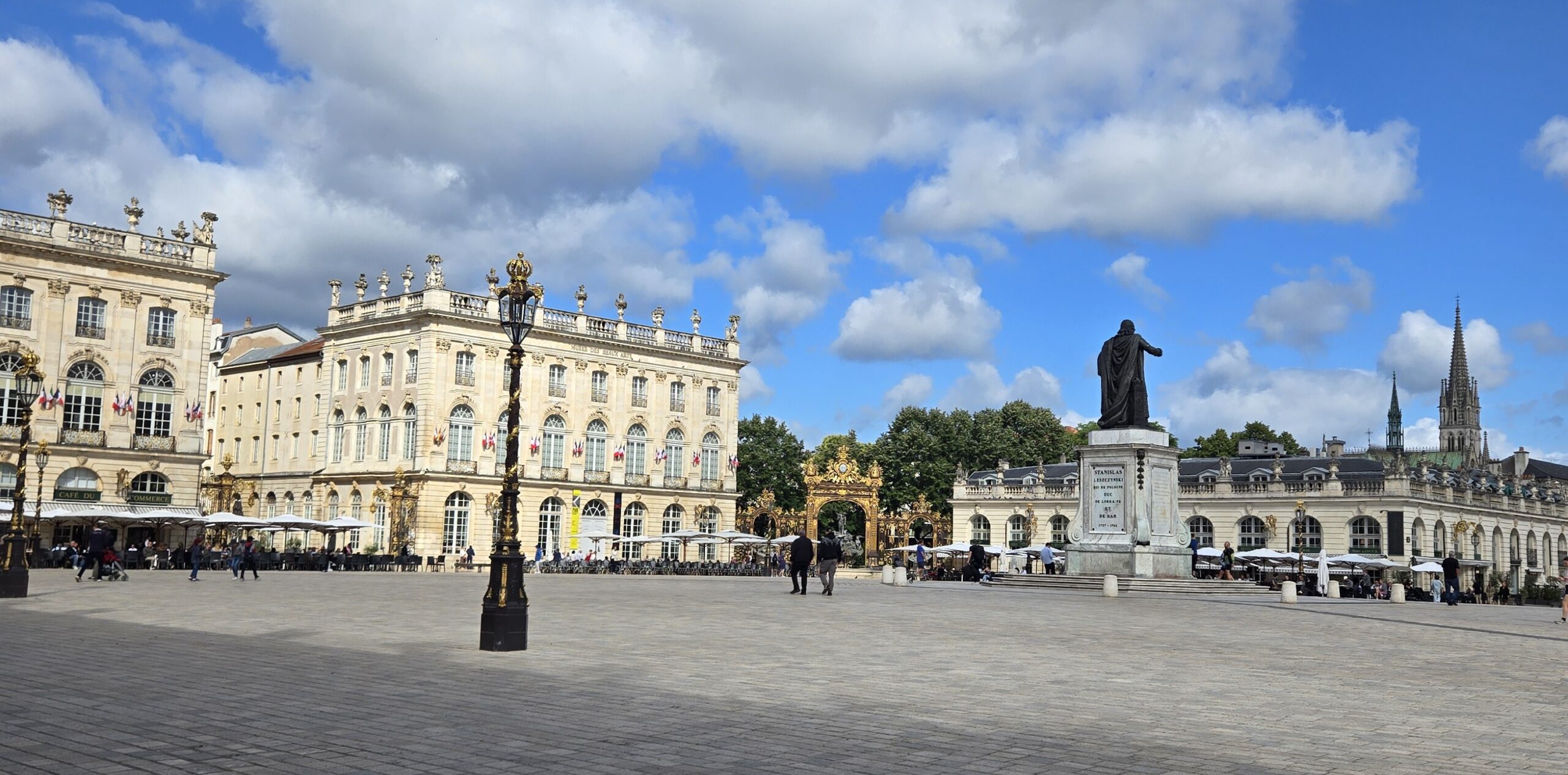
Nancy is known for its Late Baroque and Art Nouveau landmarks. Some date back to the time when the city was the capital of the Duchy of Lorraine.
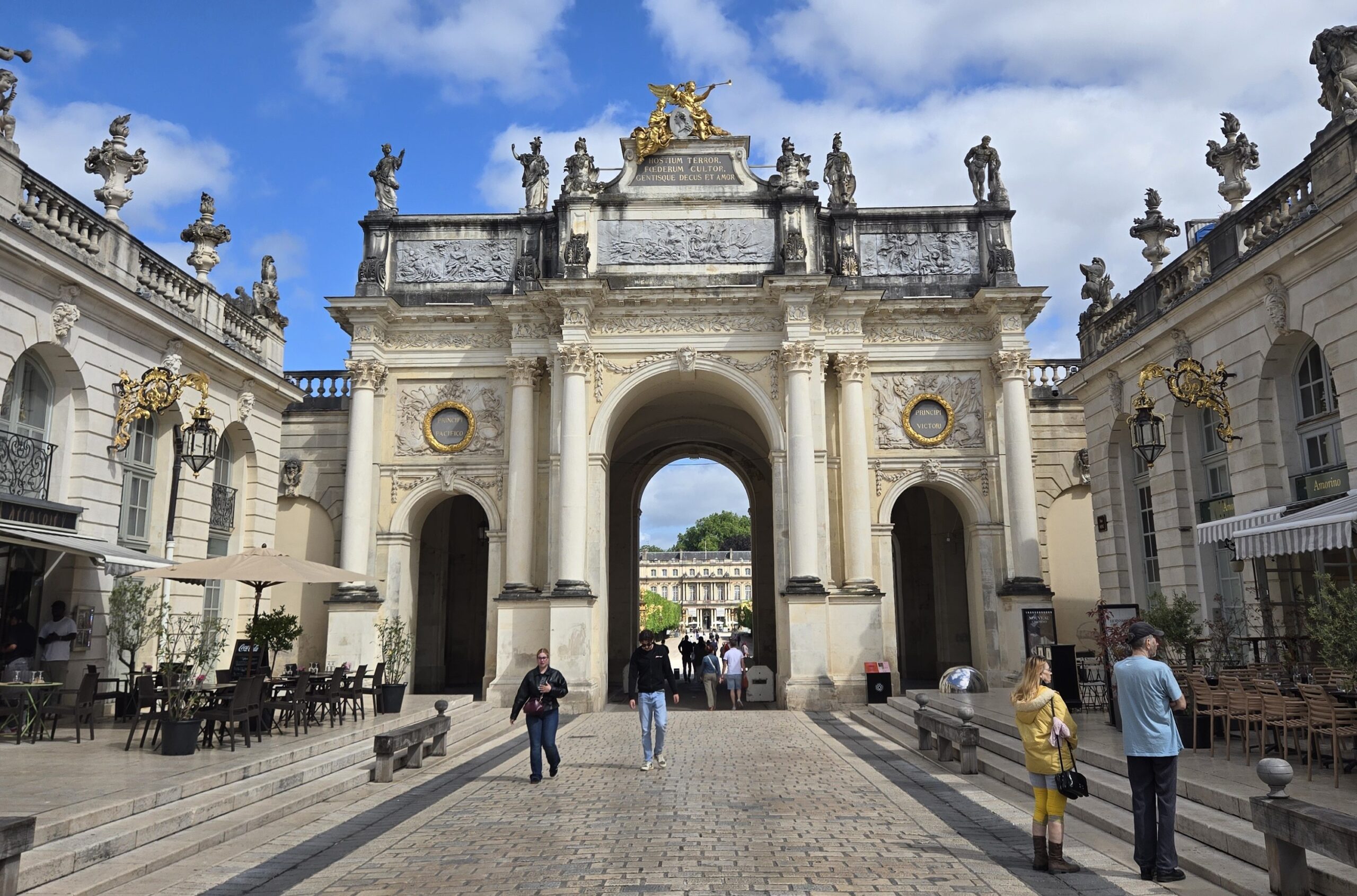
Its iconic landmark is the 18th-century Place Stanislas.
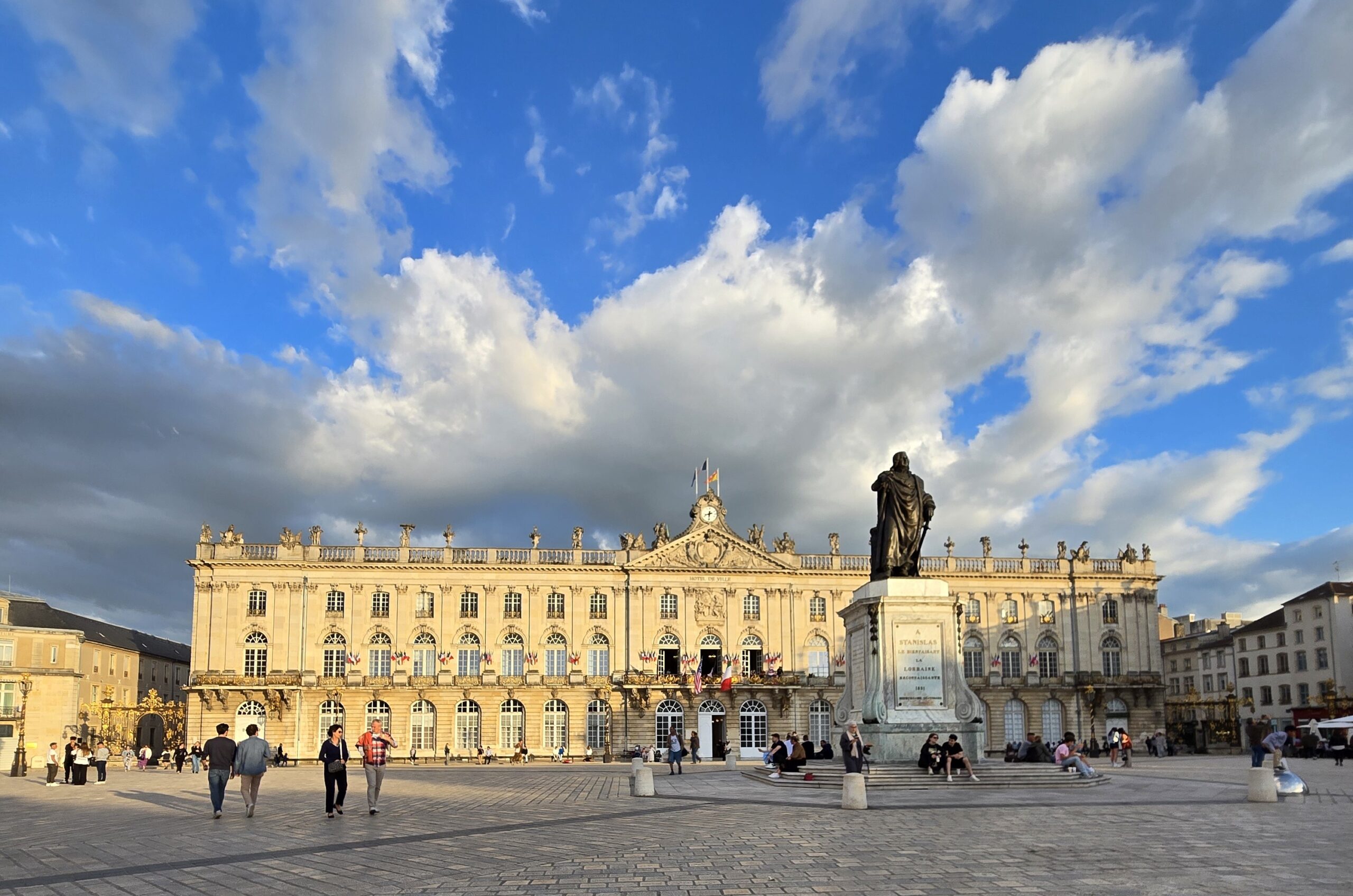
This vast square, adorned with gilded wrought-iron gates and Rococo fountains, is set amidst the magnificent palaces and churches that abound in Nancy’s medieval Old Town.
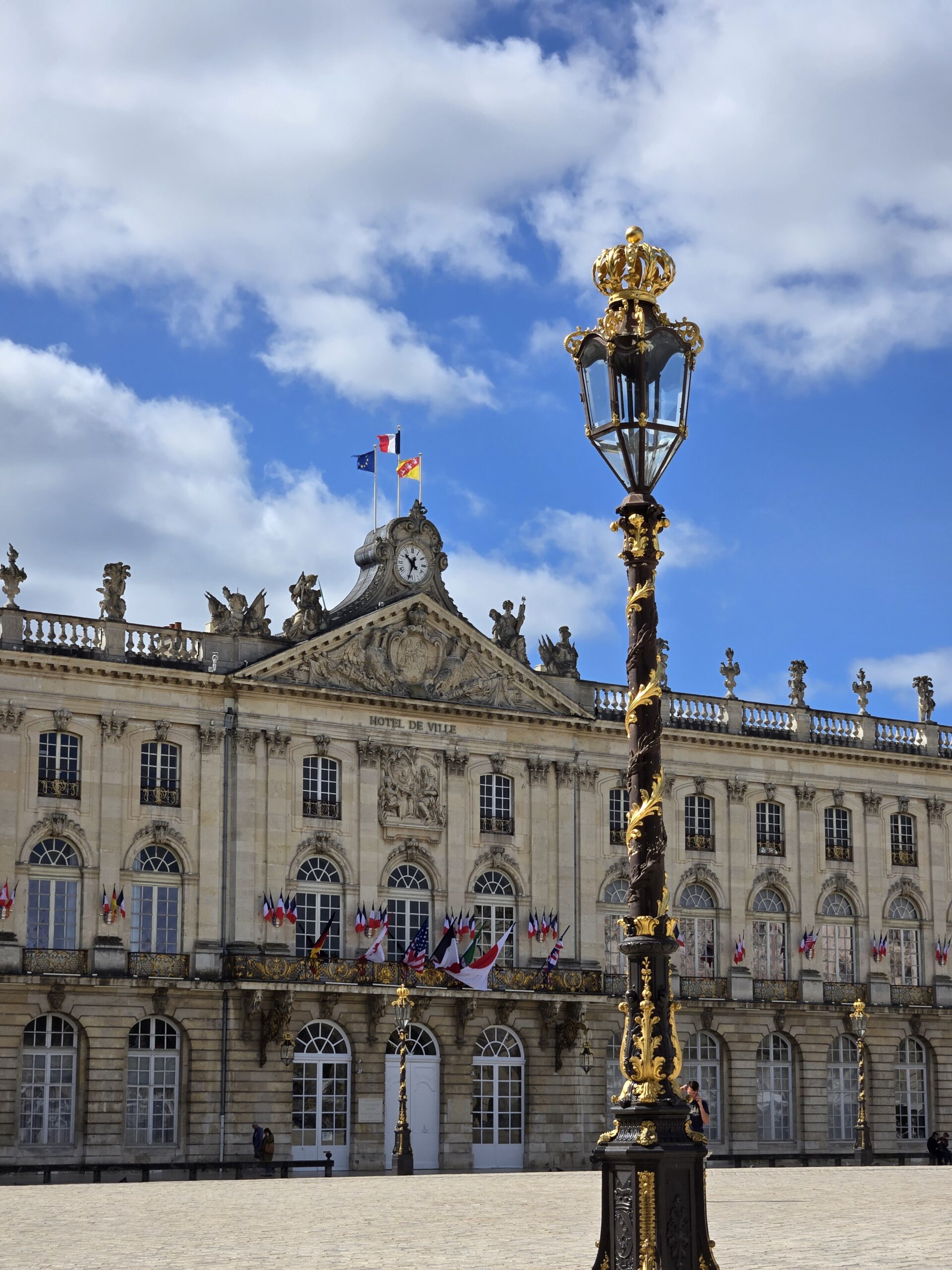
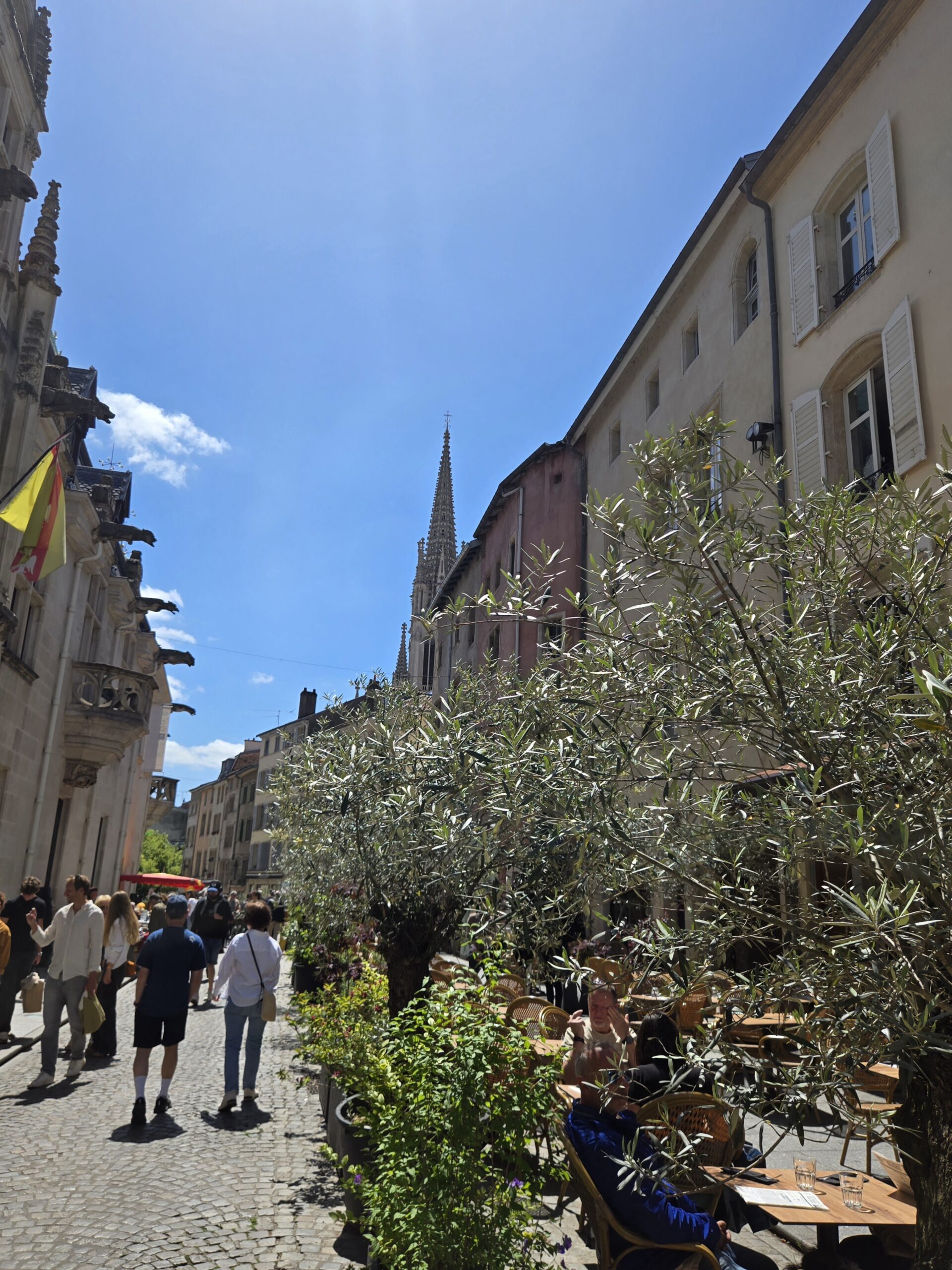
The city center, which we greatly enjoyed visiting, is perfect for strolling …
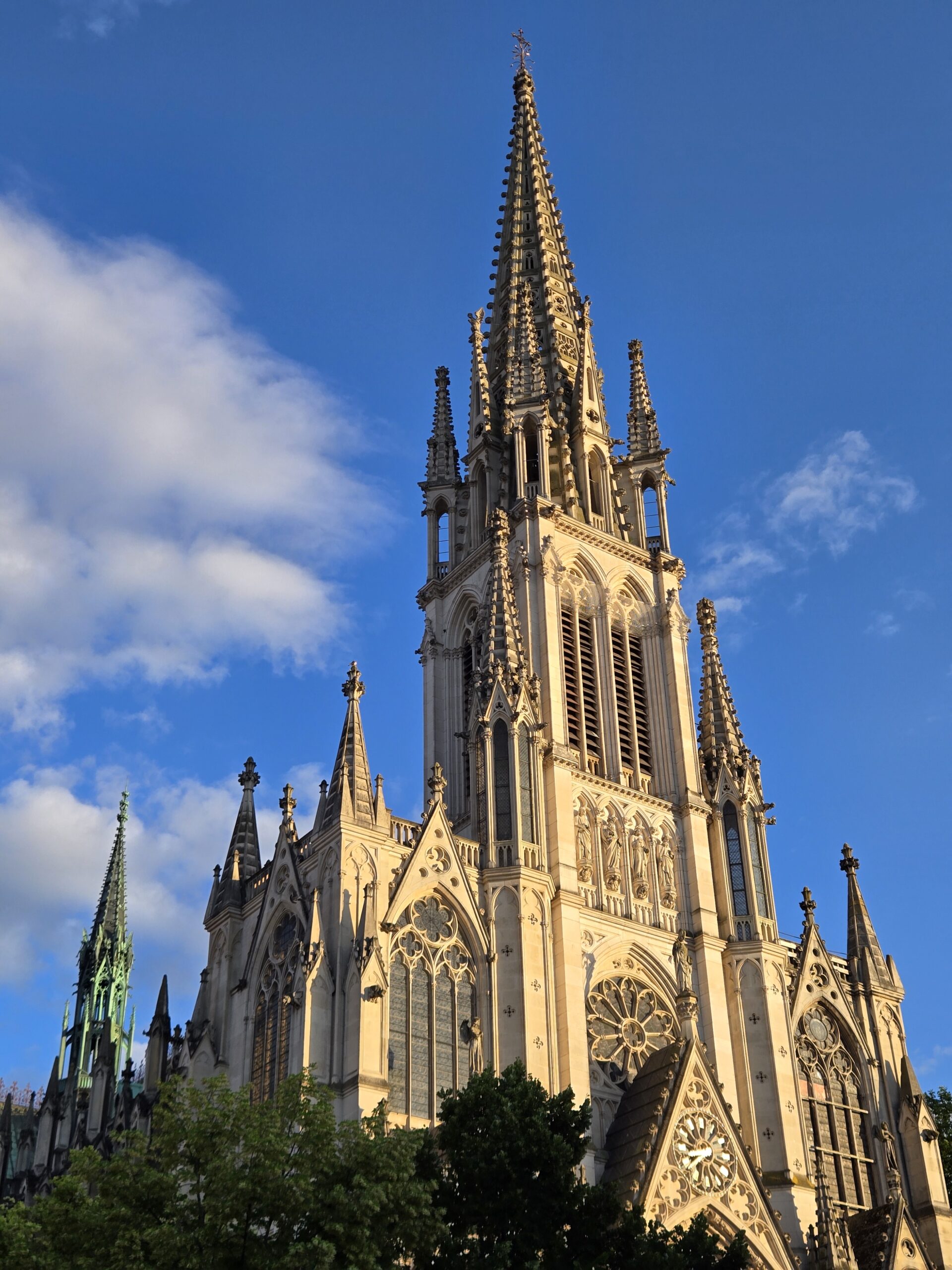
…and offers superb, varied architecture.
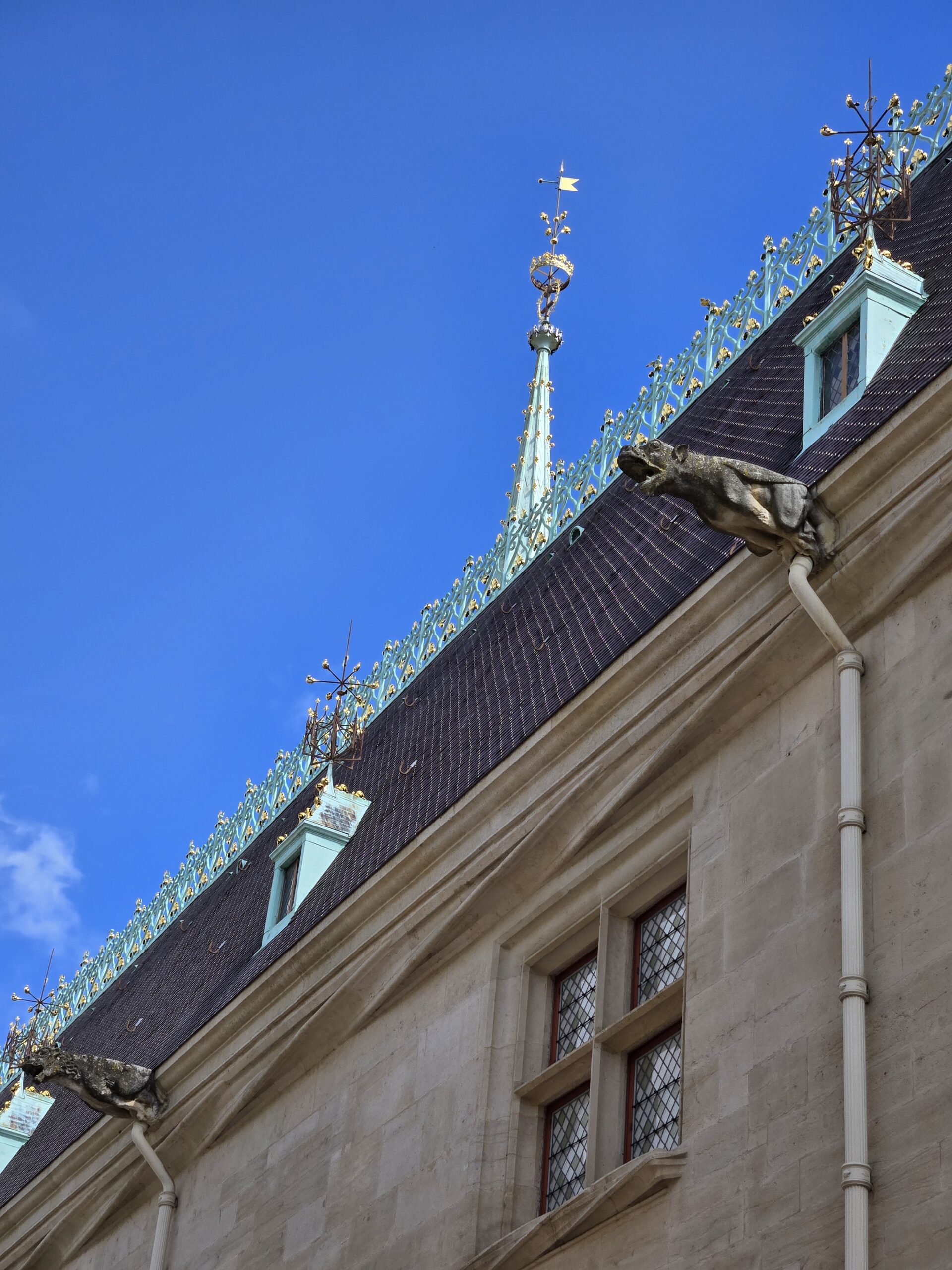
Yes, truly, Nancy is a city worth seeing…
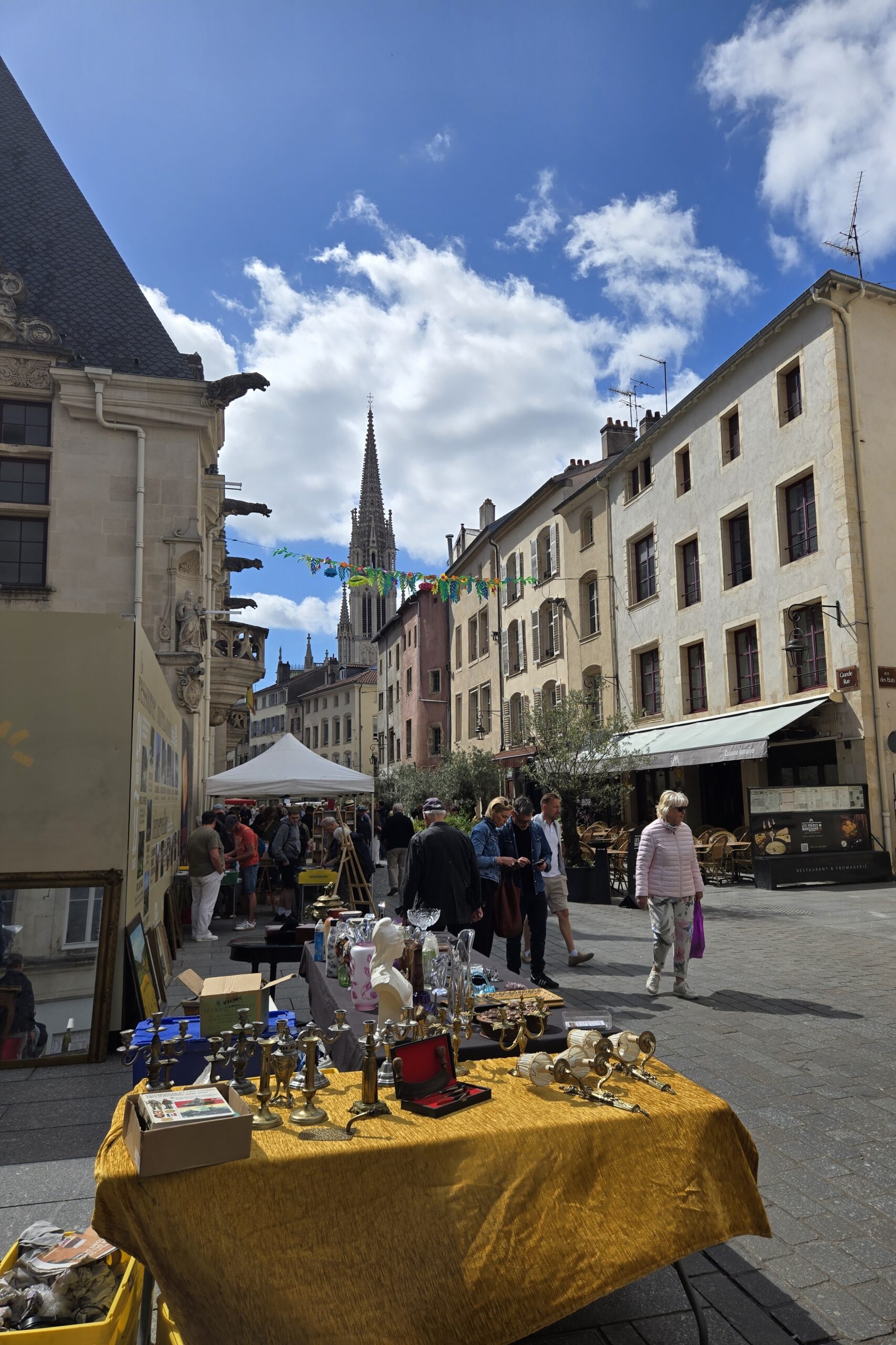
Our trip was drawing to a close, and on that Sunday morning, it was time for me to hit the road back to Paris. Naturally, I took only the back roads, making sure to take my time and enjoy a few sunny breaks along the way.
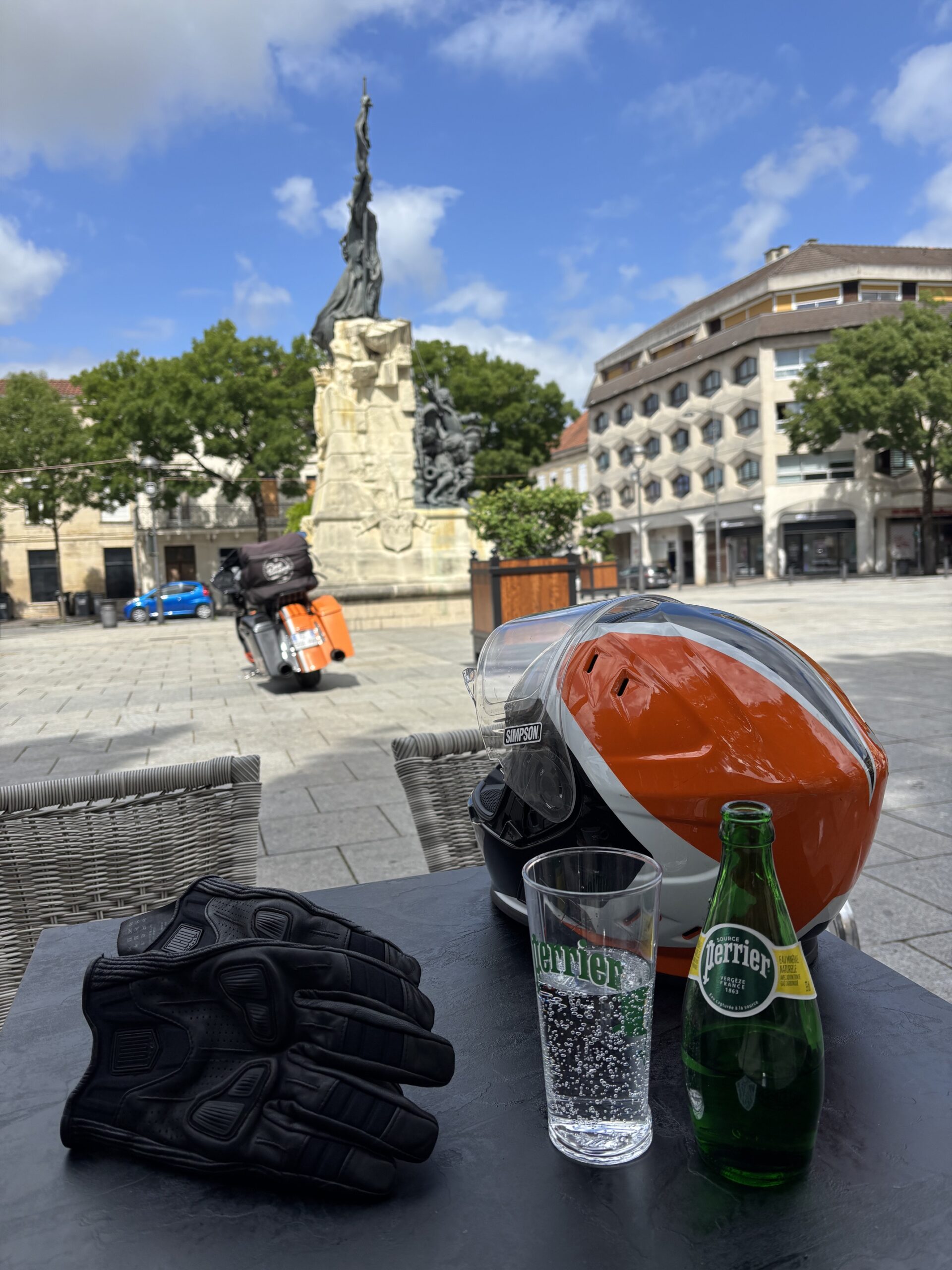
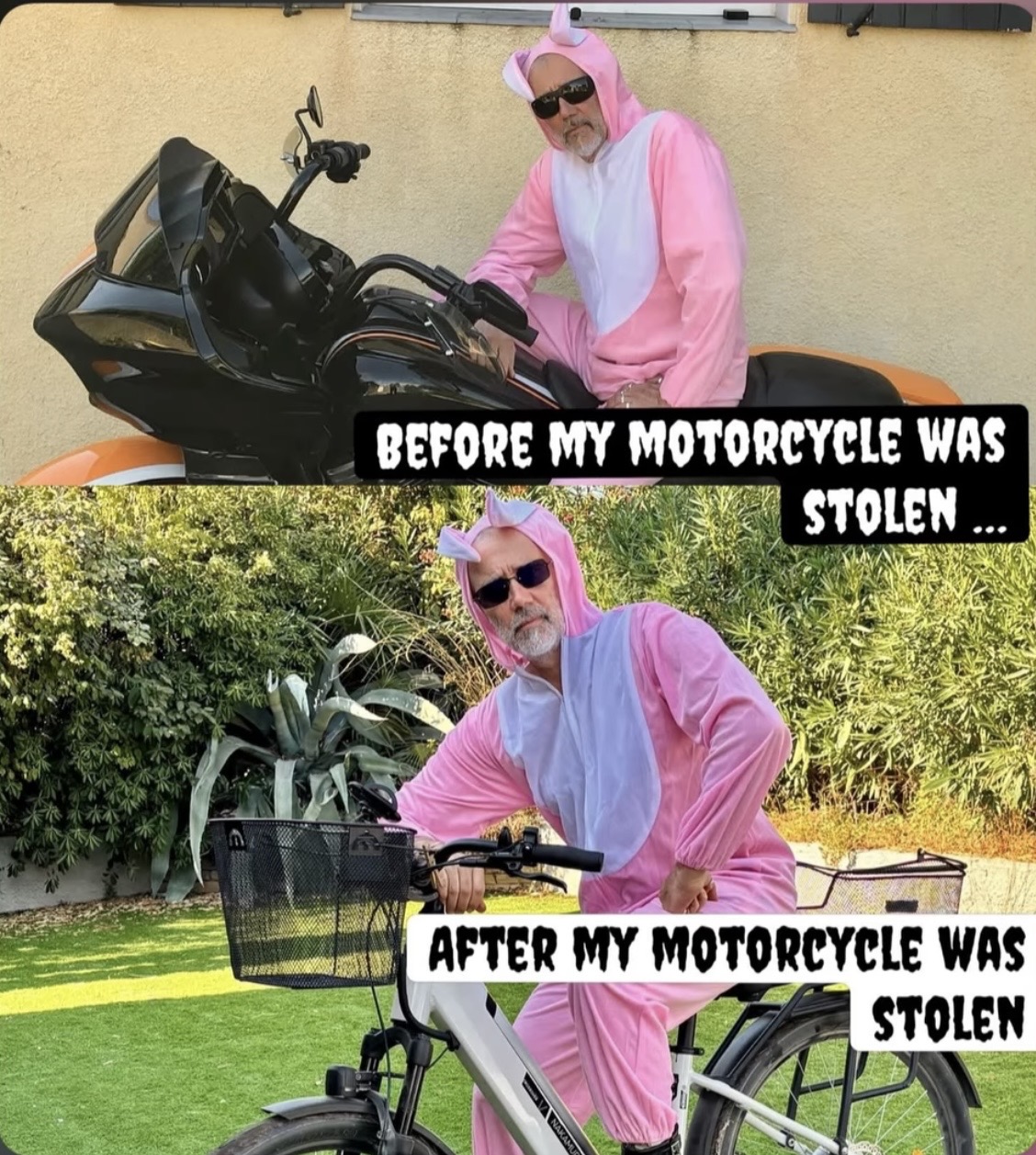
What I didn’t know then was that before long (in July), my beloved Road Glide was going to be stolen…
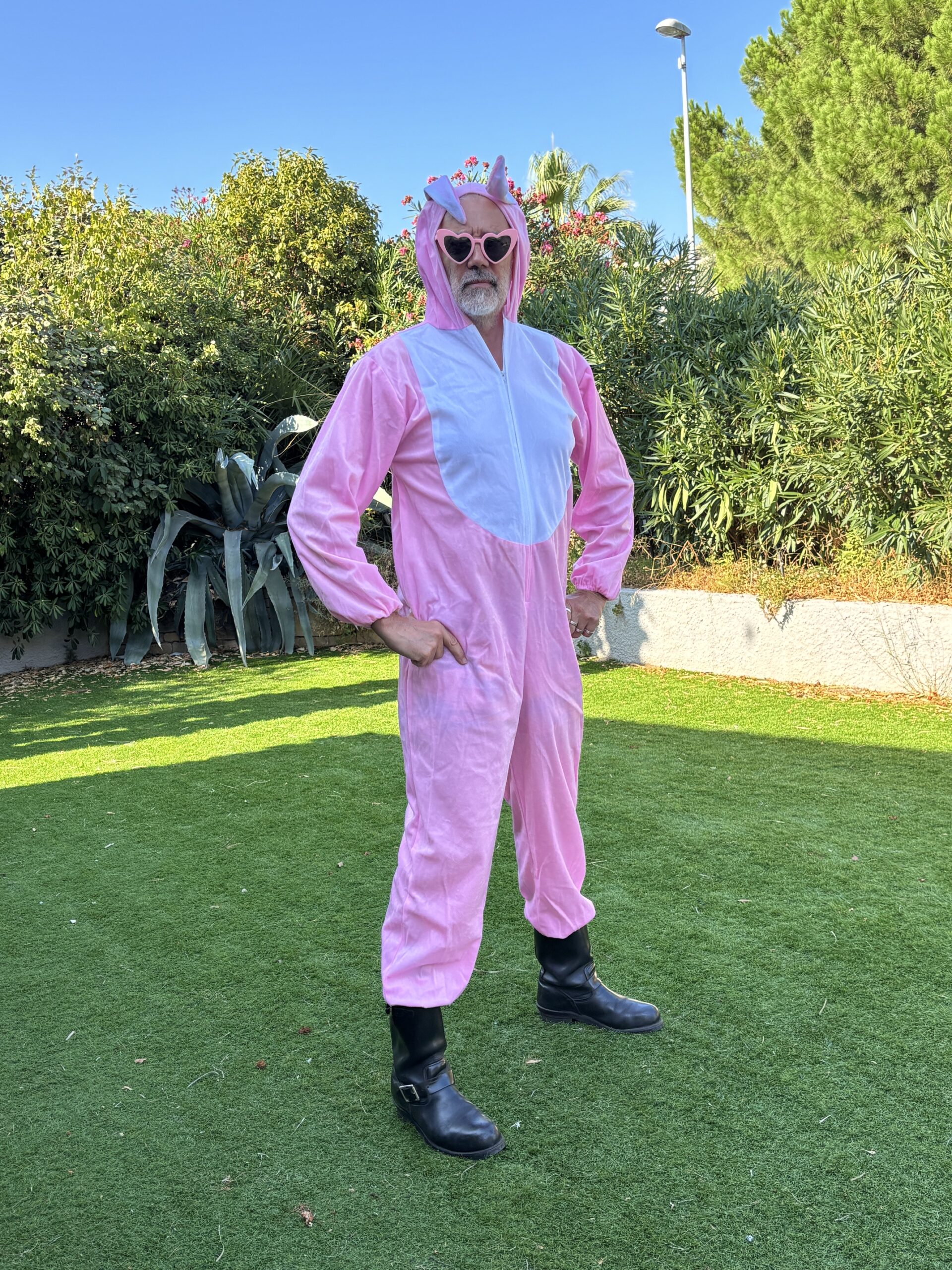
Fortunately, I’m keeping my spirits up thanks to my pink Batman costume (of course it’s a Batman costume—it’s from a little-known episode in the life of Bruce Wayne).
As I write this post, I know I’ll never get my motorcycle back, and I don’t know when I’ll be back on the road on two wheels (for now, I’m trying to get reimbursed by my insurance company, and it’s a long, tearful ordeal…).
See ya soon on the road, who knows?????
Hervé, your french biker friend.



More Stories
Triumph Motorcycles has announced a comprehensively updated TF 250-X for 2027
Flash sale on Racer waterproof gloves
Indian Motorcycle Owner Sets Four World Records Aboard 2025 Indian Pursuit, Rides 201,901 Miles To Raise Money For Myotonic Dystrophy Foundation