
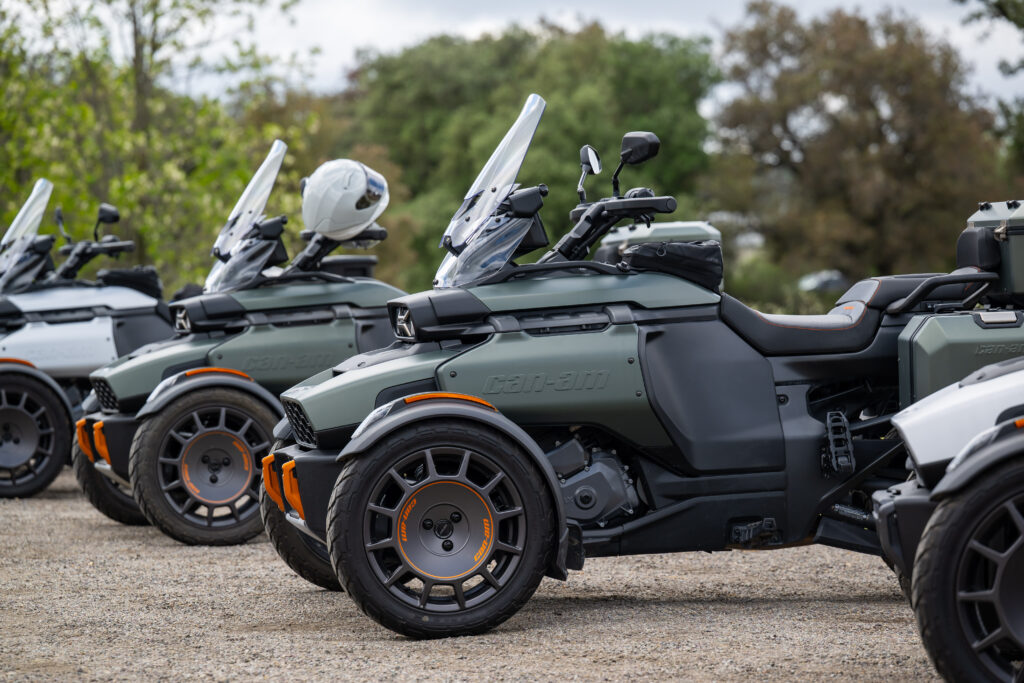
Story by Jan Schmitt, Photos compliments of BRP/Align Media.
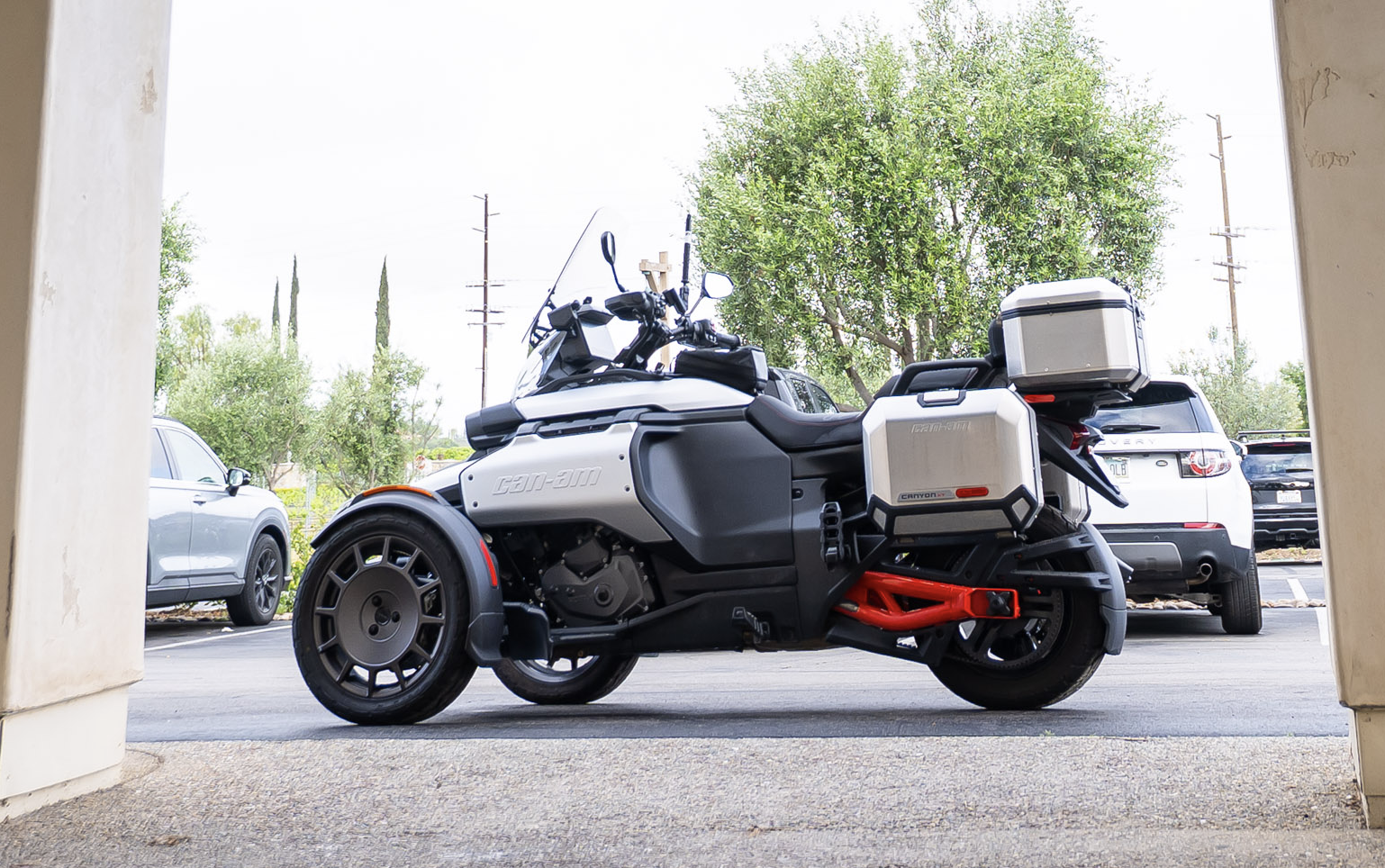
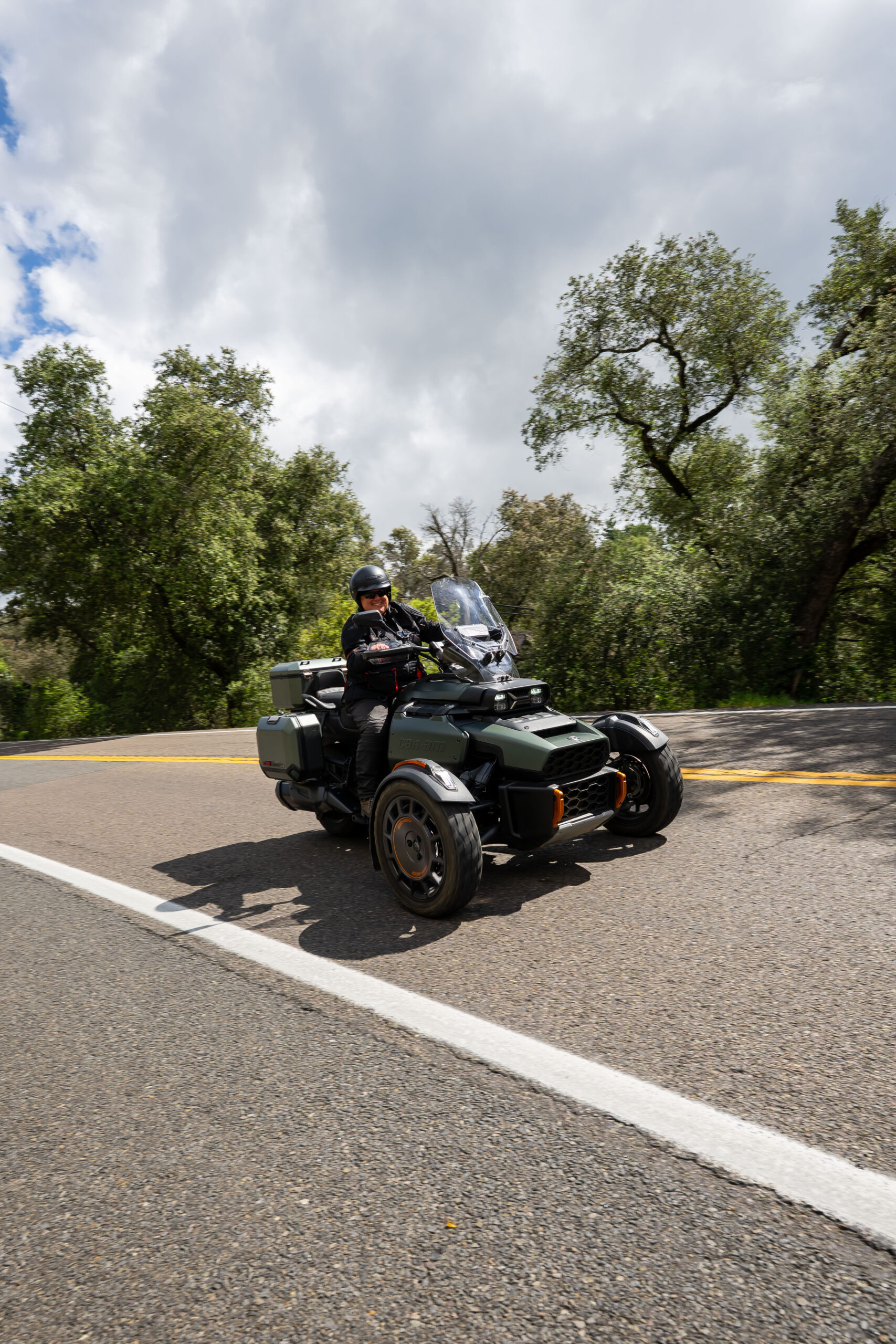
Feature Image: Can-Am’s new Canyon model features a liquid-cooled,
inline 3-cylinder Rotax 1330 ACE engine with 115HP and electronic fuel injection.
The opportunity came unexpectedly: did I want to fly to California and test ride BRP’s
new Can-Am model with a select group of women riders? Most people would jump at
that offer but I enter some situations with slight reserve. Those closest to me call it
skepticism but, as a native of Missouri, I like to blame it on the influence of the Show Me
State, the need for tangible proof.
So as soon as I accepted the opportunity, I started my research in a show-me frame of
mind. I was about to have an incredible experience evaluating the newly released 2026
Can-Am 3-wheel Canyon model in a fantastic setting. As a longtime rider on two
wheels, I had moments of doubt on whether I could operate a 3-wheeled vehicle, and/or
if it could shift my perspective or tug my attention with true, gripping interest. To tamp
down the uncertainty, I snuck in a local test ride of a Can-Am Spyder for self-orientation
to three wheels before the ultimate experience of a 150-mile day on the newest Canyon
model. Mere moments into the pre-test ride, it was clear: I was heading to California for
the test ride event. The Spyder provided a gateway view on what was to come on the
Canyon and my interest piqued.
After experiencing a good day aboard the Canyon, through an intriguing and gorgeous
route, I am overjoyed to report my attention and interest was immediately captured! To
boot, a new level of mindfulness was achieved which I will touch upon later.
My goal here is to share what I learned from my brief, yet highly impactful day on the
Can-Am 2026 Canyon. Not only did I learn specifics about 3-wheel riding, but it’s also
clear that the Can-Am product line offers options for anyone waiting to add a spark of
fun, utility, and enlightenment to their riding life. Hopefully by end, this review will
present new insights and provoke thoughts for new riders looking for a path to entry or
existing riders of two or three wheels looking for new adventures.
A brief segue worth sharing: late last year I decided to trade in my 2023 Harley-
Davidson Road Glide to lessen the weight and fuss around maneuvers on uneven
surfaces. I was not ready to give up certain “likes” of V-twin engine rumble and feel, so I
purchased my all-time heartthrob bike — a 1690cc 2012 Harley Davidson Deluxe which
falls into the cruiser category. I also have a 2006 1200cc Sportster. Both are older bikes
which can introduce nuances; no matter, they each scratch a very specific itch.
To my surprise, it wasn’t long after parting with my Road Glide that I became hyper-
focused on what the next chapter in my motorsports book was going to look like. I share
this because my highlights will lean towards the differences I noticed coming from 2-
wheel, manual operation riding. Anyway, the rabbit holes were lengthy around future
riding and just not fun. That’s when perfect timing intervenes. Iron Trader News (ITN),
Can-Am, and BRP entered stage right to change my perspective in one swift
brushstroke via this California-curated opportunity.
In short, the Can-Am Canyon experience showed me that it is possible to have
precision and functionality on a solidly engineered 3-wheeled platform. It is fully capable
of scratching the itch of several types of riding, touring included.
Yes, I recognize that three wheelers present a different package from two wheels. The
Canyon still brazenly and unapologetically offers up the following:
• a huge punch of excitement with a nice dose of adrenaline
• tremendous feel of control and movement in space
• power at the touch
• tone that satisfies from the get-go
• muscle with cruising finesse
• good looks that will make a rider “look back”
• performance and features for precision paired with ease, comfort and safety
• and the biggest perk….countless future opportunities because of the obstacles it
resolves and the independence it serves up to people who want to enter this
level of riding!
It thrills me to declare that I am no longer looking at the close or the end of my own
motorcycle days. Instead, I see a much larger opening of choices and way more options
for many. If you like where this is going, keep reading: I have a lot more to say about the
Canyon.
Walk-Around Appeal & Fit
My initial thought: will a shift to 3-wheels be aesthetically attractive, and , like every
bike I’ve owned , will the fit require significant modifications? Here’s what I learned:
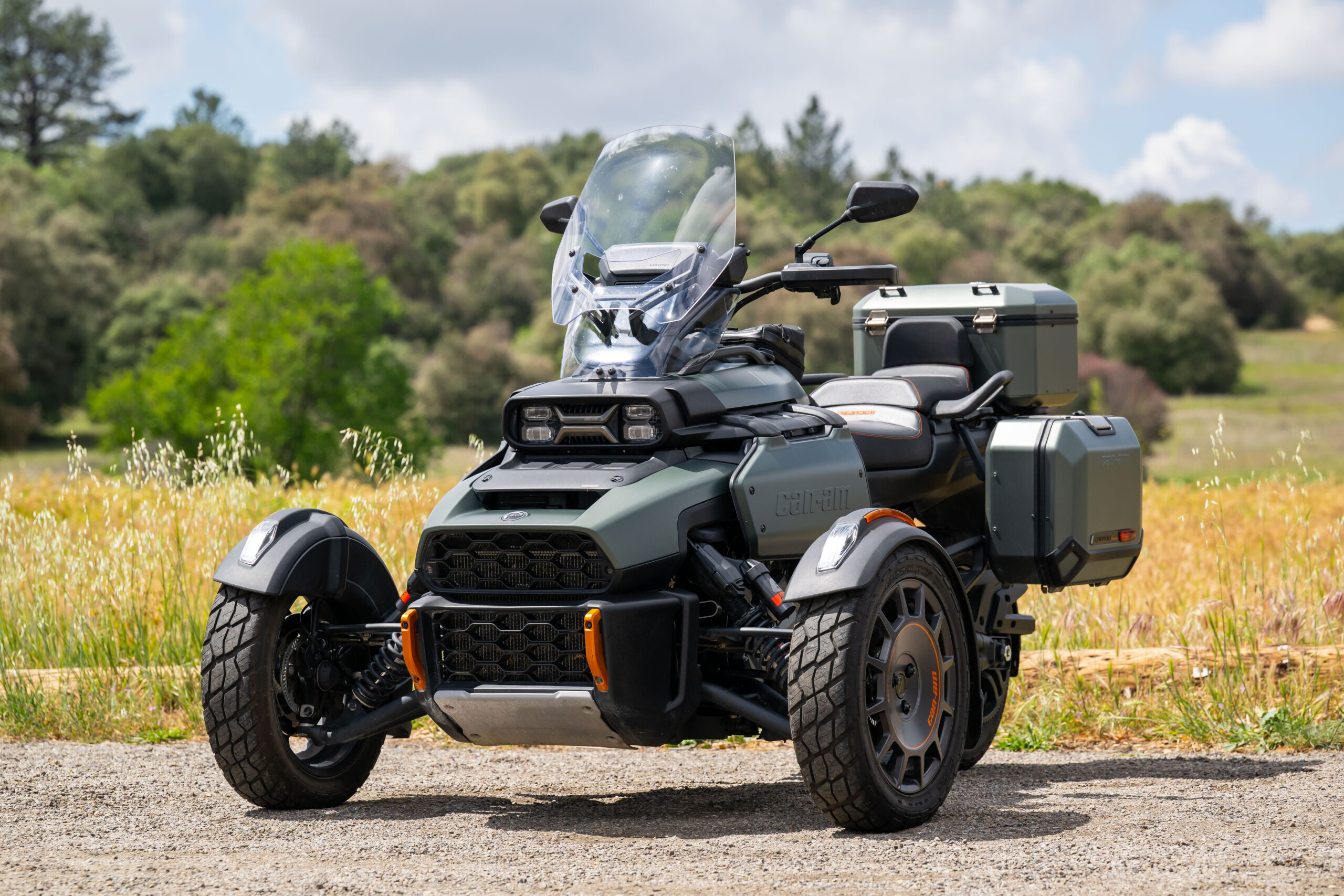
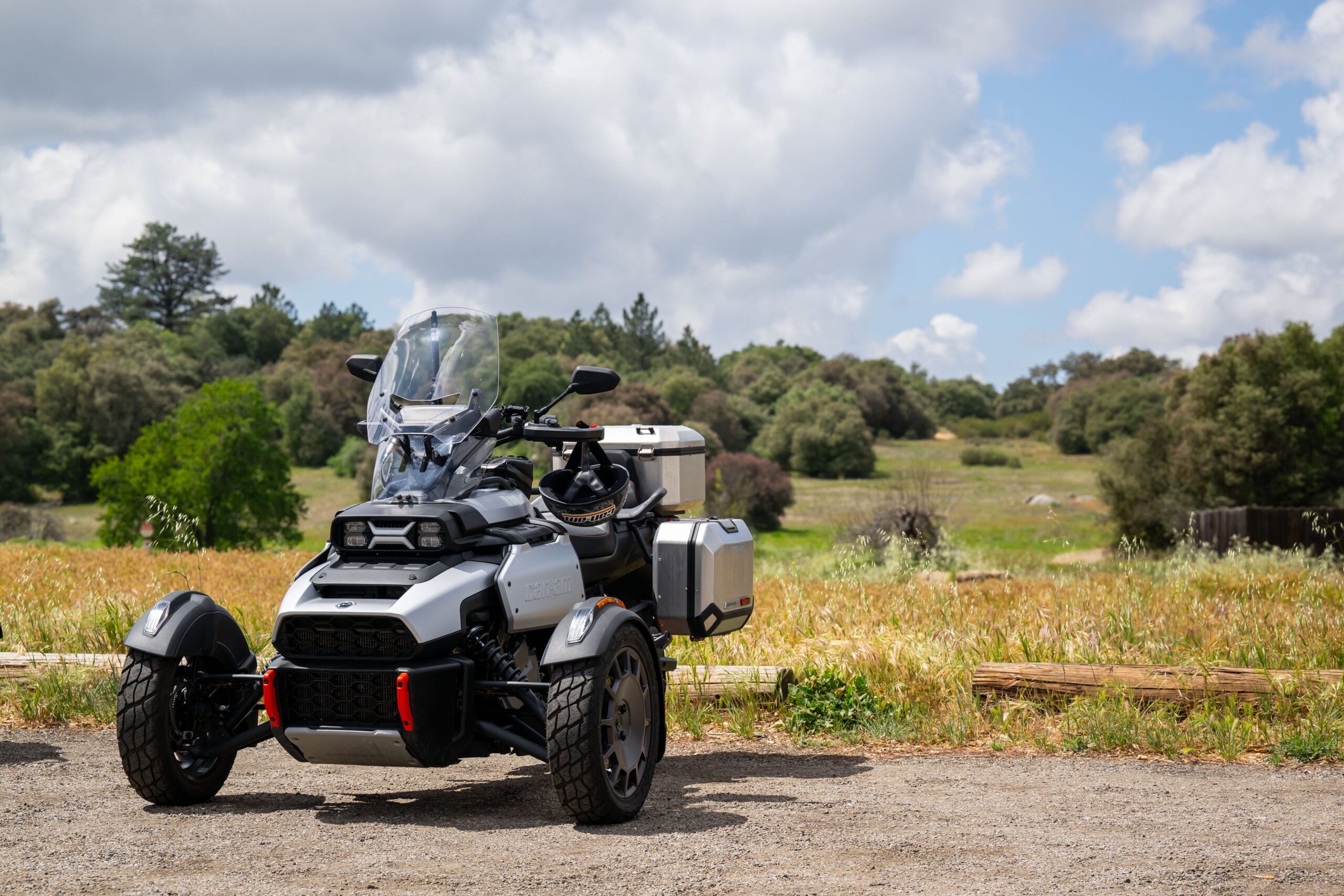
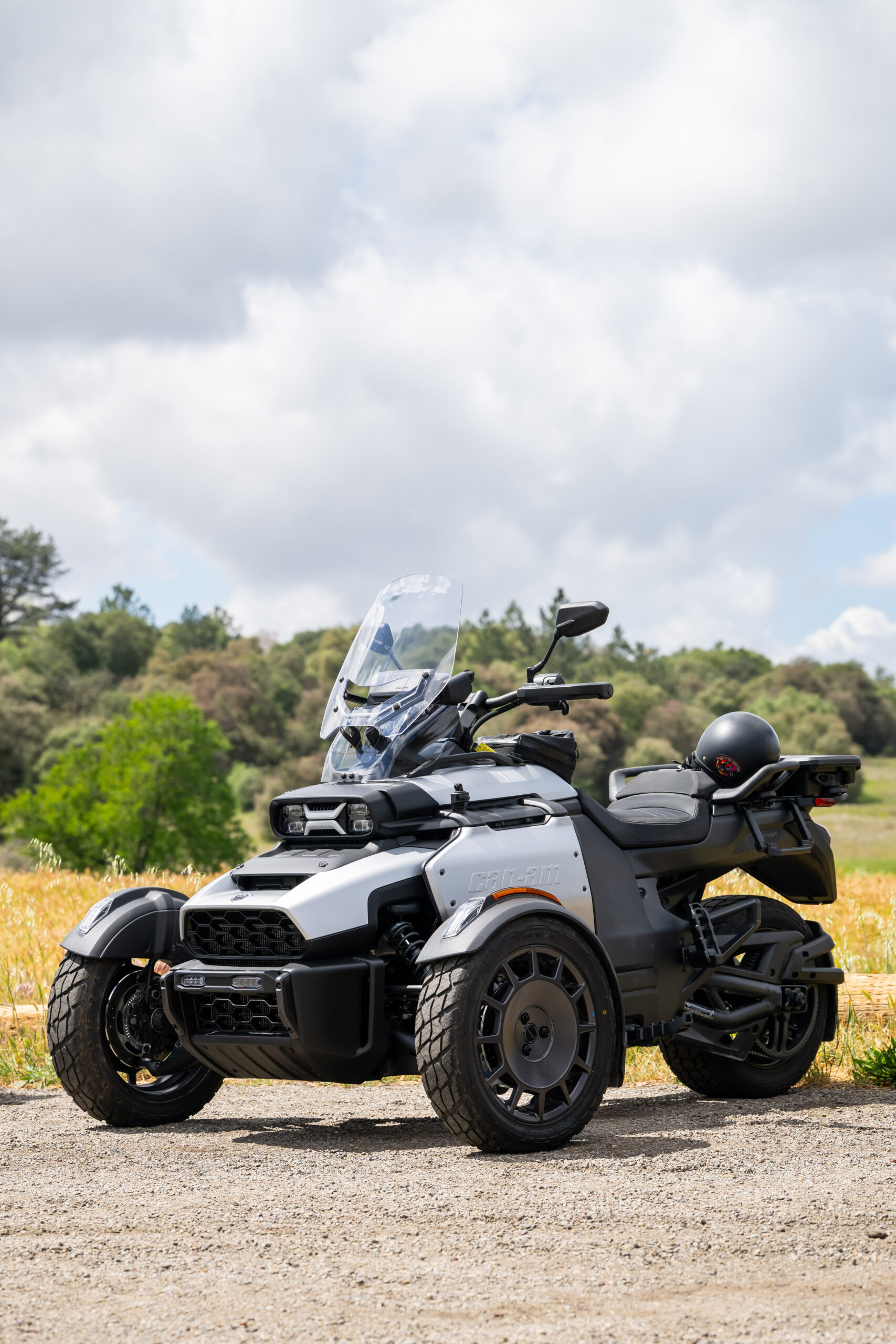
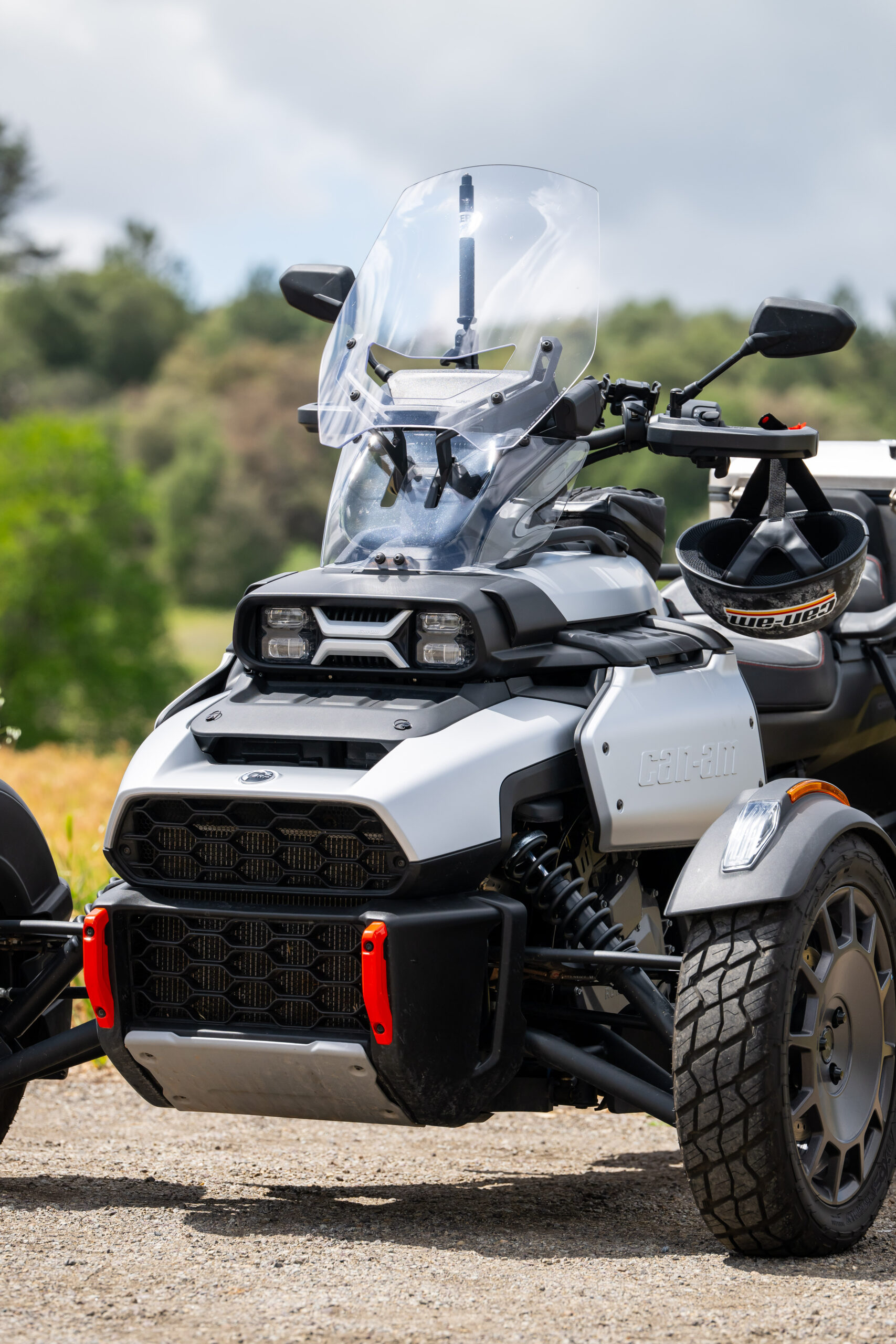
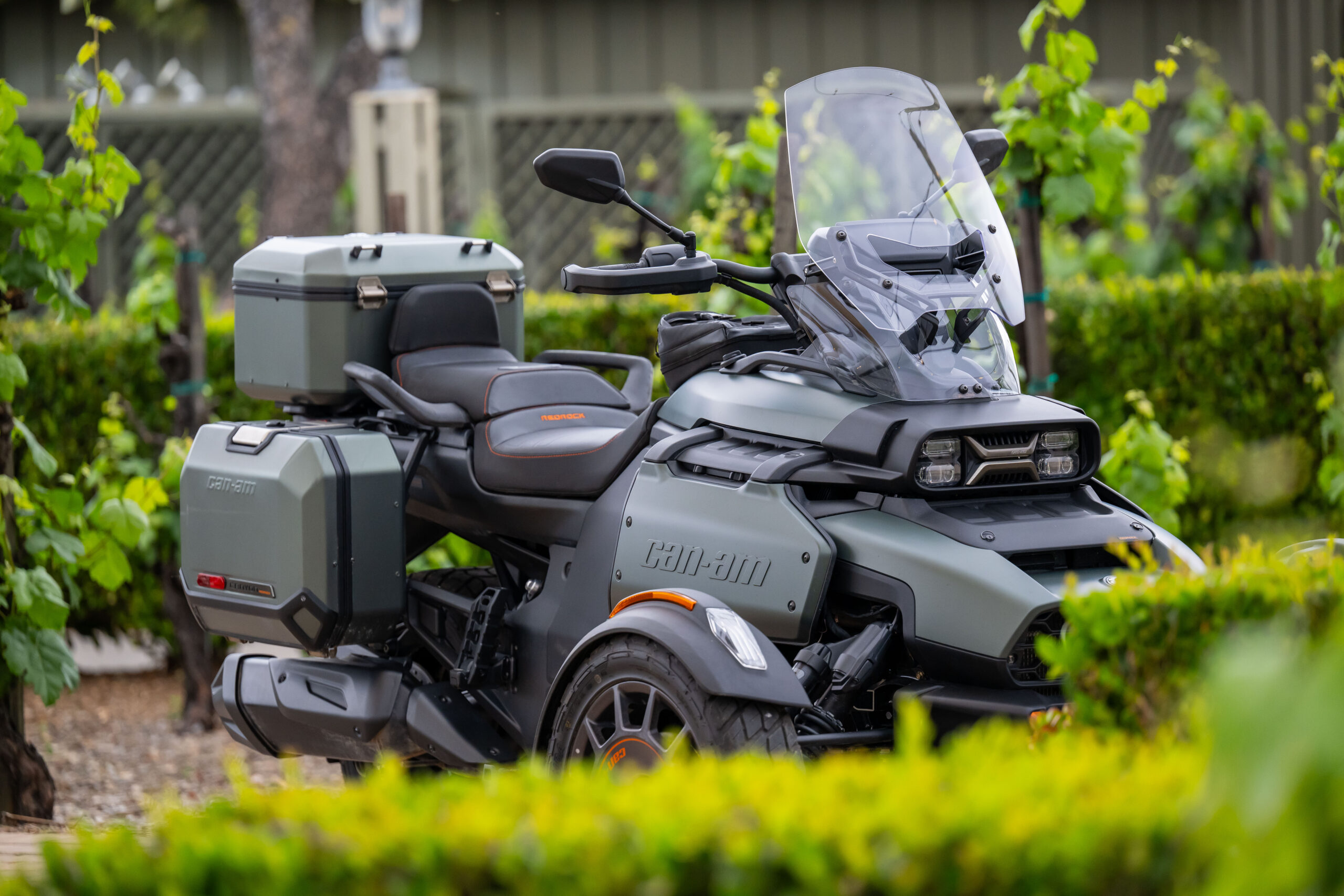
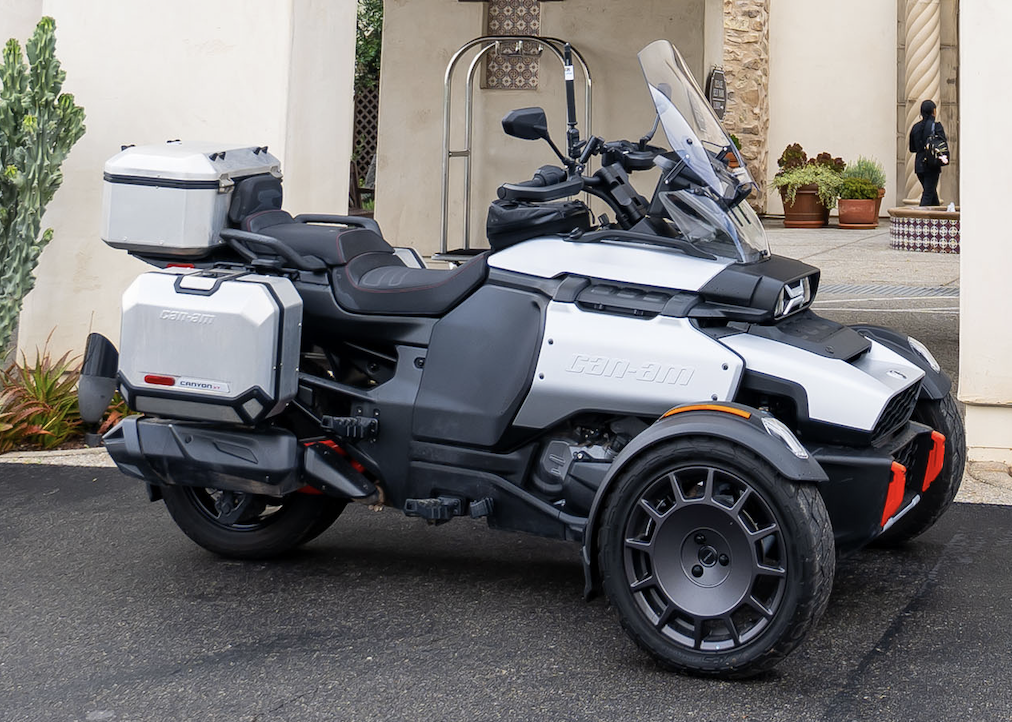
• At first glance, the bike was engaging from all angles; clean lines and easy to look at. Again and again. The subtle yet proud branding is well done.
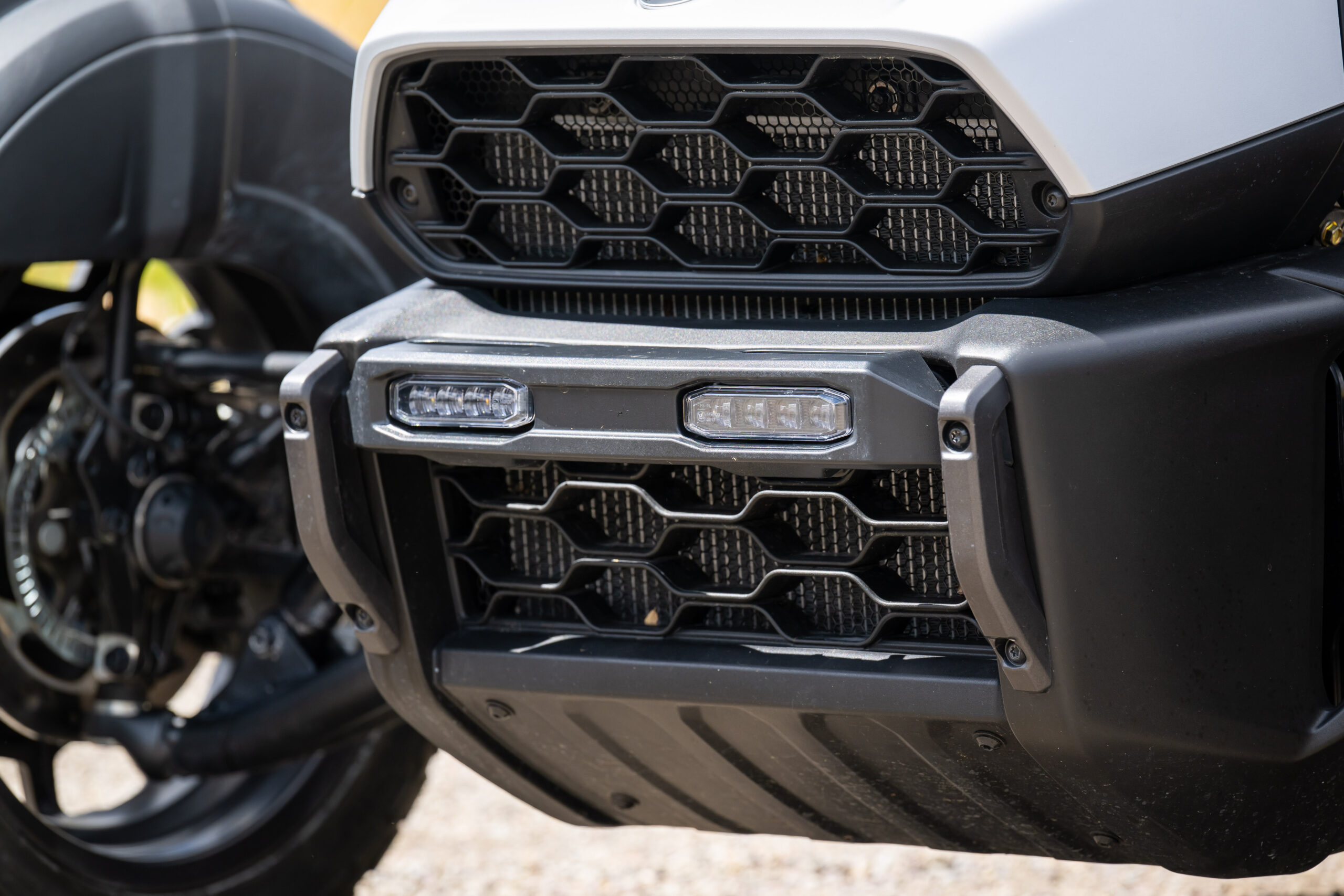
• A message of grit comes from the front grill design, and the under-engine guard
speaks to additional ruggedness and the off-road paths which are possible with
this model.
• The Canyon presents strong, durable, and solidly equipped from get-go.
• The stance is demanding yet serves up personal confidence to do the job well.
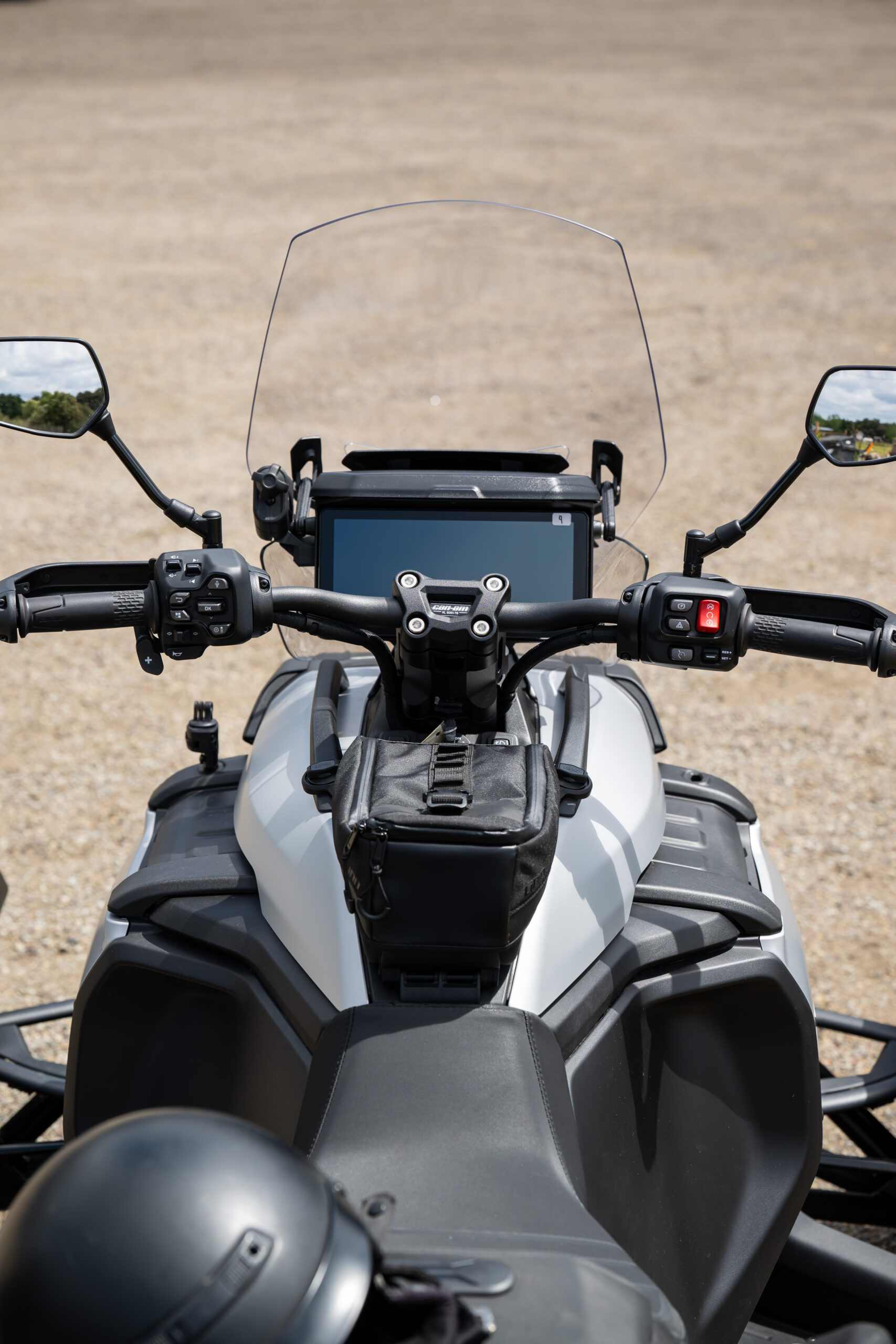
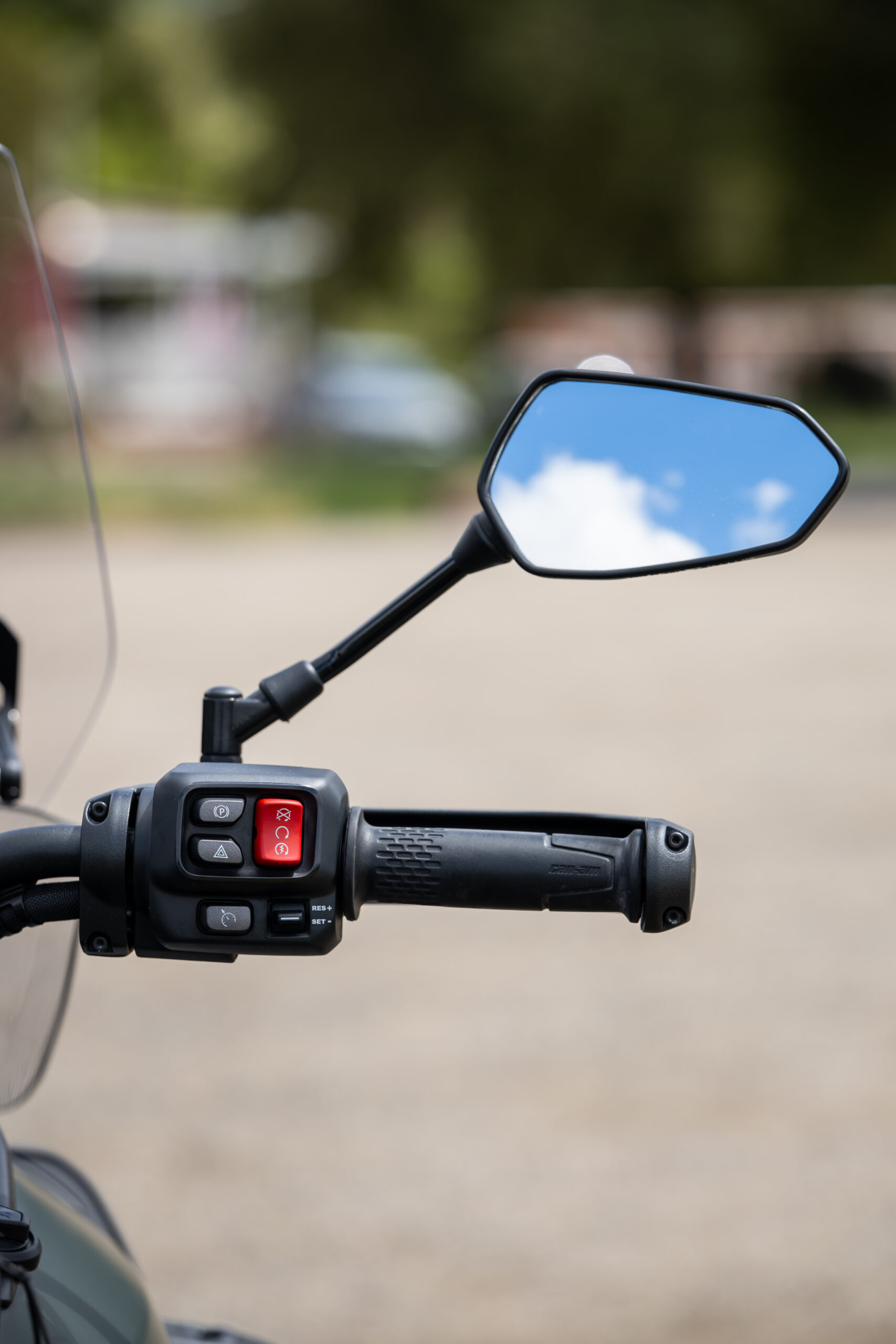
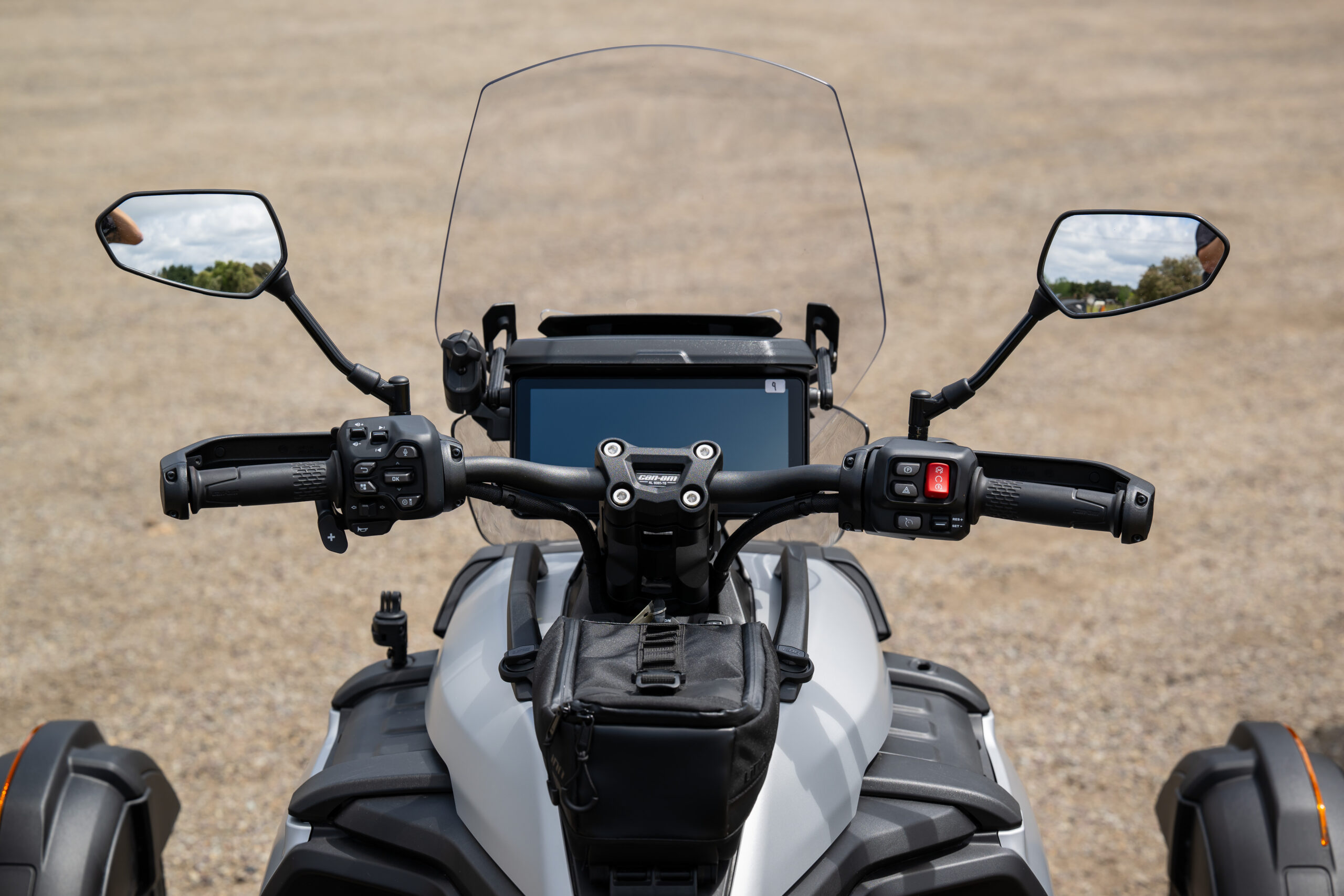
• The look of the handlebars, mirror positioning, controls, and adjustable
windshield suggests adventure riding and sets the tone for protection with
preparedness. That is important.
• The windshield is easily adjustable with a manual knob. I was able to adjust for
airflow on the fly. It took nothing to drop it down and the airflow was fantastic with
no buffeting. Kudos for the knob versus over-engineering that could add
unnecessary cost.
• Foot pegs were in the perfect location for me; yet, accessories and options do
exist with aftermarket products.
• The reach to controls was accessible at 5’2”. Zero critical parts to change out.
Everything in its place for comfort and control.
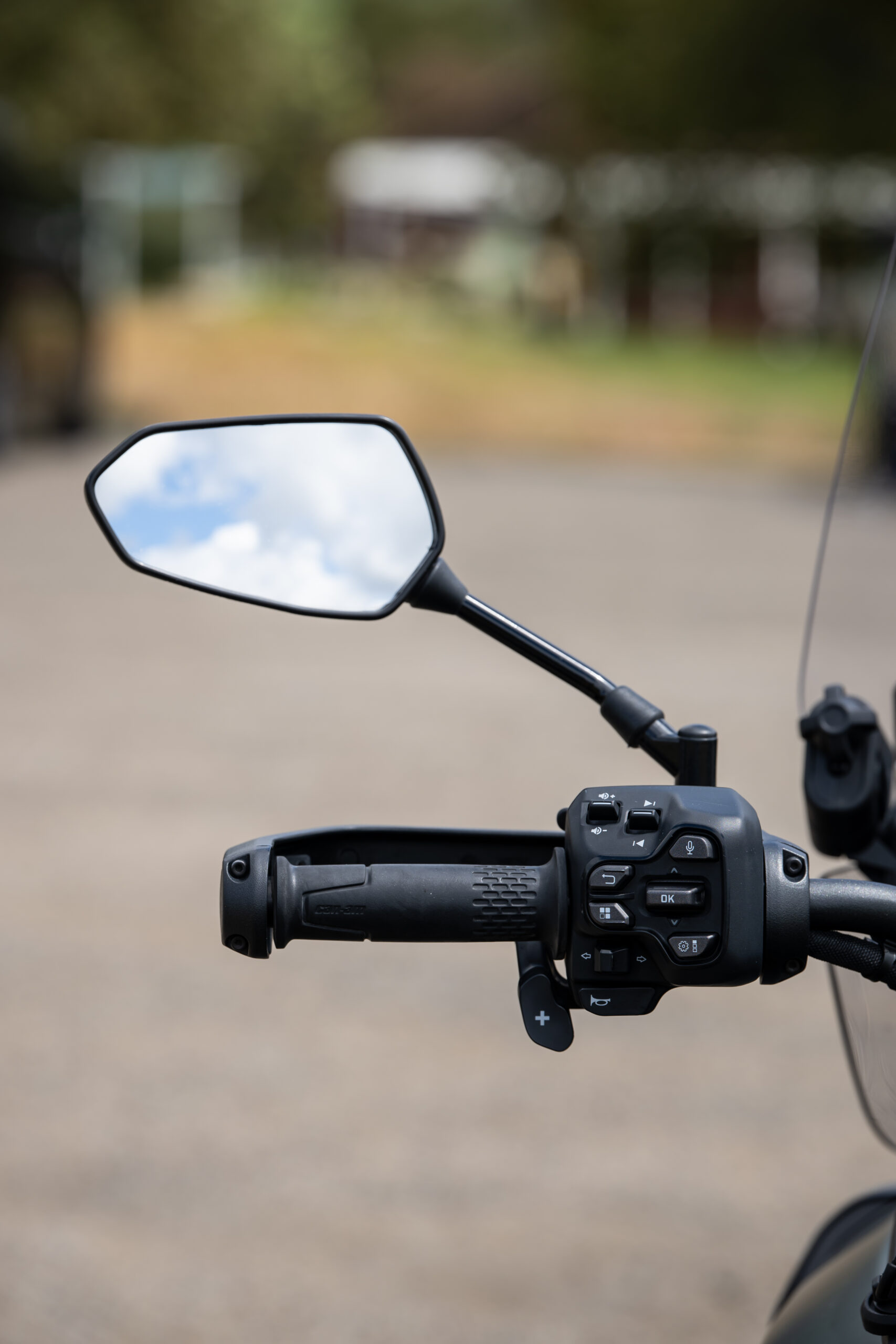
• One oddity, that being my consistent miss of finding the turn signal. I believe it
was because the cluster on that side was a little tighter than my norm, or I just
didn’t have the time to build the right muscle memory.
• Can-Am/BRP has taken design seriously by making this a ridable and an
ergonomically 3-wheeler that will work for many inseams and statures.
Now for Some Seat Time
The Canyon is a 1,330cc engine, semi-automatic transmission, with no manual clutch or
shifter, quieter exhaust, and three wheels. Considering how different those things are
from my decades of riding Indians and Harley, my initial thought: will a transition to a
three-wheeler truly capture my interest for any length of time? I was unsure about the
aspects of being in motion, too — like technical turns or wind management at higher
speeds. Again, I entered a little jaded, but here’s how it all shook out:
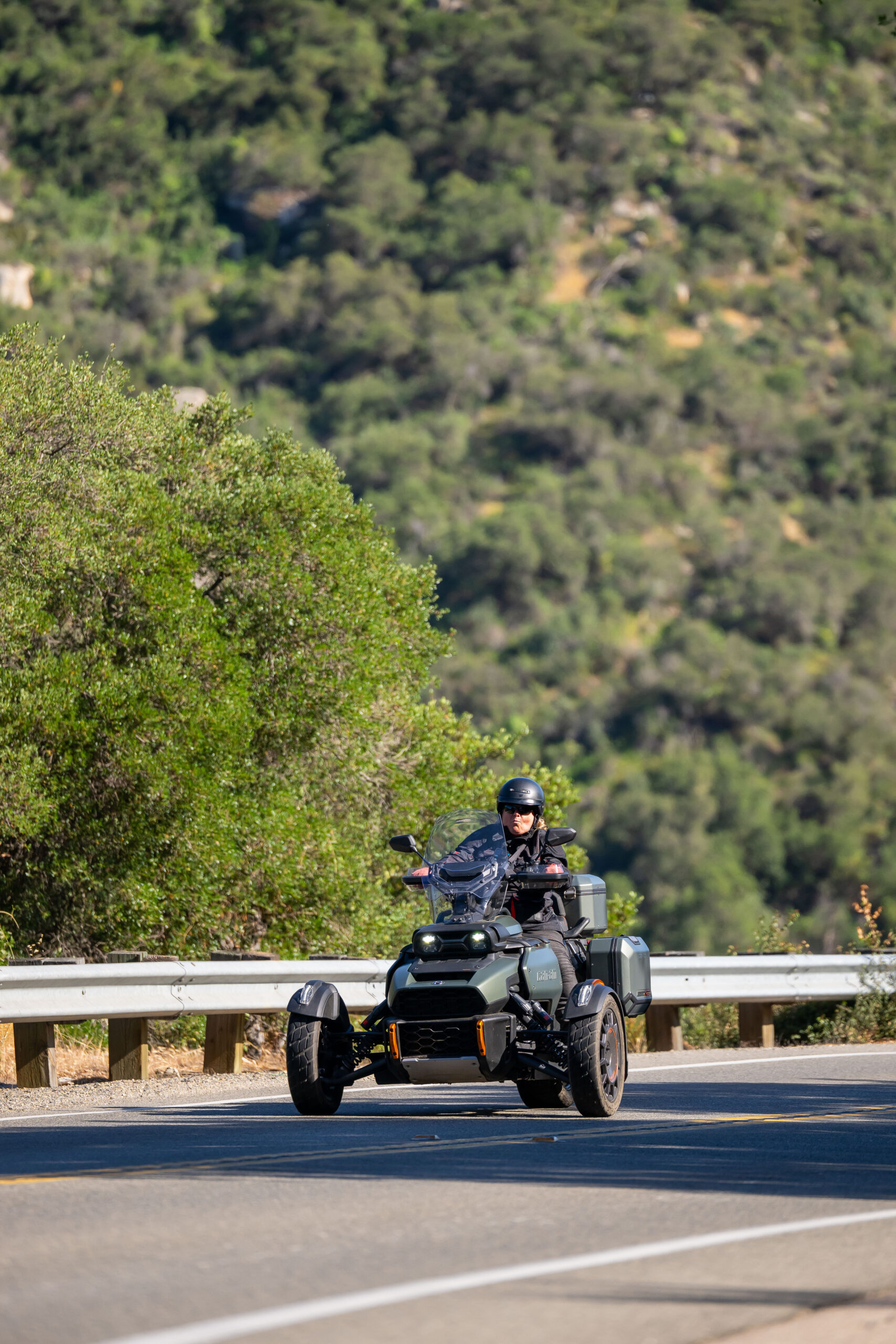
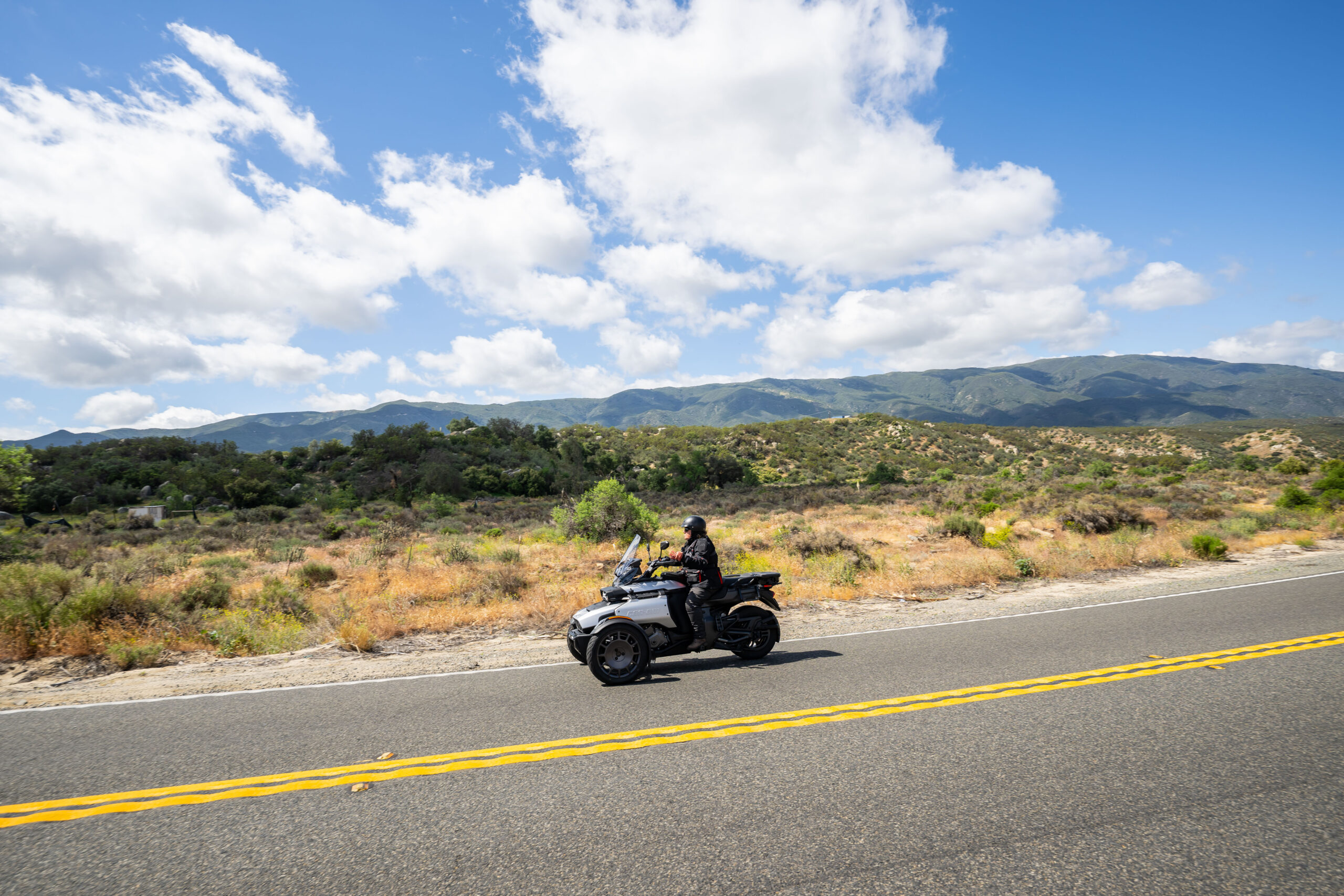
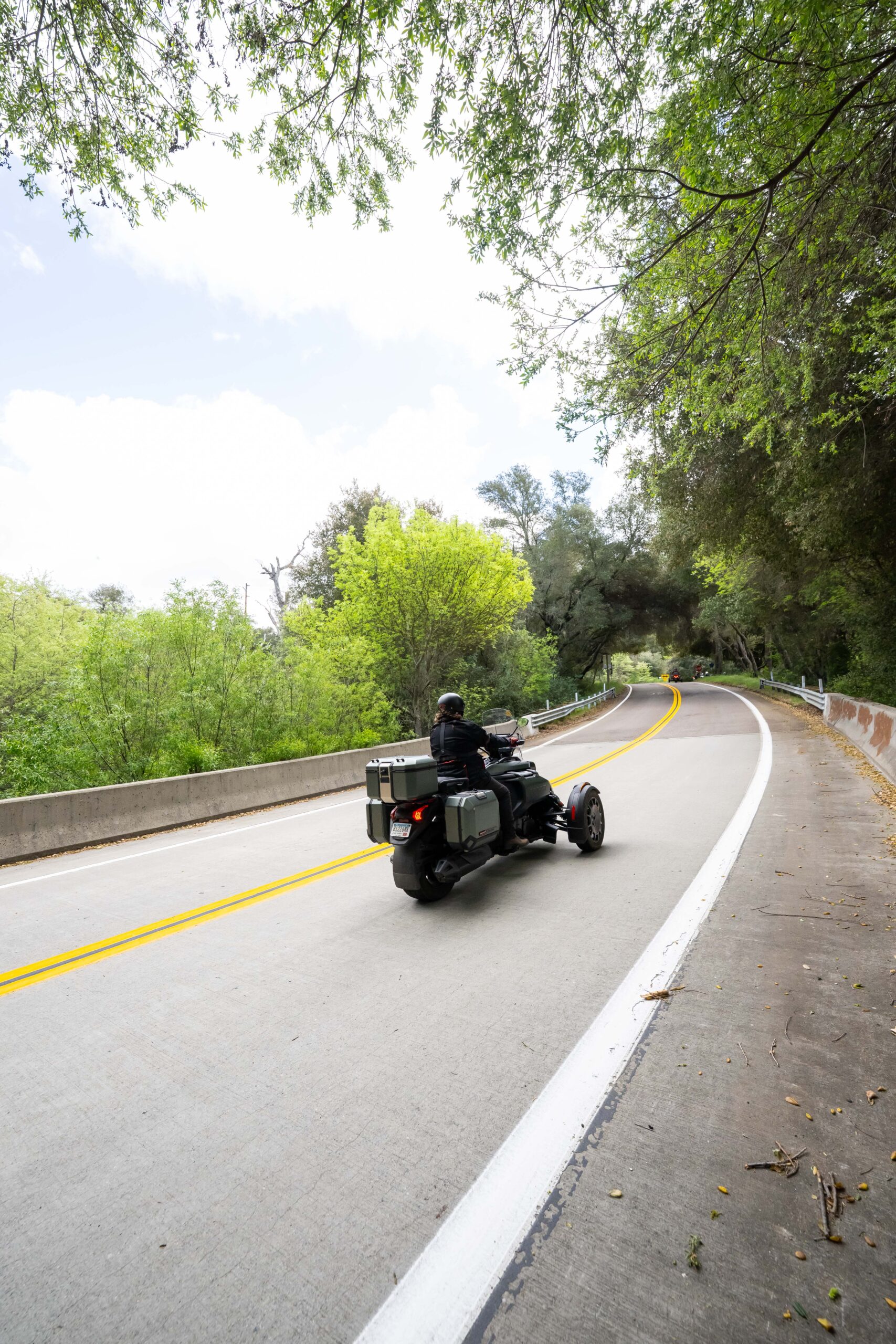
• Cruising speeds were easy, fun, and stable. A few times the route allowed for
space to open it up to 70+mph for brief moments. Once again, no buffeting.
There were no issues with the Canyon delivery speed, comfort, and control
across the power band.
• Grip of the driver’s seat felt comfortable and kept me where I needed to be at any
given time or motion. I also had the opportunity to ride as a passenger and found
the passenger handles made for perfect positioning and I felt in control of my
place on the bike.
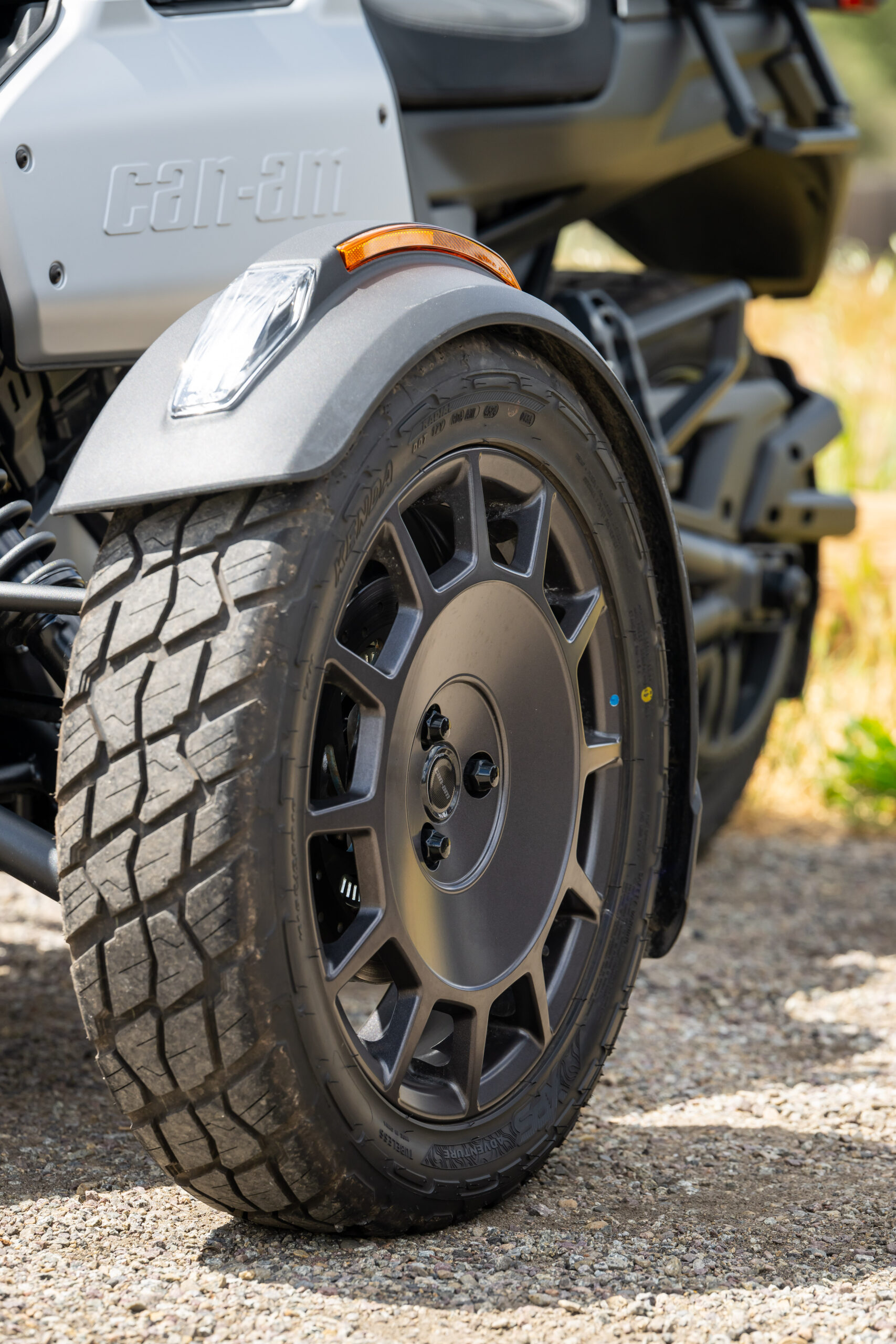
• Cornering presented no issues due to the Canyon’s suspension and traction-
related engineering. There was a turn I misjudged and went into a bit too fast, but
I recalled the orientation session on stabilization features. I steered with the trust
of it to do what it was built to do. It hugged, gripped, and traveled me through. I
can see that once a person acquires additional skills using the Canyon’s full
capabilities, it could take technical rides to a new level of experience as skills are
sharpened. I have seen several Can-Ams in the mountains and foothills of North
Carolina with one in particular taking a curve amongst a group of other bikers on
two wheels. This one caught my attention as they nailed the technical need of a
corner at what I thought was significant speed coming from the other direction —
no break from the group. After passing them, I shook my head in disbelief and
thought…”Wait, that was a Can-Am in that pack!” Now, I know the surprise was
simply my ignorance.
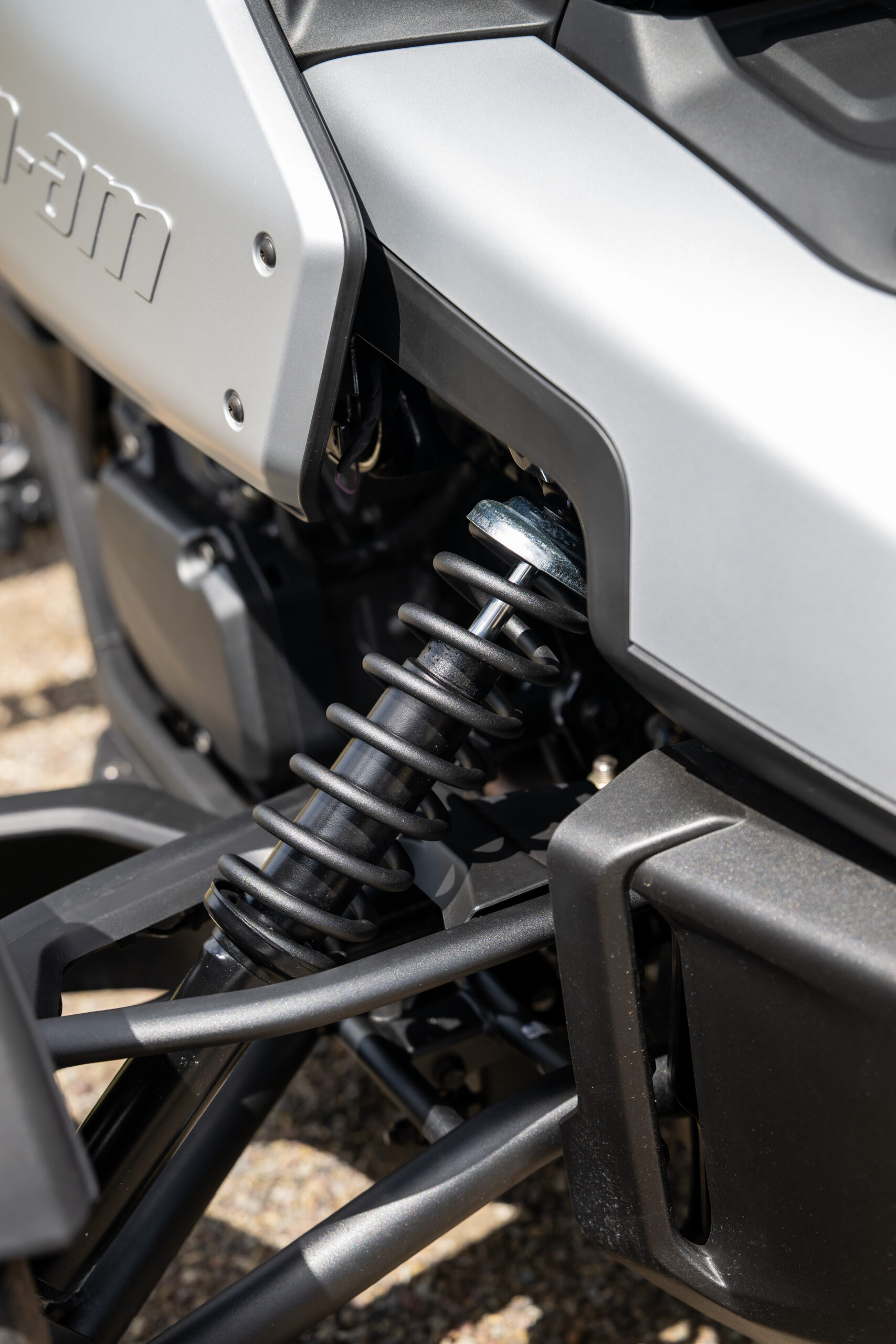
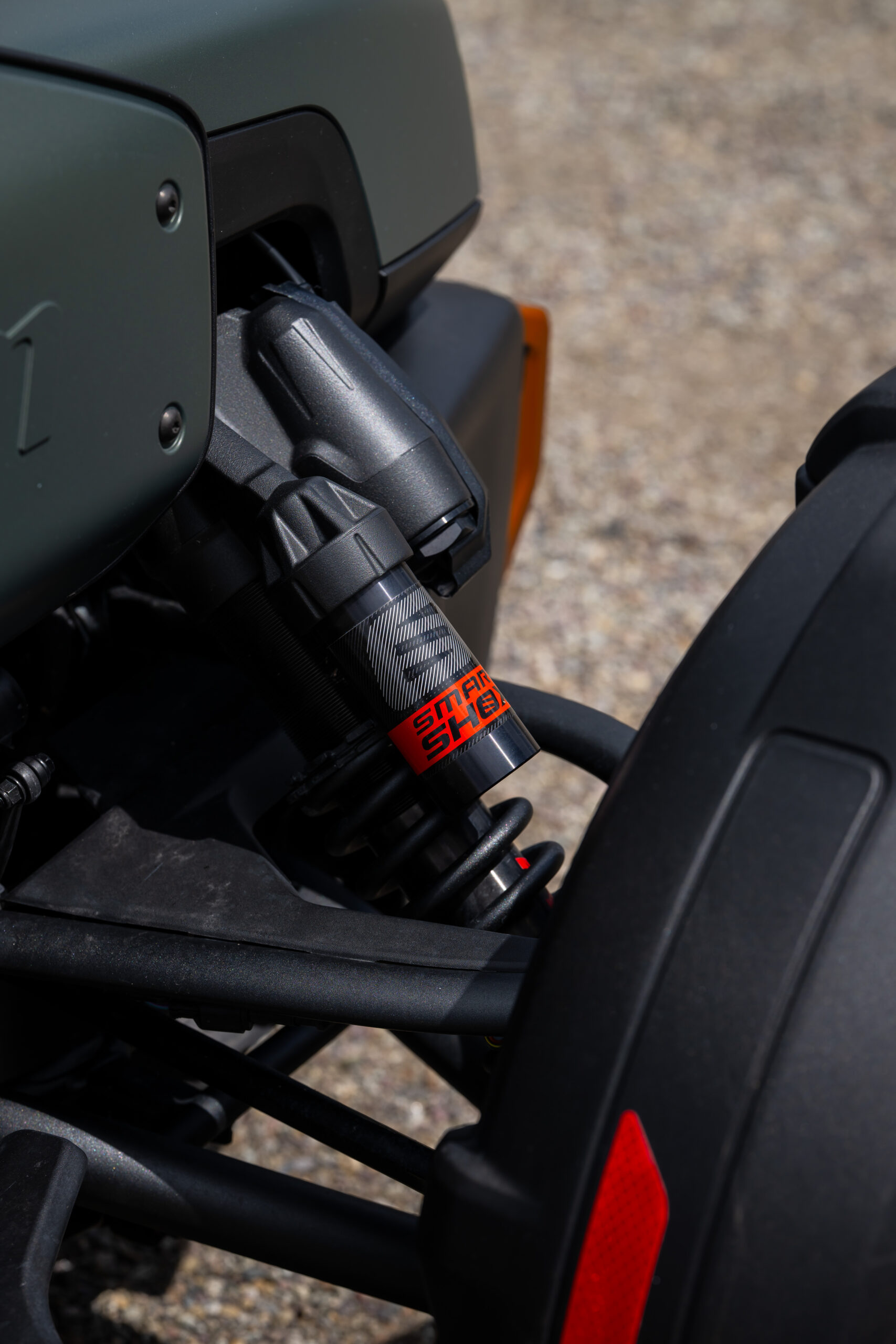
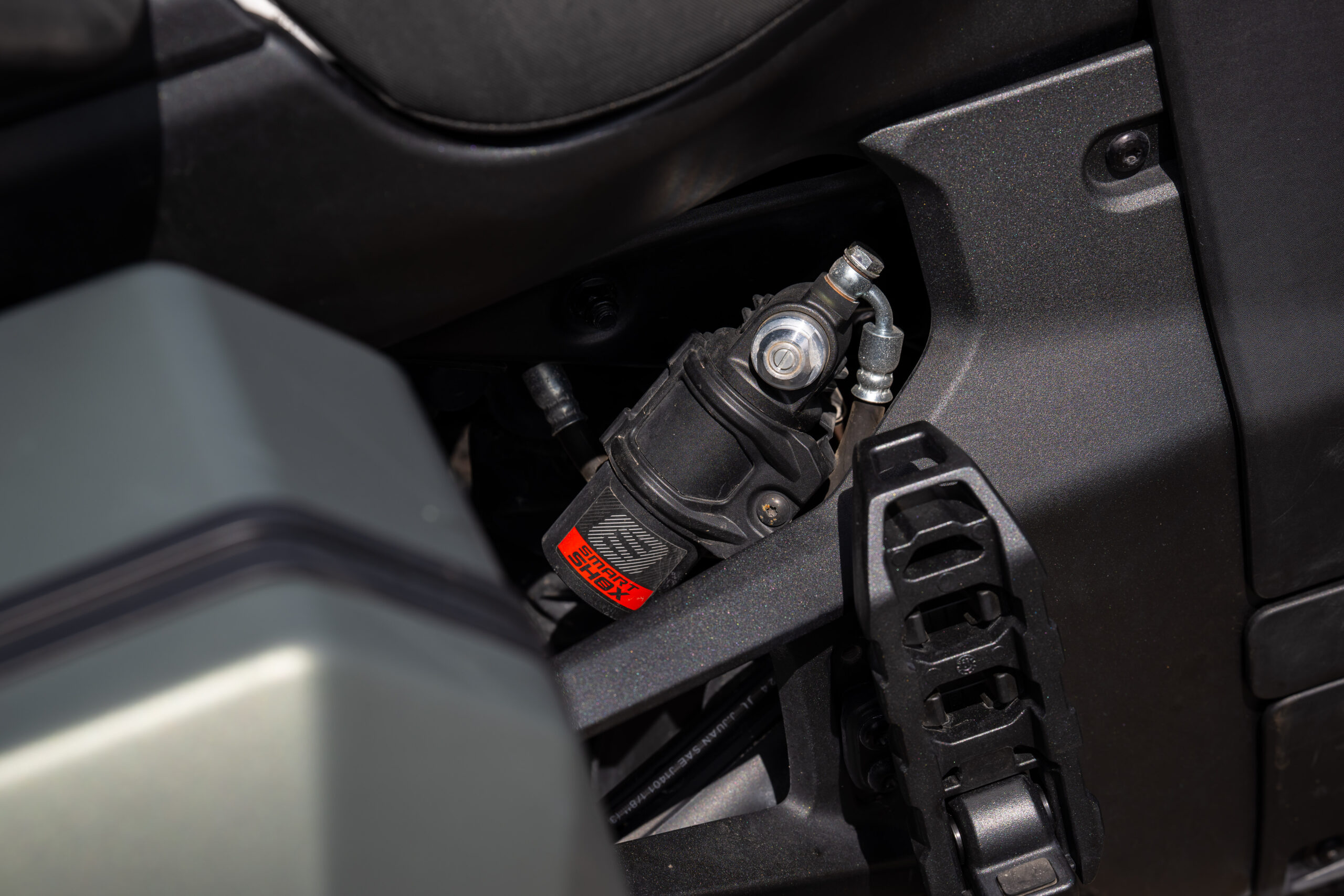
• Suspension options are different between the base Canyon, Canyon XT, the
Redrock, choices exist for self-leveling, SACHS Big Bore, and Smart-Shox for
top-of-the-line semi-active suspension between models.
• Shifting with a paddle (verses clutch/toe control) was easy, and the automatic
downshifting was quickly appreciated. I did not miss the hand-clutch/foot shifting-
action for manual gear-down required for my 2-wheel motorcycles. It worked so
well ultimately allowing attention to other details — like, taking in more of the ride
and beauty before me.
• Braking power with Brembo quality and performance is a one-foot motion to a
pedal on the right side with excellent response. in addition, the engine is
automatically geared down per the downshifting process. All a plus with varying
speeds in the hills and curves.
• Off-road surfaces like rough, extra bumpy, unpaved, routes or parking are easily
handled by Canyon’s architecture and vehicle stability system. This is probably
one of the most exiting features. This entry to off-road capabilities removes
limitations of a route and/or personal vulnerabilities which can be troublesome
when pitched a rider’s way unexpectedly. Adventure can literally be on demand
with Rally drive mode — in addition to ground clearance and underside
protection.
• So, the engineering and design for the Canyon fell on point with immediate
confidence in all areas — running with the Rotax engine, gearing down,
managing stability and traction, breaking, and pushing performance and
suspension.
Practicalities: Storage, Going the Distance, Cost of Ownership, Community, and Transition
All of these topics have been huge areas of negotiation and sometimes contention for
me with any bike/brand I have owned or considered owning. Questions surface often.
For example, can I do what is needed to tour, how will I carry luggage safely and/or will
the contents be accessible on-demand, will there be a network of quality support, how
will the community nurture the experience, and is the overall cost doable?
• My perception is that touring would be a breeze with comfort and safety on the
Can-Am models. There is a muscle motion in steering a Can-Am with two wheels
in the front that is certainly different from a standard two-wheel motorcycle;
however, I did not find it fatiguing or irritating. Instead, the difference added an
adrenaline rush because of the newness for me. I can see touring back on the
priority list with a Canyon because of its thoughtful design and ergonomic
features.
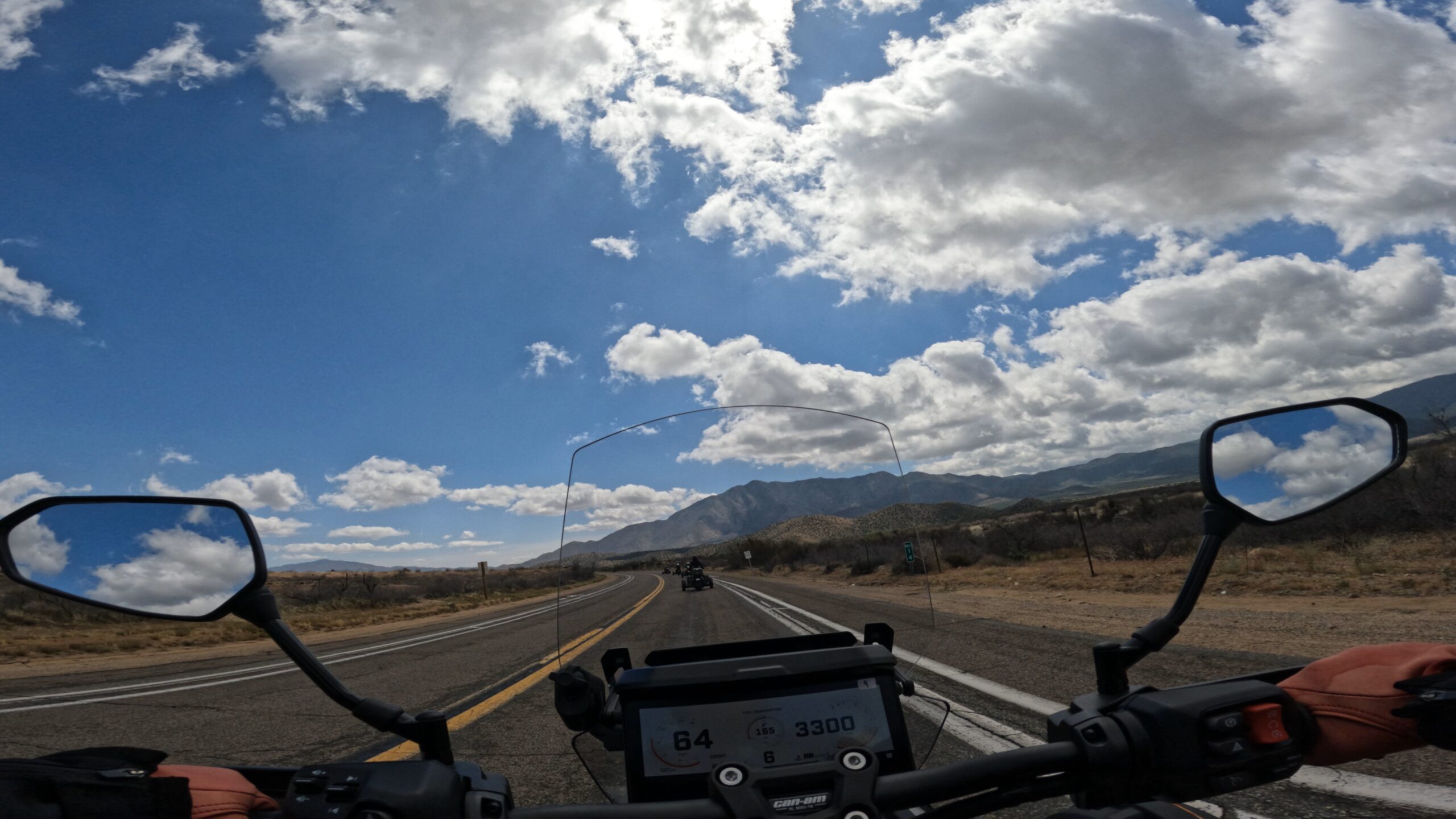
• With high-speed comfort, adjustable windshield, info center, integration with
phone/nav, good lighting, stability of the suspension and electronic control,
heated seats, heated grips for rider and passenger — this bike will allow for long-
range riding..
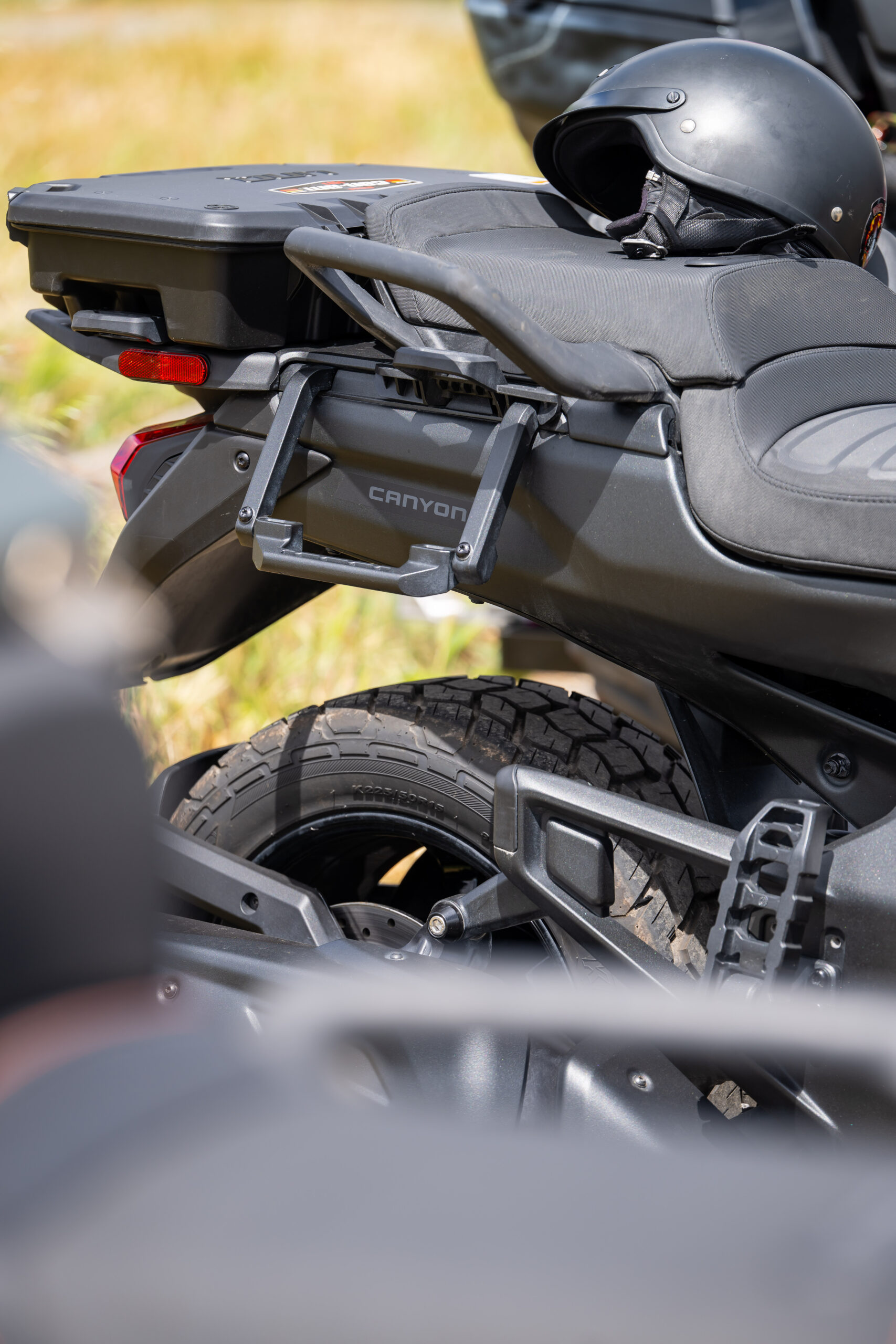
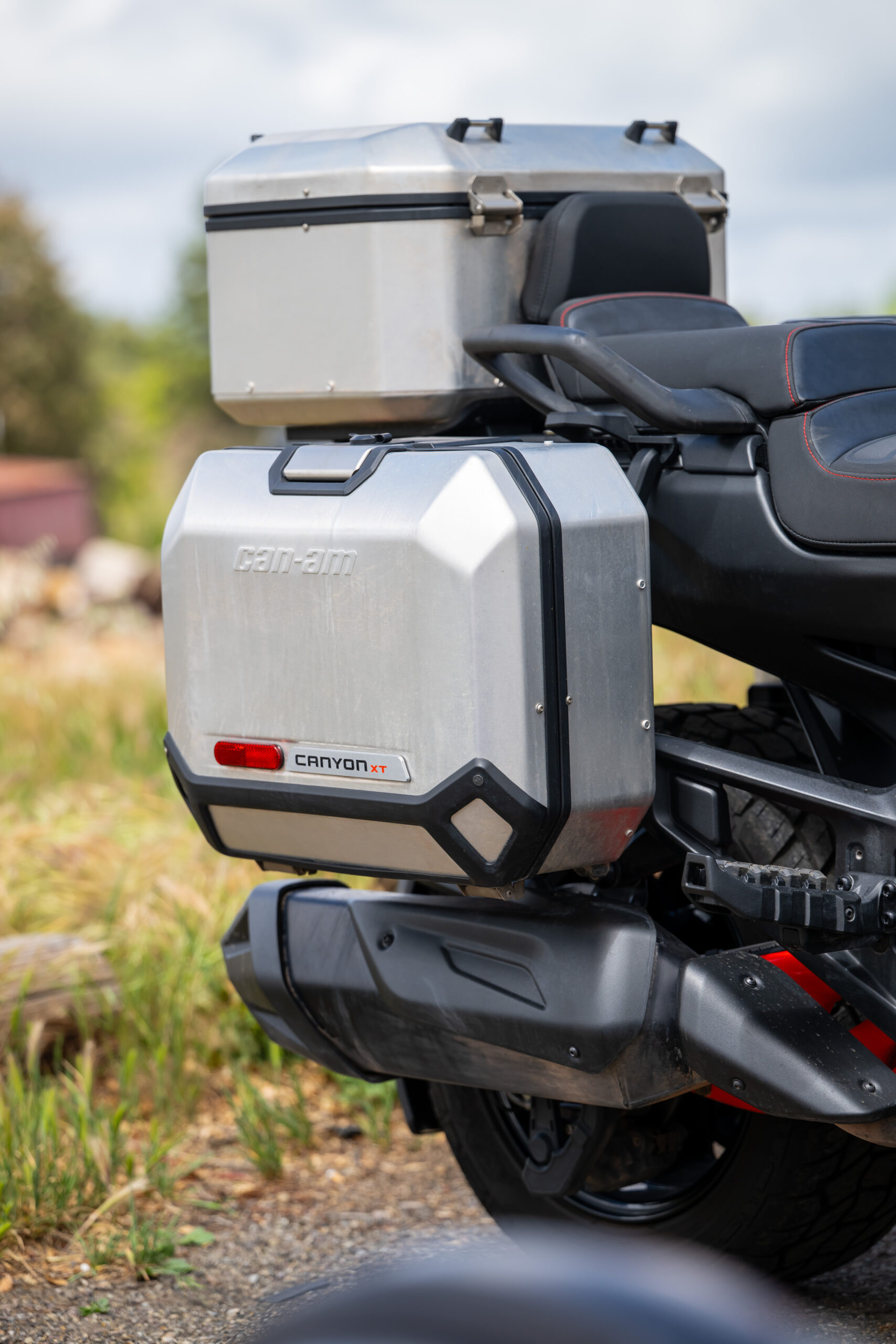
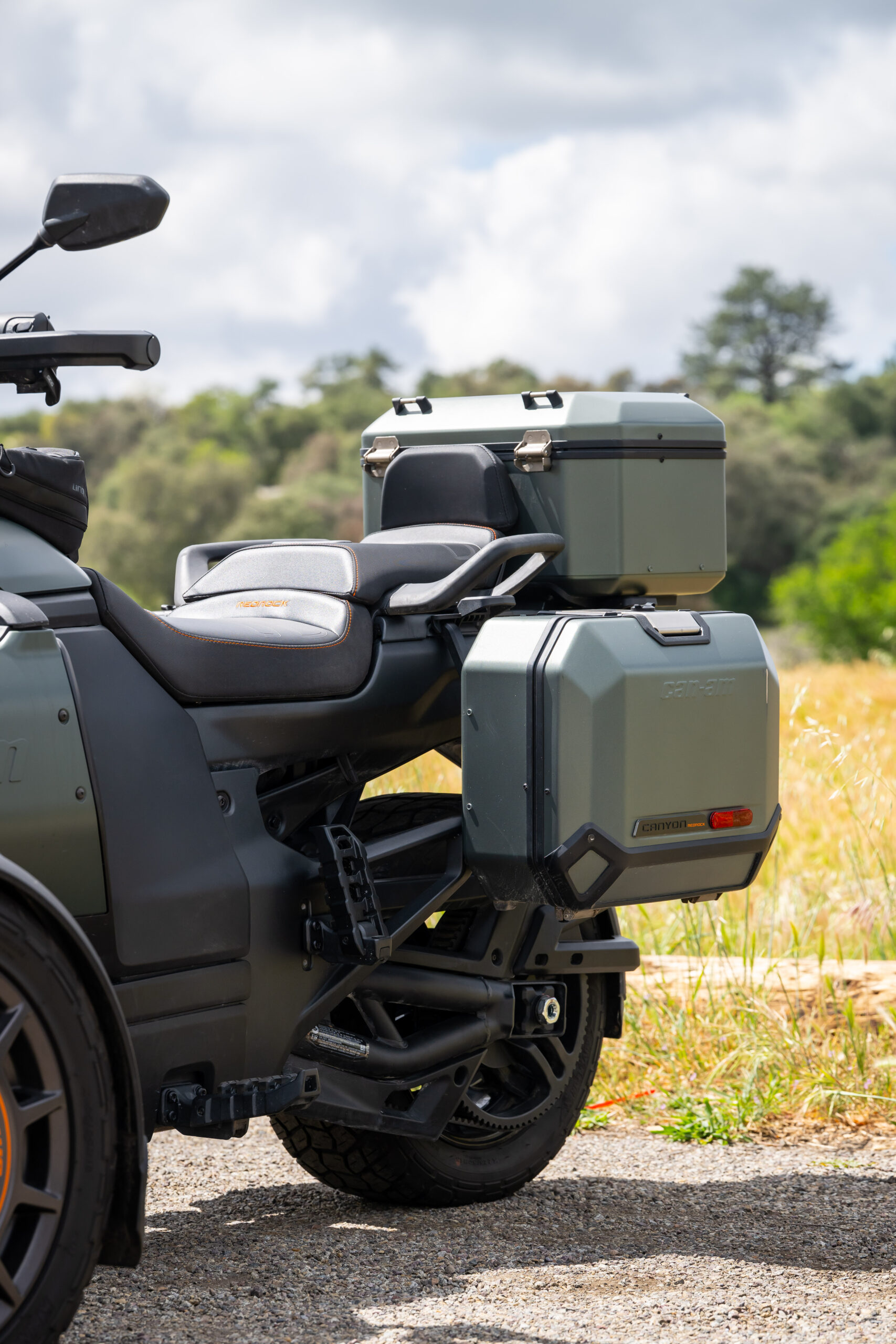
• The storage options and luggage capacity of the Canyon can fit many scenarios
and travel needs. The quick disconnect makes it easy to add or remove. A line of
pannier accessories and bag-liners, are another plus.
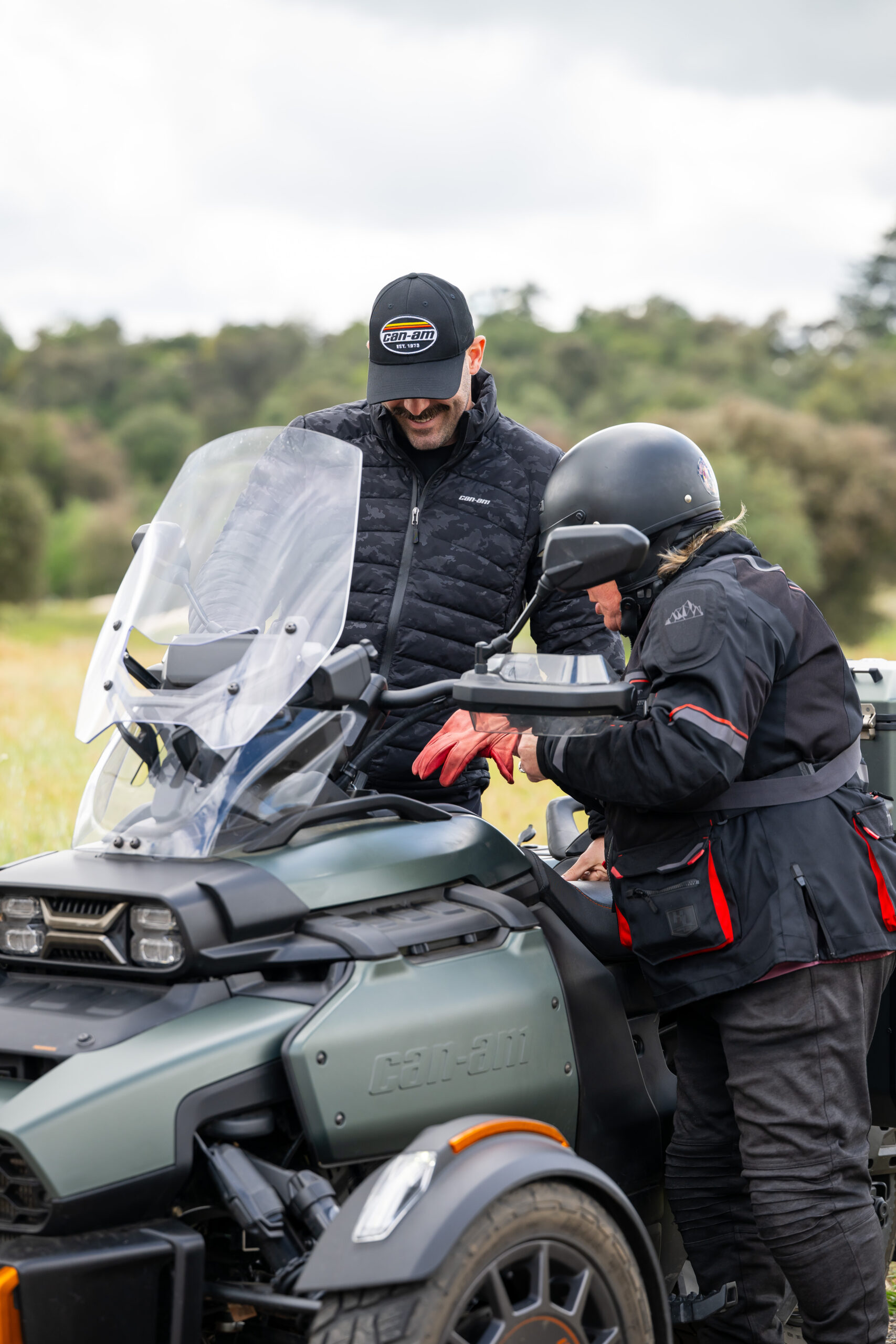
• Community of Can-Am riders were present, and I was able to witness how BRP
works with the Can-Am rider groups and ambassador. For this ride, BRP:
• coordinated with a local guide (https://sdbadassmotoguide.com) and
members of the owner’s group to provide an amazing route to experience
multiple road surfaces.
• pulled in additional members of the local rider’s group to assist with the
ride and ultimately show us the strong commitment to their own Can-Ams
and rider-community, but also to our newness to the platform — all with an
amazing warm welcome
• has solicited feedback from and listened to the riding community to impact
production design/offerings
• pulled in the Can-Am Ambassador, Beth Ryker Rides, to assist with
training and product knowledge, accessible on the spot, which was
beneficial for this event and for a resource moving forward
• Regarding cost of ownership, the Canyon brings a lot of value because of where
this vehicle can take you with stability of three wheels, safety features, an abilityto travel on multiple surfaces on the fly or impulse. Especially, when you look at
the technology of the Redrock model with the system of sensors that adapt to
optimize the ride and all of the luggage versatility — the riding experience is like
a two in one type feel — cruise and adventure. A follow-up will be to continue to
research the dealership network, plus repair and maintenance requirements. The
Can-Am/BRP product shares manufacturing similarities with Can-Am’s full line of
other products which seems to be perfect for boosting the knowledge and
coverage across service facilities, shops, and general skillsets. It will be
interesting to watch.
• There are many conveniences with cargo features of the Canyon. This model
presents endless destinations and countless adventures — short or long, smooth
or rough terrain — if you wish, you will be able to pack the necessities!
• For transitions of riding, if a person is going from two to three wheels because of
a need, I do not see compromise with a Canyon. Instead, the lifecycle of riding is
simply increased. Likewise, for a new rider considering two or three wheels, this
is a viable option as the decision is explored because the features will support
the journey.
Past, Present, and Future
For the better part of the last 40+ years, I have been exclusively on 2-wheels since the
mid-80’s. In the last 22 years, our household touched several brands, makes, and
models, with most miles spent in the areas of American V-Twin cruisers. On a whim, a
set of Ducati Diavels sneaked into the mix. Yet, the heavy, muscle-inspired designs with
lots of tone in loud exhaust, usually extra torque, and much sought after performance
with extended-touring ambitions consistently rose to the top of the list , year after year.
In other words, the progression meant going from big, to bigger, on to the biggest.
Between these decisions and across the years, time was always spent searching for a
new ride with the right fit and features with belief that one day it will align comfortably.
However, at 5 foot 2 inches, many product lines simply drop out of the running even
before the dealership door could fully close behind me.
Each bike has required modifications because the initial design has never
accommodated my inseam, reach and/or torso. Customizing for fun verses necessity is
a book with another cover: a checkbook. Sarcasm aside it was so refreshing to just hop
on the Canyon and ride without concerns or obstacles. Fitment that works for many.
Wrapping Up
Can-Am was launched in 1973 by Bombardier Recreational Products (BRP) as a high-
performance motocross and enduro motorcycle brand with the onset of 3-wheelers in
2007 focused on cruising/touring features and the addition of a sportier, less expensive
‘Ryker’ model in 2018. I applaud the addition of the Canyon in 2025. The BRP portfolio
of choices across environments (snow, water off-road on-road, etc.) is exciting when
considering the shared technology, lessons learned, and efficiencies which filter over
from one product to another. Can’t help but believe it all helps in developing a solid
foundation of innovation and productivity. Plus, enhance the full ecosystem of
powersports. As a consumer, this is a good thing.
The 2026 Canyon feels like a Swiss Army knife of motorcycling with a blend of and entry
to off-road-adventure. If a game changer is desired, this just may be the right one. It
sets a person up for success to pursue a journey, explore new regions with quality,
safety, and surface confidence. Personally, I was able to remove obstacles — real or
perceived — with an end result of a higher mindfulness and deep peace when out on
the road. The Canyon experience has inspired me to keep evaluating – paved or
unpaved areas without hesitation – along with stability, performance, and safety
deliberately designed, produced and delivered! Tangible proof done.
More Stories
Triumph Motorcycles has announced a comprehensively updated TF 250-X for 2027
RIDE WITH THE SPYDERS (Part 2)
Flash sale on Racer waterproof gloves