




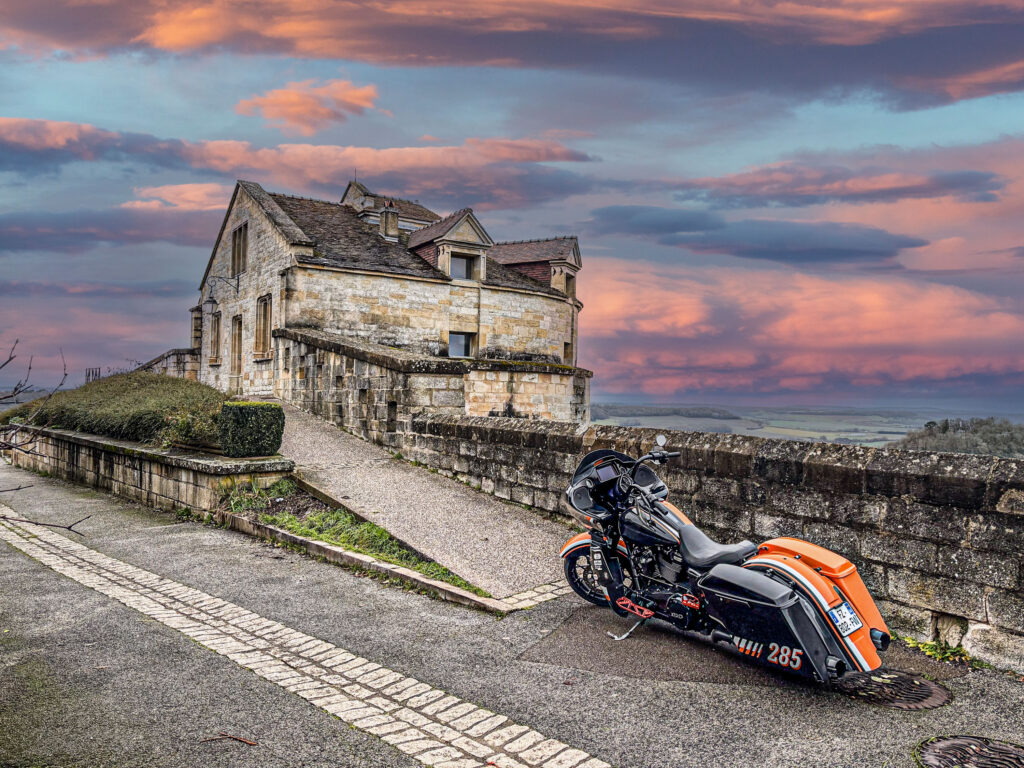
Story and Photos by ITN European Reporter Herve’ Rebollo
Salut à vous riders from around the world,
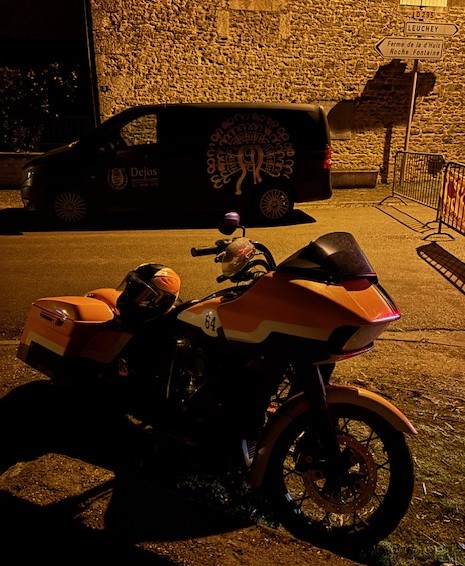
I was especially excited on the morning of December 5th to get back on the road: I was going to ride for pleasure and for work reasons …
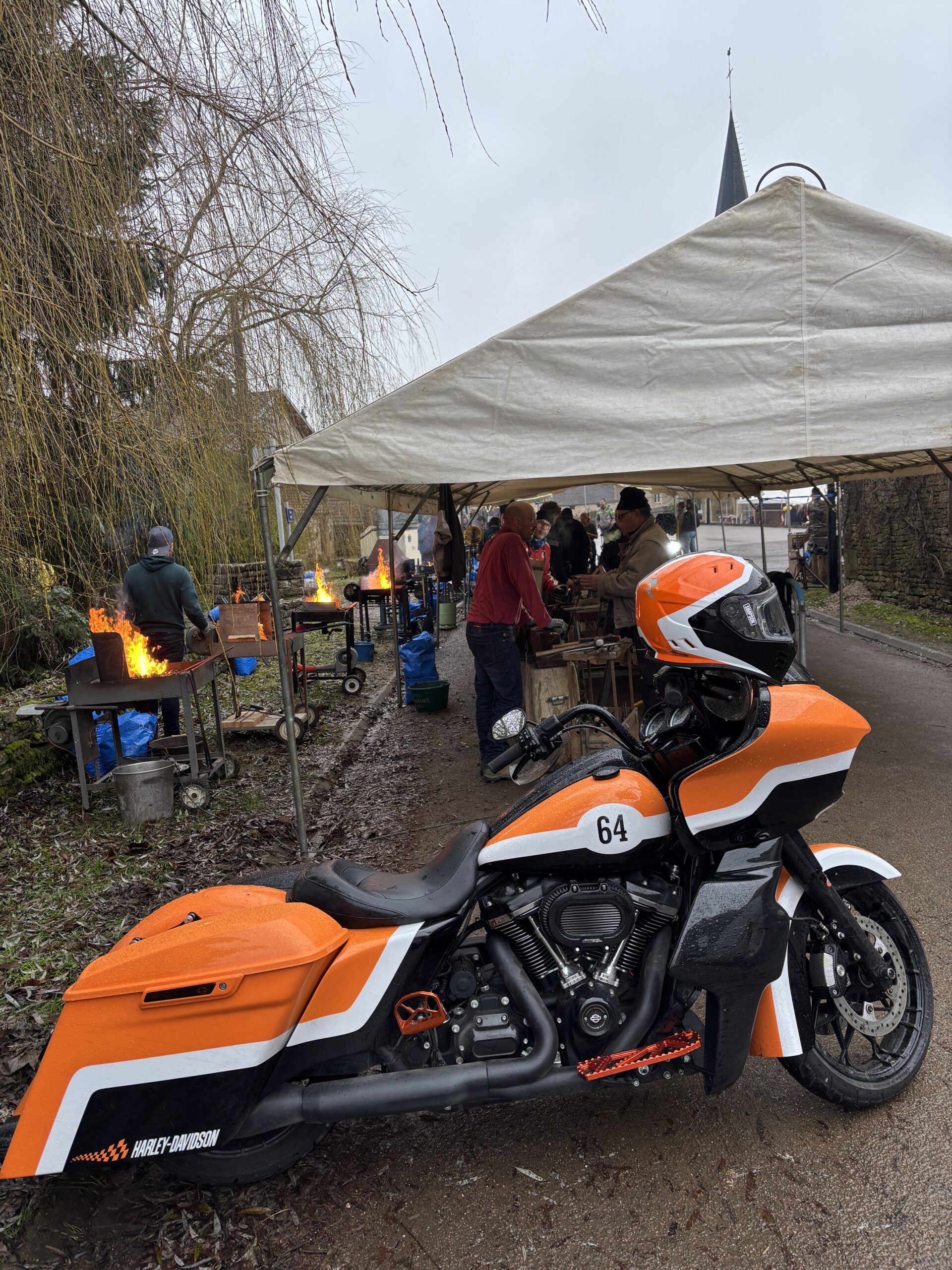
Happy me, I’m always motivated when it’s time to ride. And that’s a good thing because at the beginning of December, the weather is cold and very foggy.
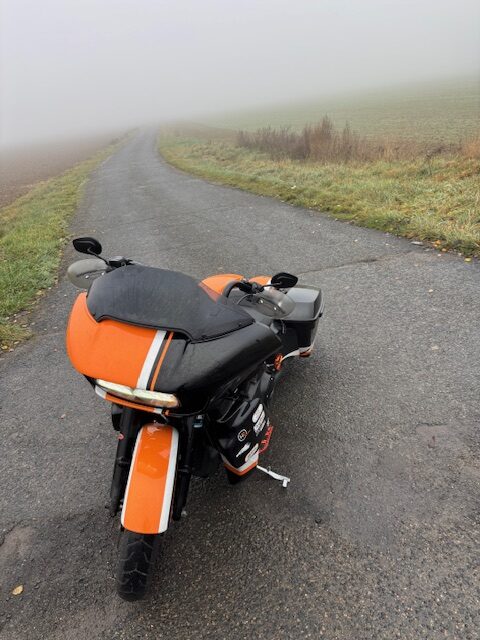
Don’t tell anyone (this will be our secret), but to save time and reach my destination before nightfall… I had to take the highway for 80% of the journey. What a shame (I swear this never happens!!!!!!!!!!!!!). No vintage traditional French bar along the way. I had to take my coffee break at a service area on the highway. What a pity!
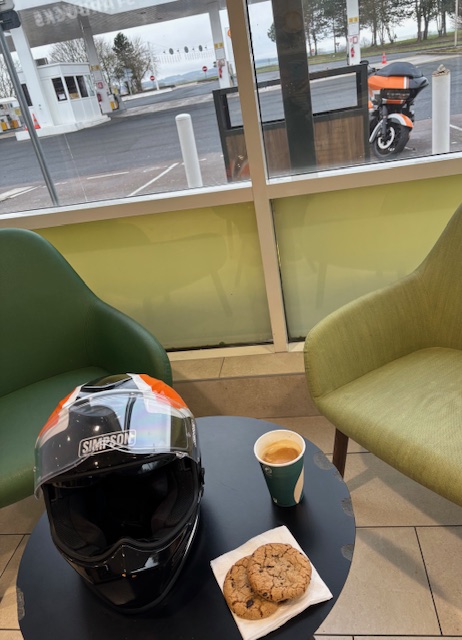
At least the 40 last kilometers permitted me to find the winding little roads.
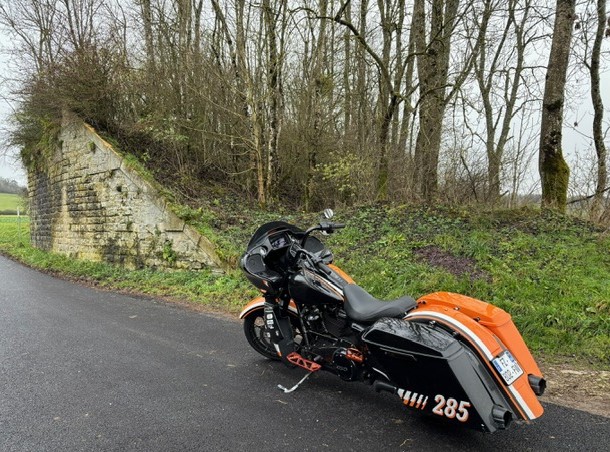
The idea was to join the fabulous old city of LANGRES before mid-afternoon to visit it.
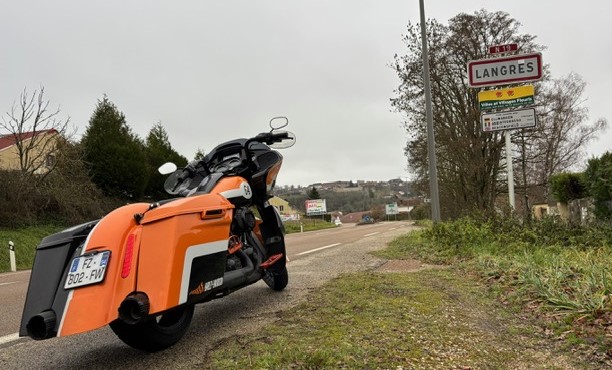
Langres is a commune in northeastern France. It is a subprefecture of the department of Haute-Marne, in the region of Grand East.
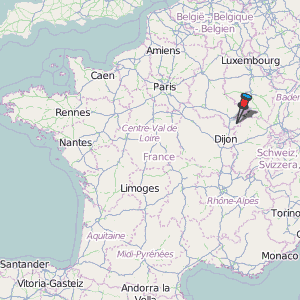
A hilltop town, Langres was built on a limestone promontory of the same name. This stronghold was originally occupied by the Lingones. At a later date the Romans fortified the town, which they called Andemantunum, located at a strategic crossroads of twelve Roman roads.
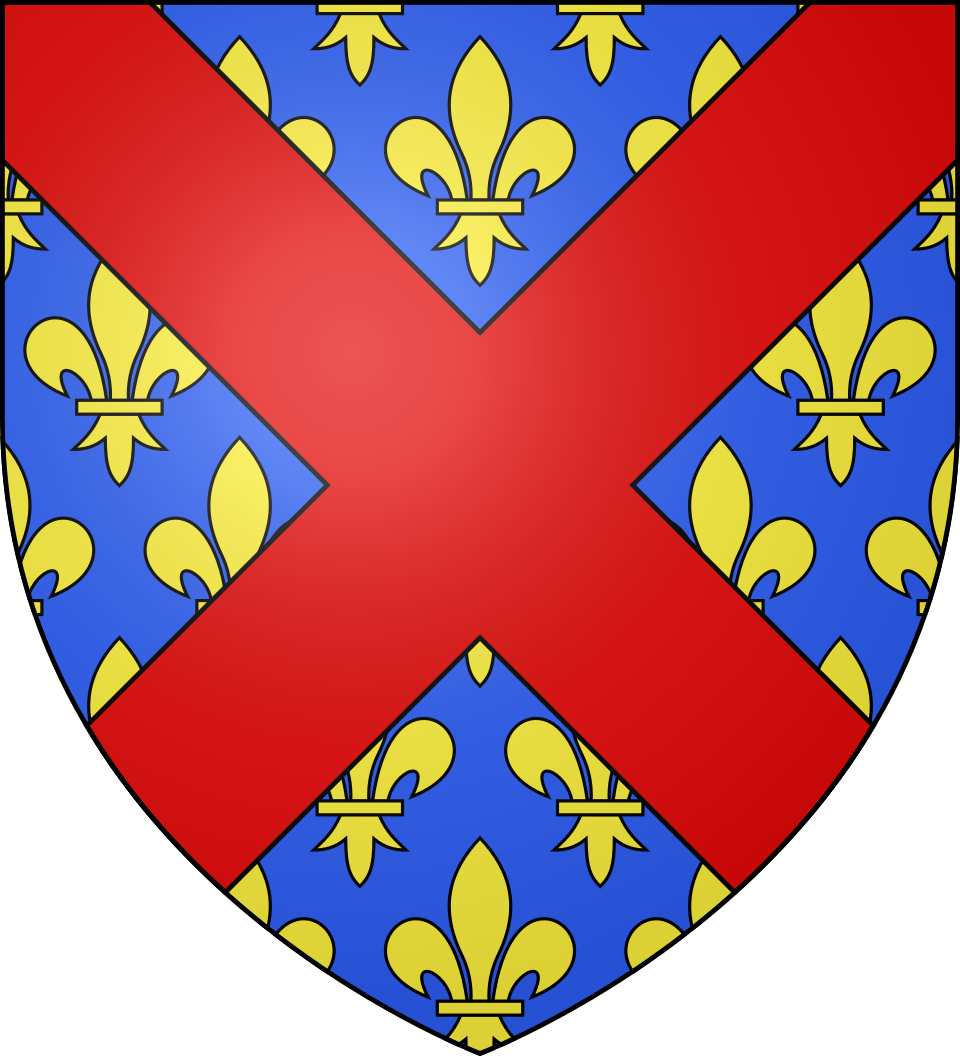
After the period of invasions, the town prospered in the Middle Ages, due in part to the growing political influence of its bishops. The diocese covered Champagne, the Duchy of Burgundy, and Franche-Comté, and the bishops obtained the right to coin money in the ninth century and to name the military governor of the city in 927. The Bishop of Langres was a duke and peer of France.
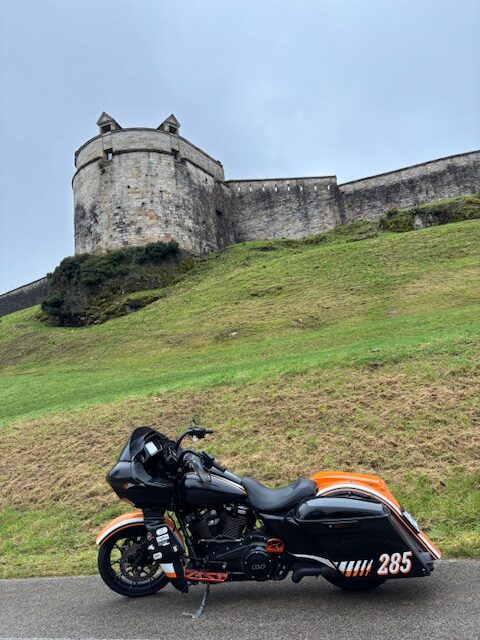
The troubled 14th and 15th centuries caused the town to strengthen its defenses, which still give the old city its fortified character, and Langres entered a period of royal tutelage.
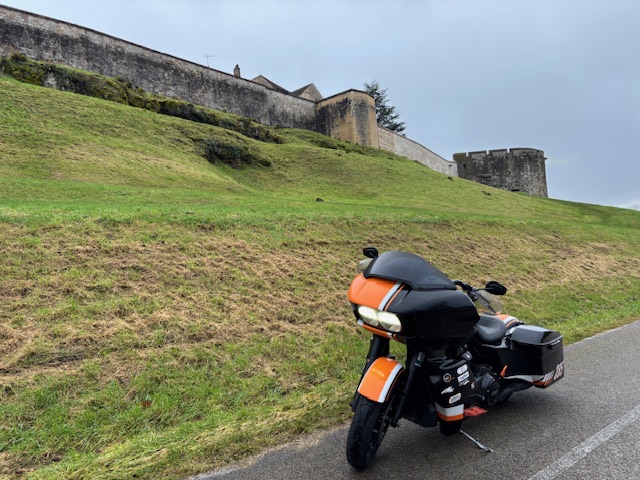
The Renaissance, which returned prosperity to the town, saw the construction of numerous fine civil, religious and military buildings that still stand today.
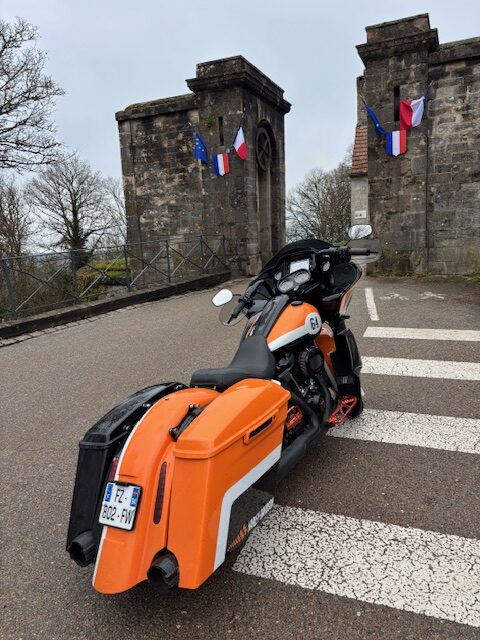
In the 19th century, a “Vauban” citadel was added.
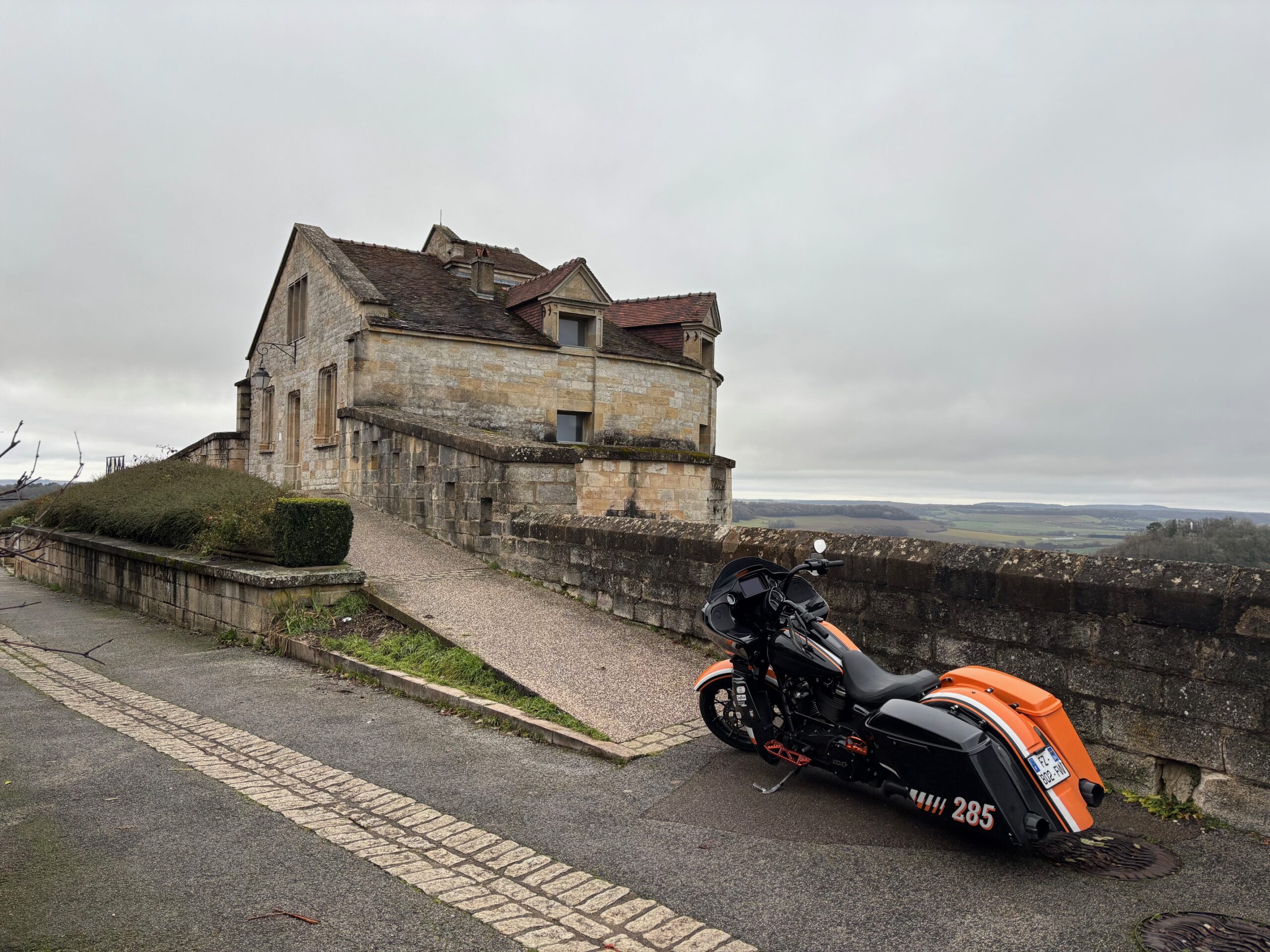
Langres has a historic town center surrounded by defensive walls with a dozen towers …
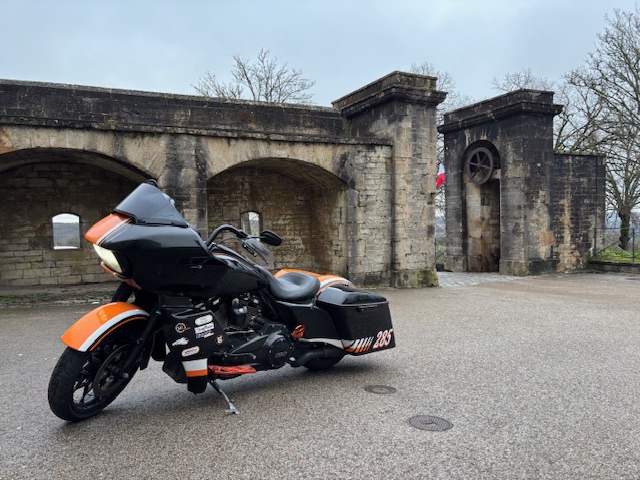
… and seven gates
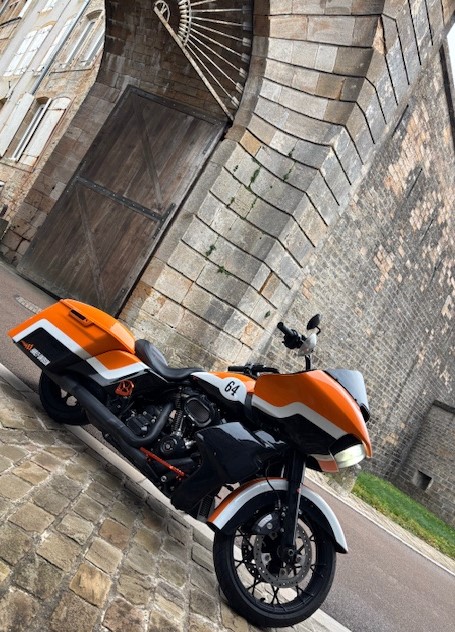
Behind the walls, inside the old city, the cathedral of Saint-Mammès is a late 12th-century structure dedicated to Mammes of Caesarea, a 3rd-century martyr.
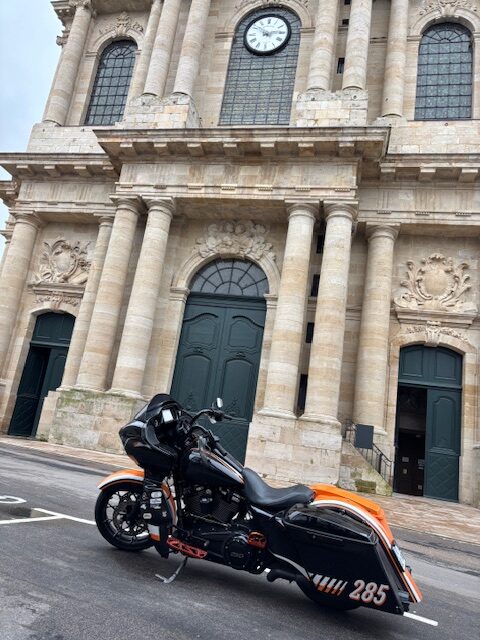
The ramparts of Langres, one of the largest fortified enclosure in Europe, are a true history book, tracing 17 centuries of fortifications.
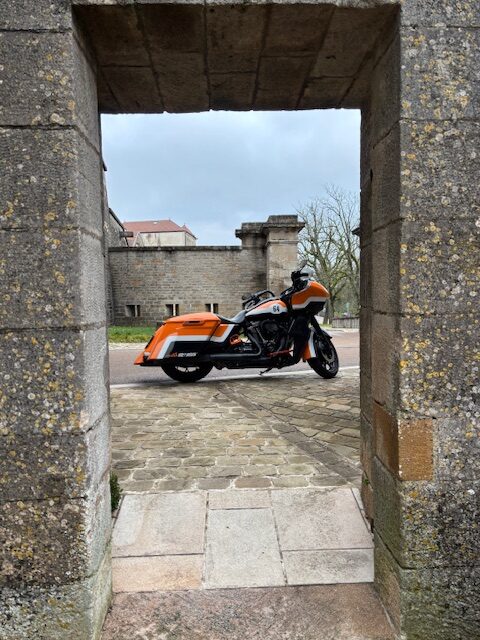
Classified as a first-category fortress in the 19th century, its defensive system developed overs a perimeter of 13km (8 miles), with a vast citadel and around thirty structures, including eight detached forts.
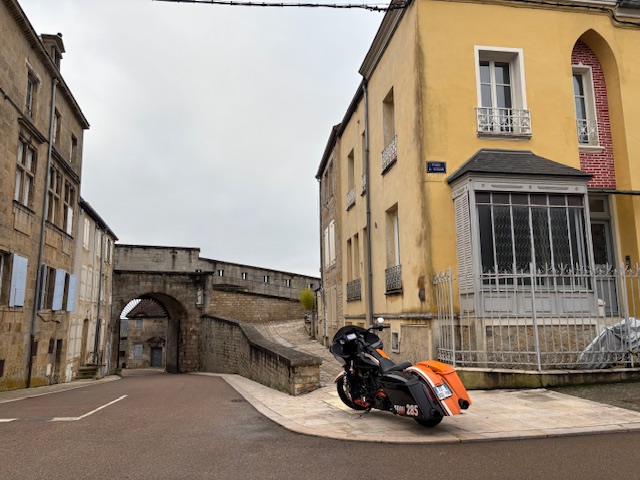
Langres, perched on its rocky spur at an altitude of 475 meters (1560 foot), stands as a proud fortress at the gate way to Champagne and Burgundy (I’m not entirely sure I was allowed to ride my motorcycle on the ramparts, but I did it, and it allowed me to take some great photos).
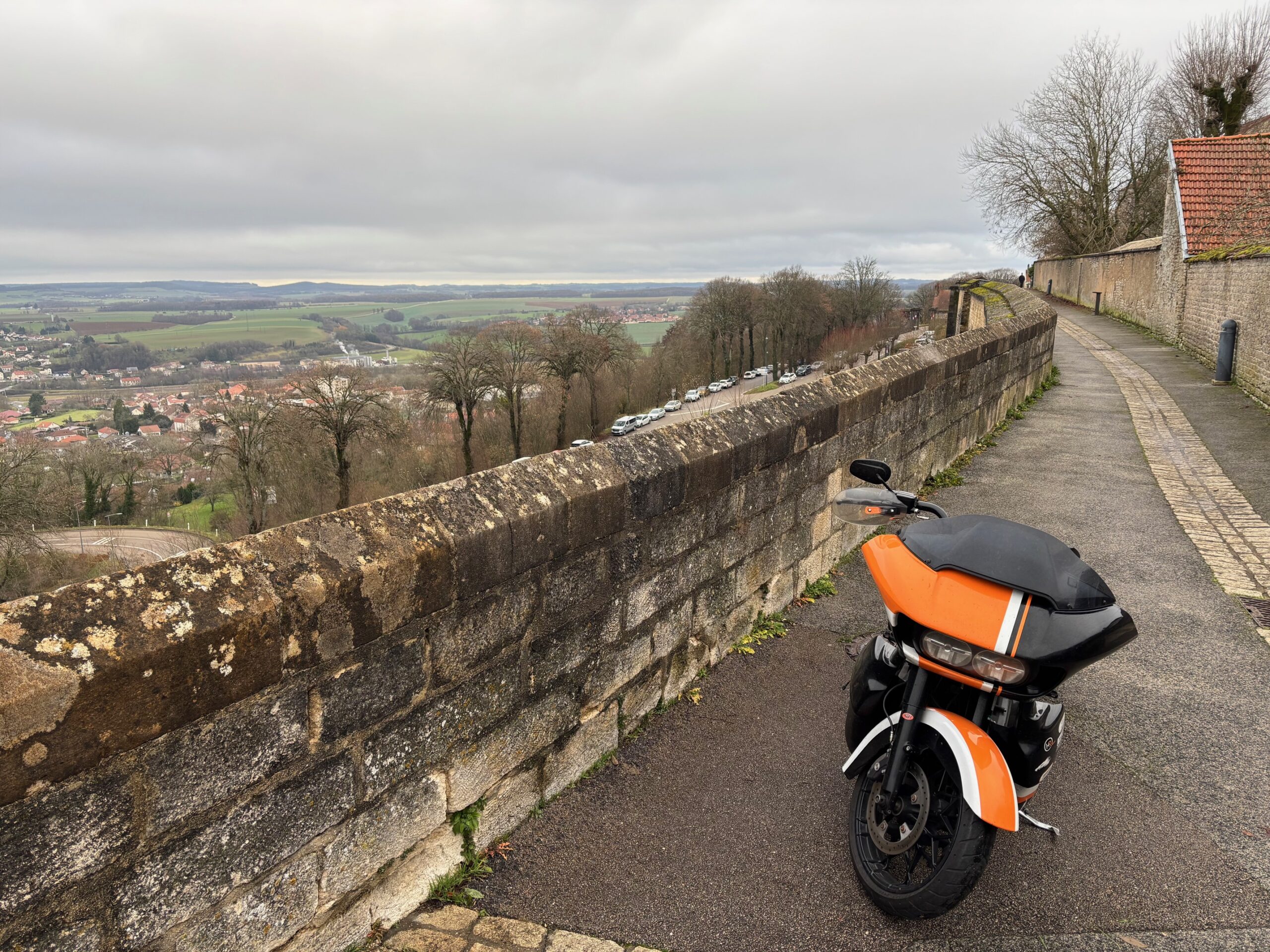
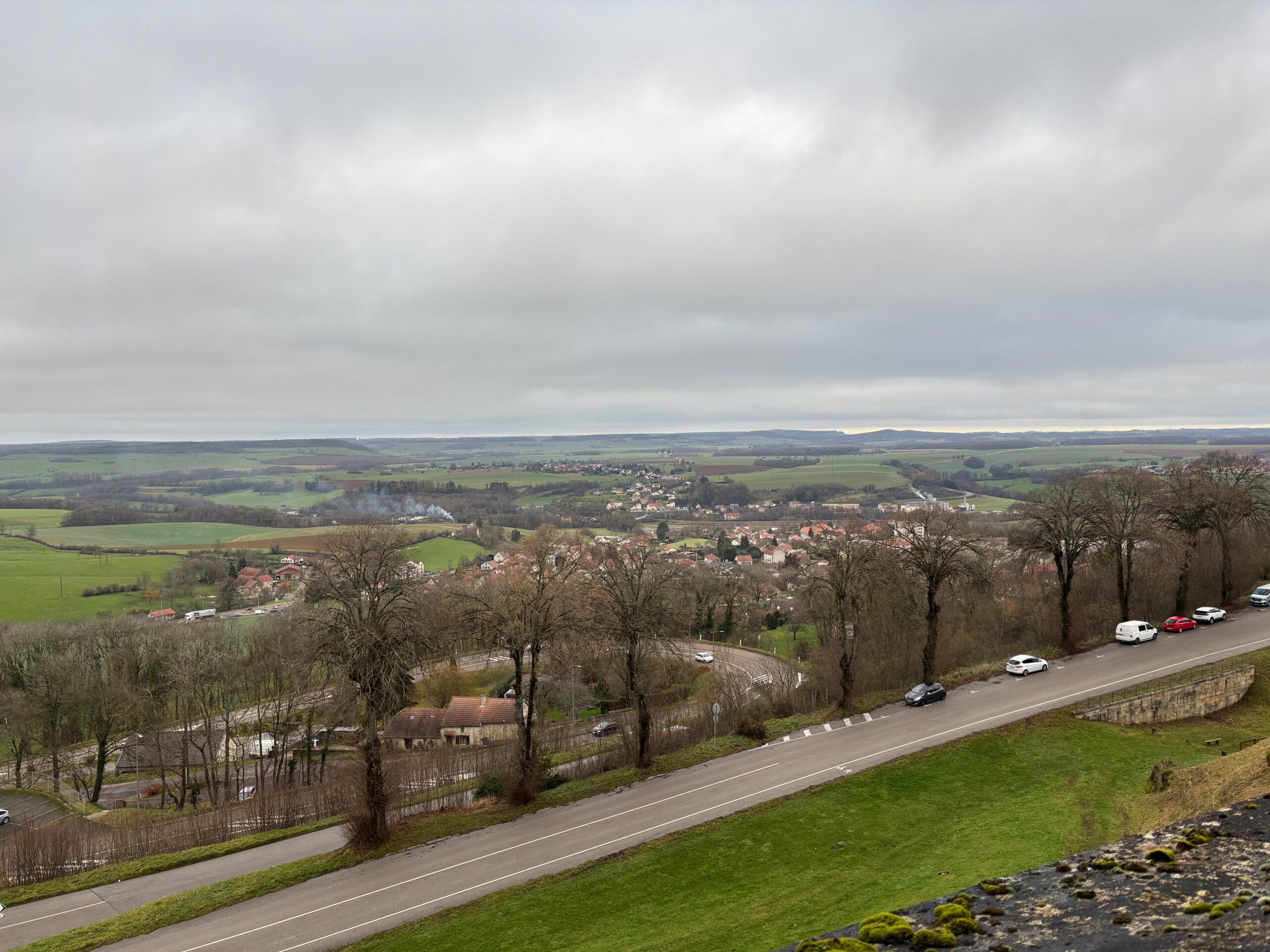
The view toward the great Far East is incredible.
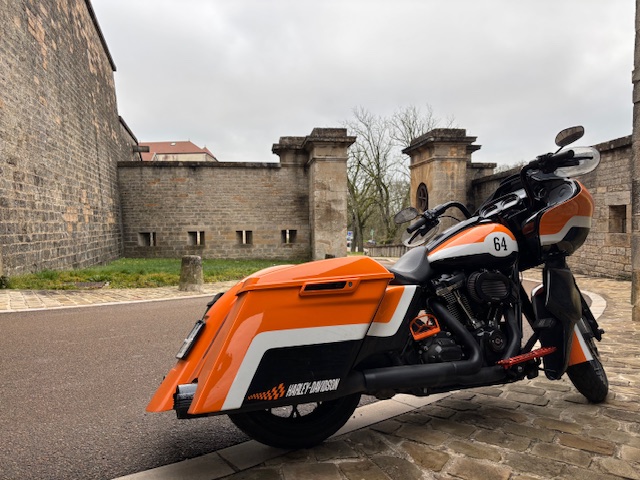
Ok, is was time to leave Langres through one of its magnificent gates, as night was approaching.
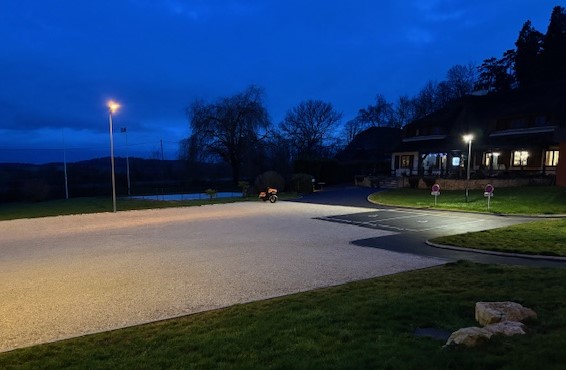
When I arrived at my little motel (charming), in the middle of nowhere in this French countryside at the end of autumn, the atmosphere felt like a spin-off of the TV series The Walking Dead. It was 4:30PM, and I felt like it was the middle of the night. I was full of energy and very excited about the evening ahead of me …
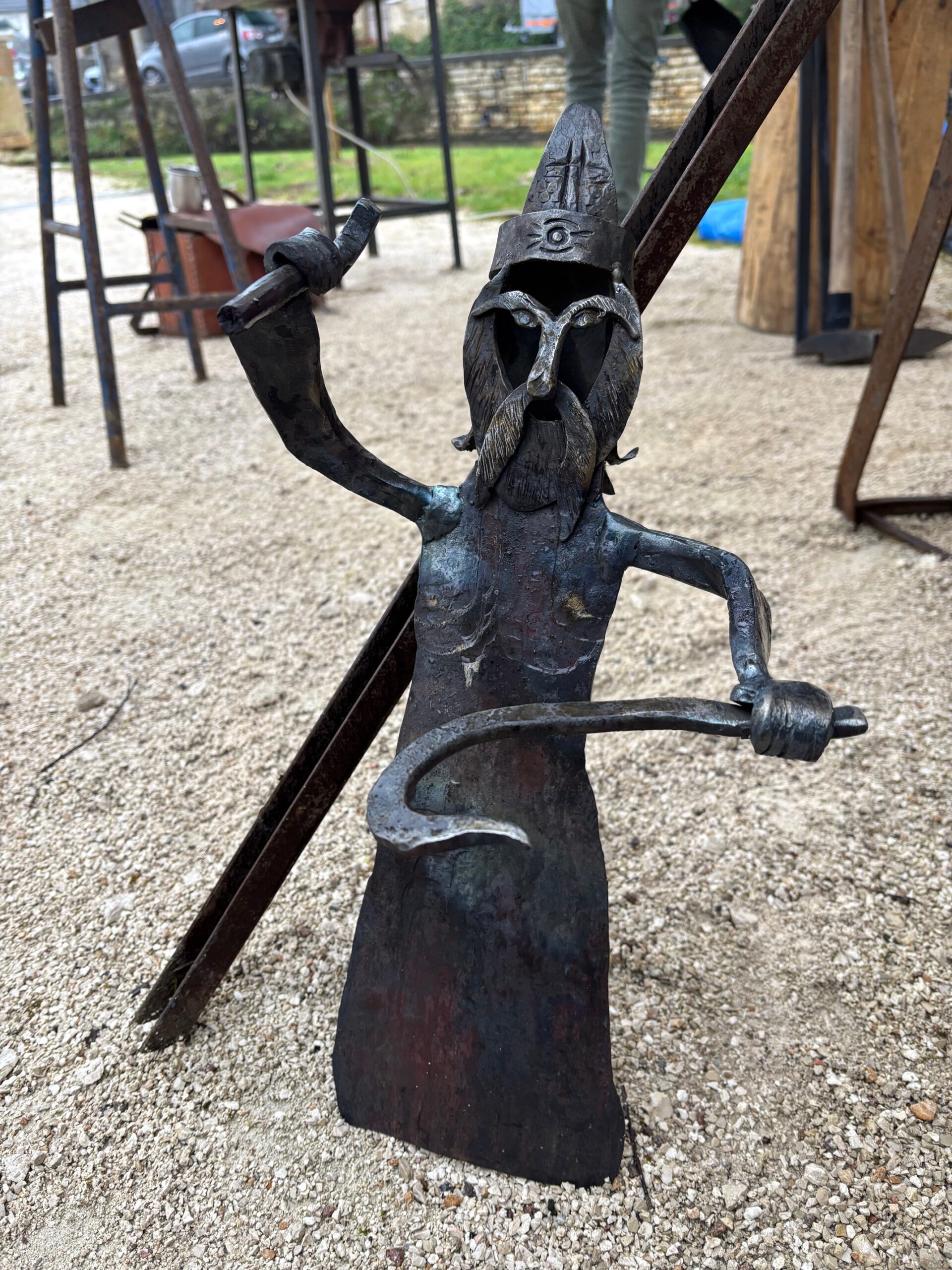
It is now time now to explain why I told you at the beginning of this post that I was here for professional reasons. I won’t go into details; just know that in my daily work, I have to collaborate with professional farriers. And in a few hours, I was going to attend their annual Saint Eligius (Saint Eloi in French) celebration. Eligius (French: Éloi; 11 June 588 – 1 December 660), venerated as Saint Eligius, was a Frankish goldsmith, courtier, and bishop who was chief counsellor to French king Dagobert I and later Bishop of Noyon – Tournai (France). He is often depicted with a hammer or an anvil in his hand.
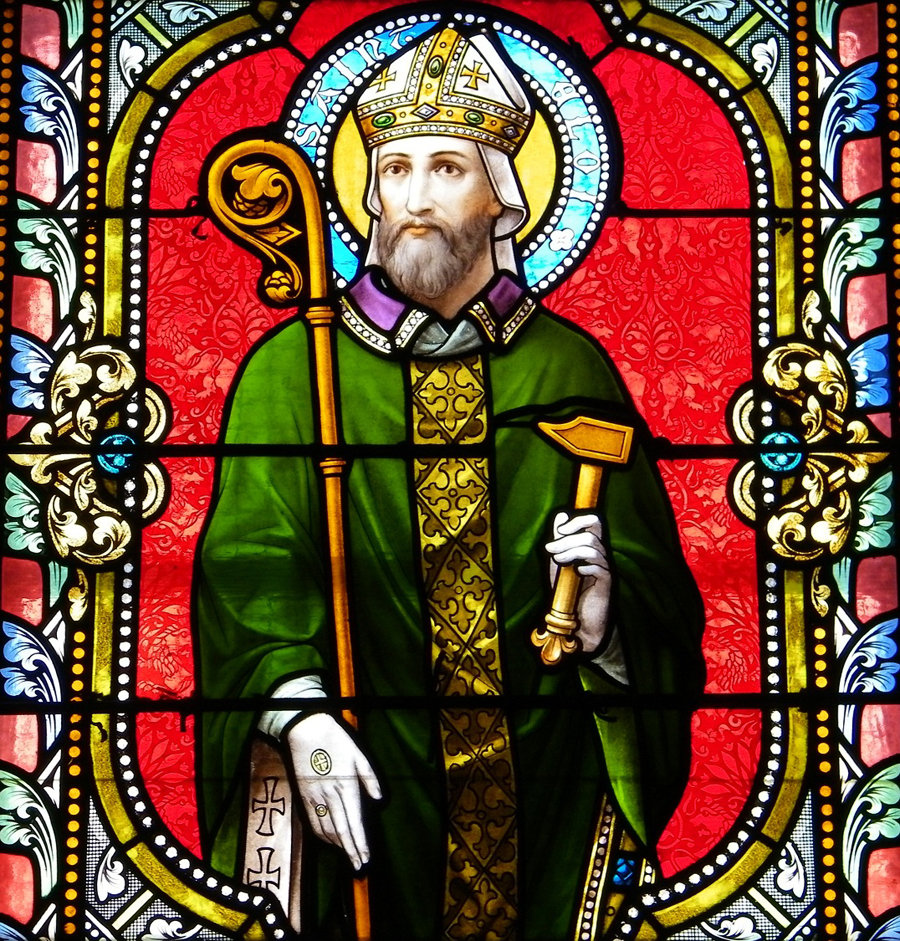
Eligius is the patron saint of horses and cattle and because of his master craftsmanship and unfailing honesty, he became the patron saint of goldsmiths, blacksmiths and metalworkers. His patronage was later extended to metalworkers and mechanical engineers in the armed forces. He is the Patron Saint of farriers (Take the time to watch this video produced by the French Professional Union of Farriers in 2023 : https://youtu.be/r1HiBnieCIc?t=38 ).
And that evening, it was time to join the traditional dinner, on the eve of the celebration. The event took place in the (tiny) village of Val d’Esnoms (about 360 inhabitants) at 25km / 15 miles from Langres, where about a hundred people (mainly farriers but not only) came together to share a wonderful time of camaraderie in a fantastic fraternal ambiance around the table (a moment so rare in our era of screens and social networks).
Some of them hadn’t seen each other since last year’s celebration and the reunion is warm (because these people come from all over France).
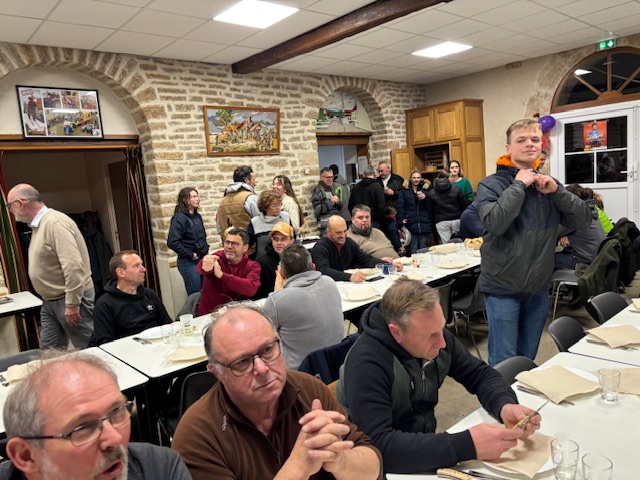
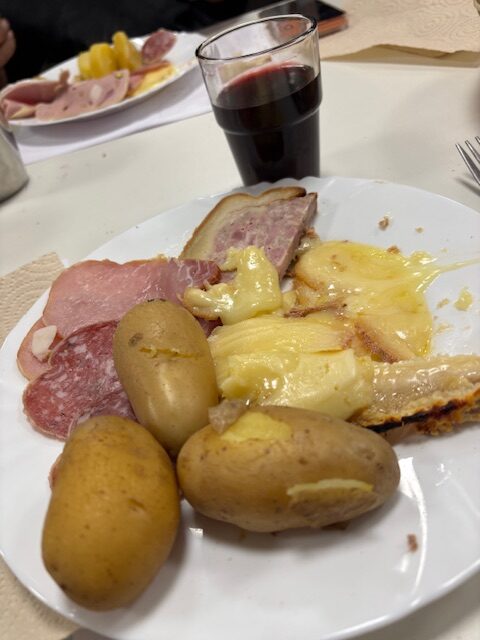
And the traditional French meal was…
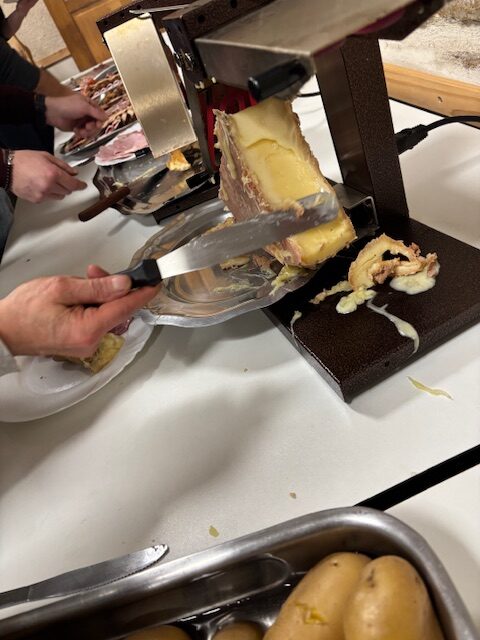
… a blast!!!
And after a good (short) night, it was time this Saturday morning to head Val d’Esnoms to attend the celebration of Saint-Eloi / Eligius 2025 (where, at 7 a.m., about 70 farriers had already set up all their equipment).
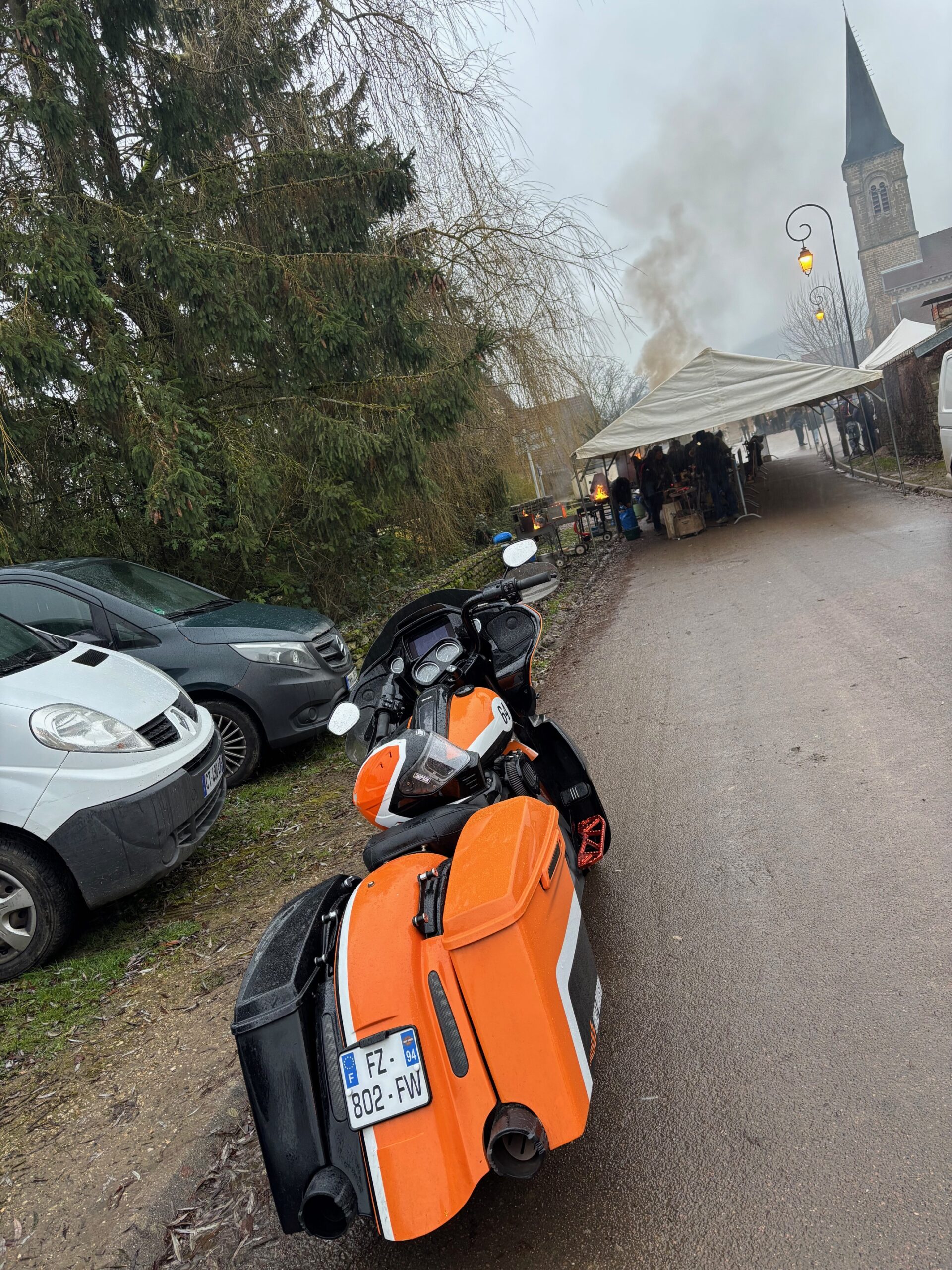
The village was entirely dedicated to the welcoming farriers.
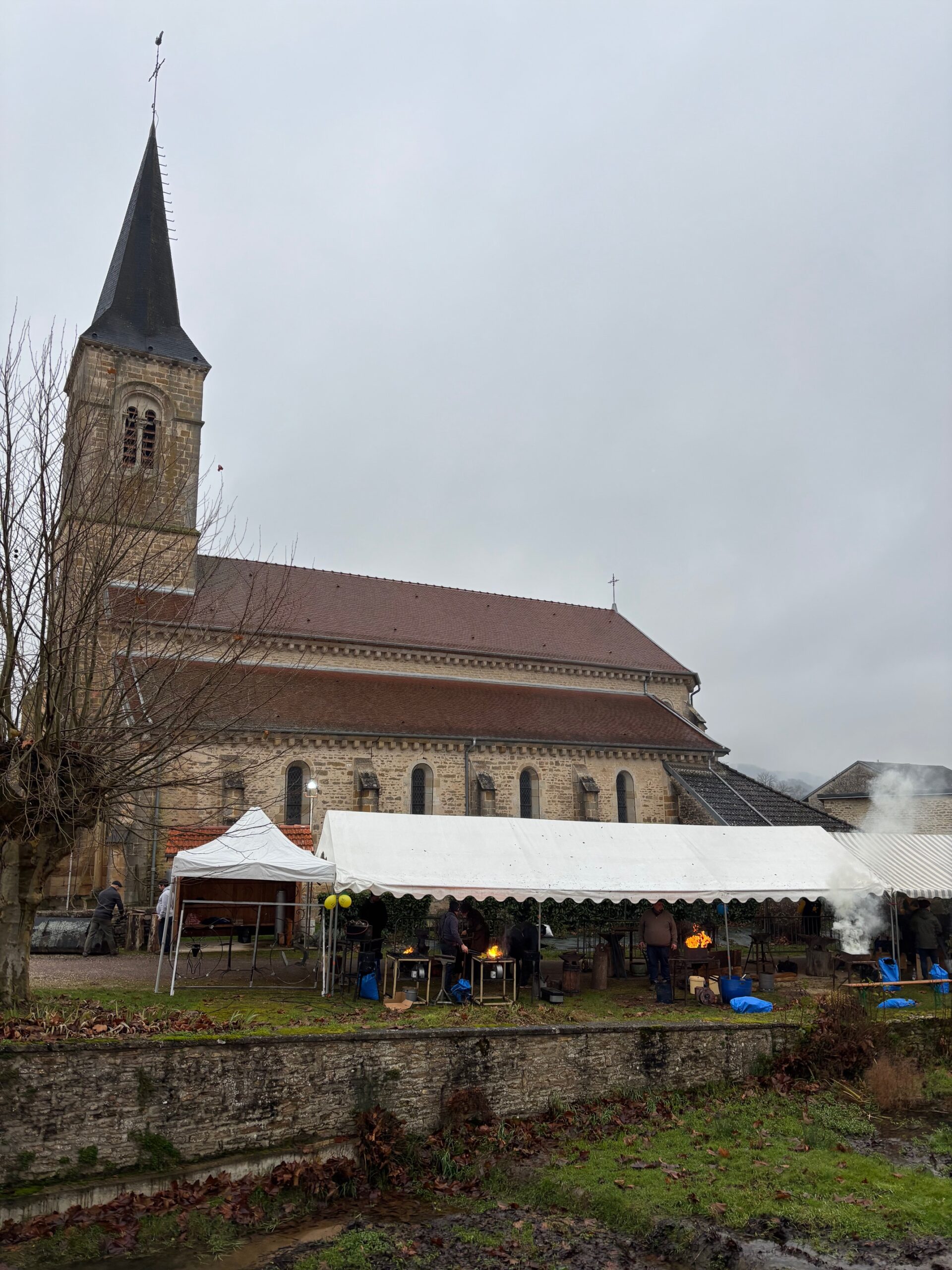
Nearly 70 farriers, blacksmiths, edge tool makers or artistic ironworkers gathered on the village to demonstrate their skills and celebrate Saint Eloi / Eligius.
The central theme being the creation of a “Saint-Eloi / Eligius Bouquet”.
A collaborative work representing the commune of Val-d’Esnoms and its three villages.
“The Hare Bread”, “The centennial Great Oak” and finally the animals and nature at the heart of the National Park were represented across three panels, brought together in a “Bouquet” (a wrought iron work nearly three meters long and two meters high). Each of these three pieces is intended to be placed in one of the three villages.
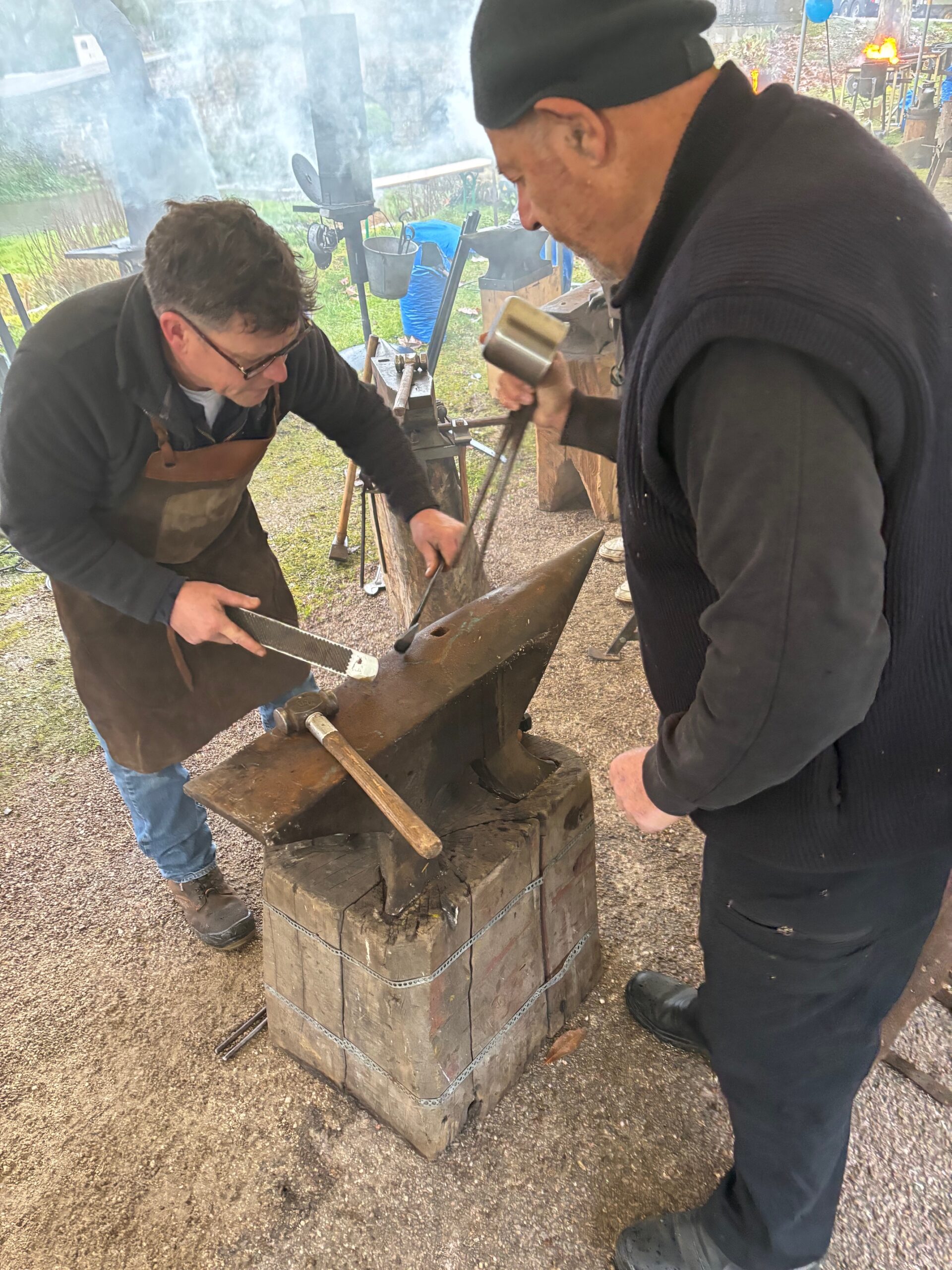
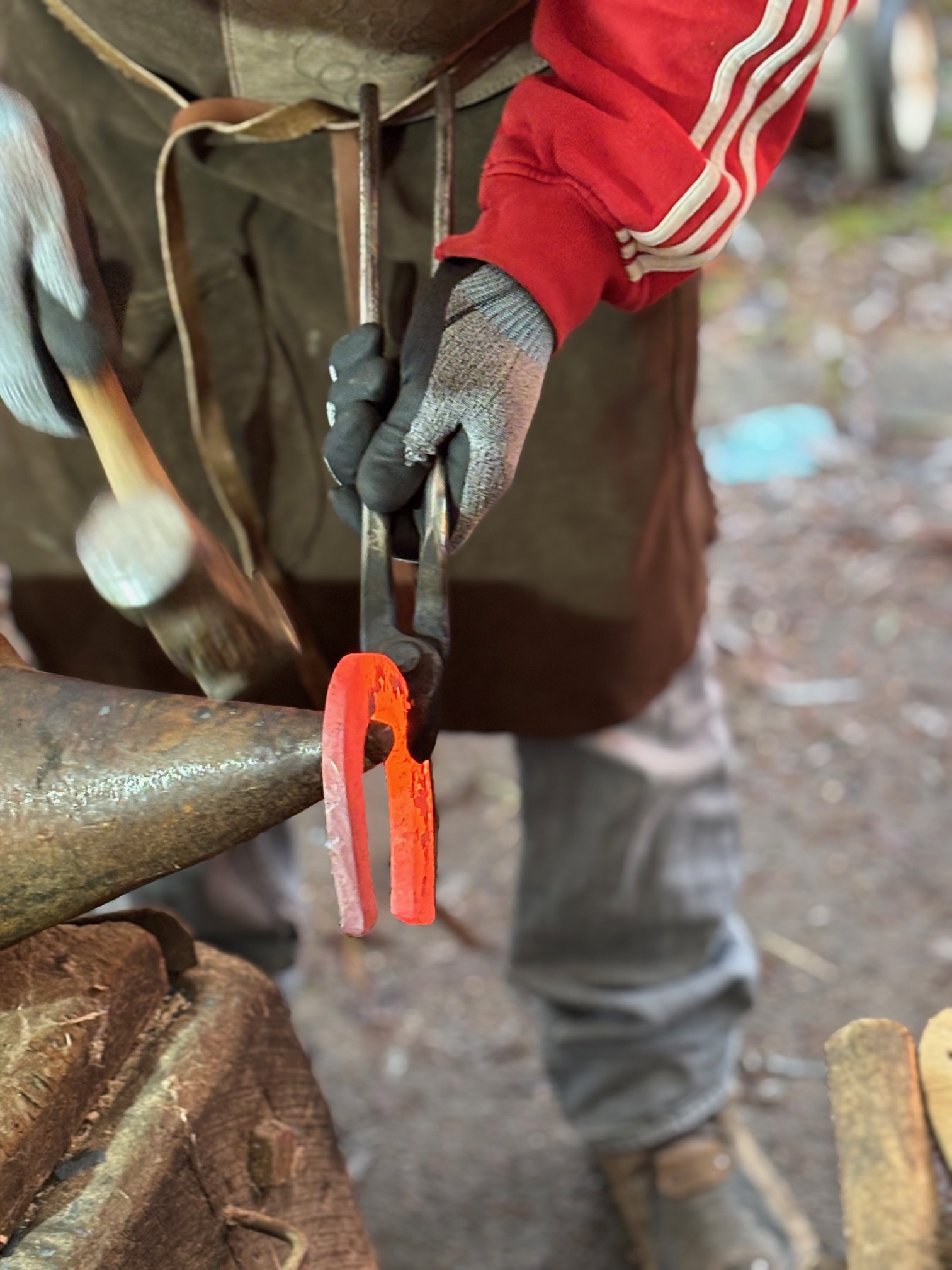
Visitors were able to enjoy farrier demonstrations …
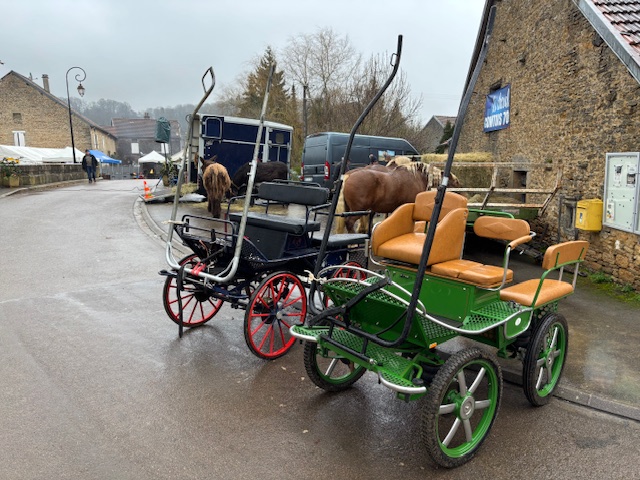
Or go for a carriage ride as they strolled around.
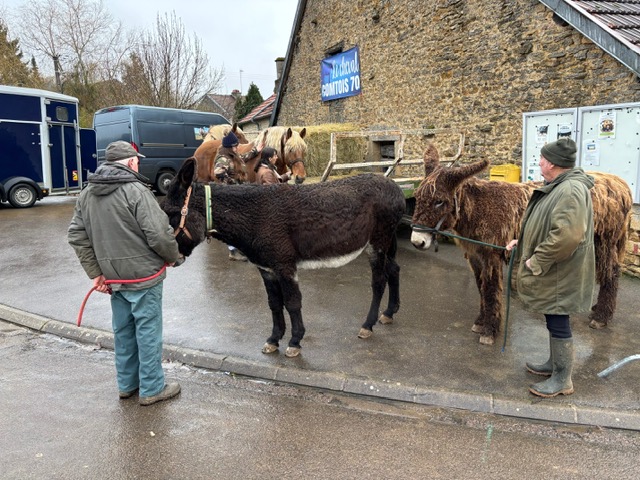
Some breeders had come to show their beautiful horses and donkey to the public.
Notably some Comtois horses. The Comtois is a medium-sized draft horse breed, native to Franche-Comté. Of Germanic and perhaps Burgundian origin, it is mainly found in France and Switzerland. The Comtois is the first example of a successful breeding of a heavy draft horse in France. Decimated during the Napoleonic Wars, it then became known, under the name “Jura horse,” alongside the future Franches-Montagnes horse of Switzerland. In France, its breeding was revived at the beginning of the 20th century.
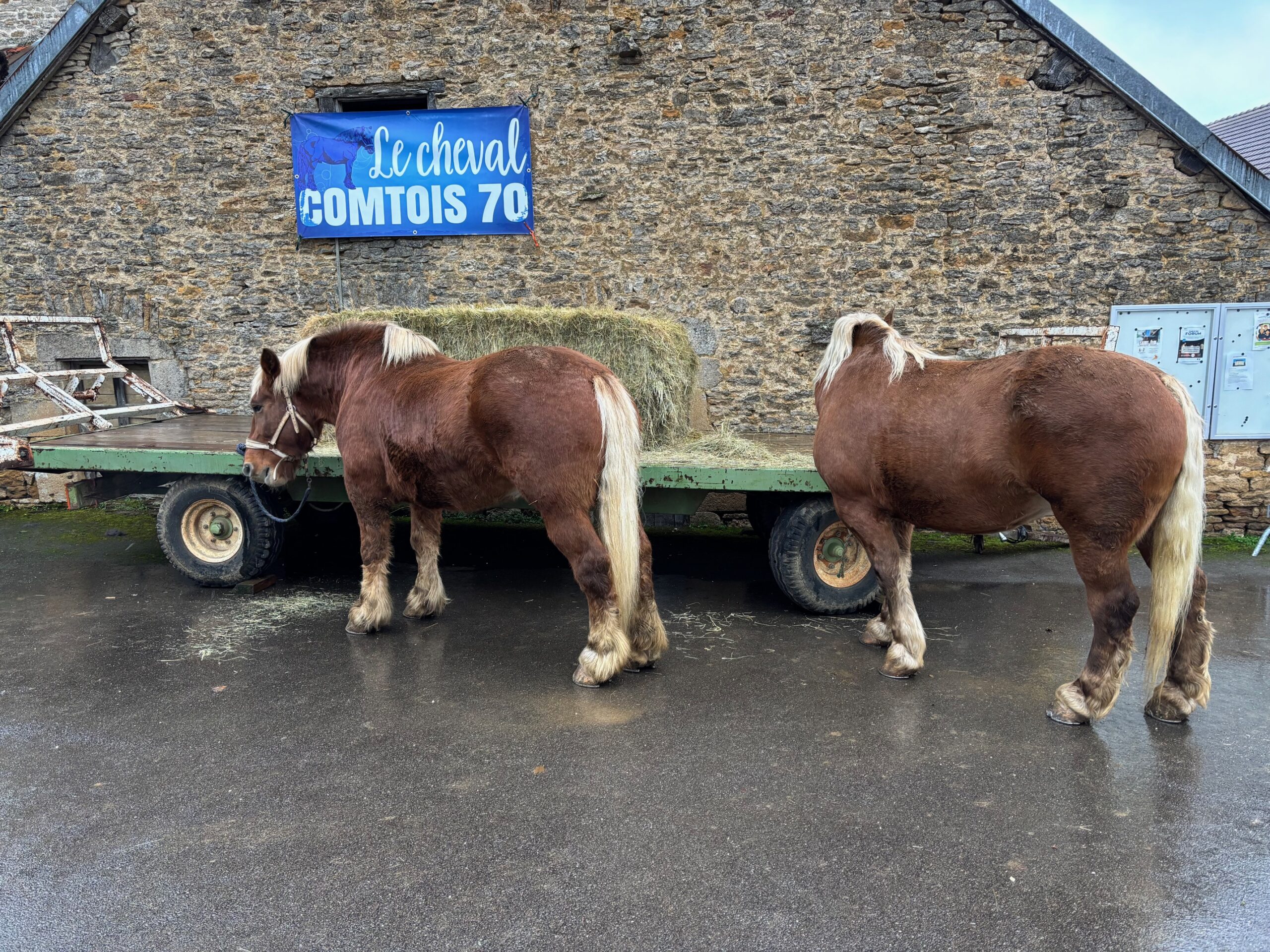
Selected for farm work, the Comtois became a rustic draft horse, capable of living outdoors all year round. The Comtois is now the most common draft horse breed in France.
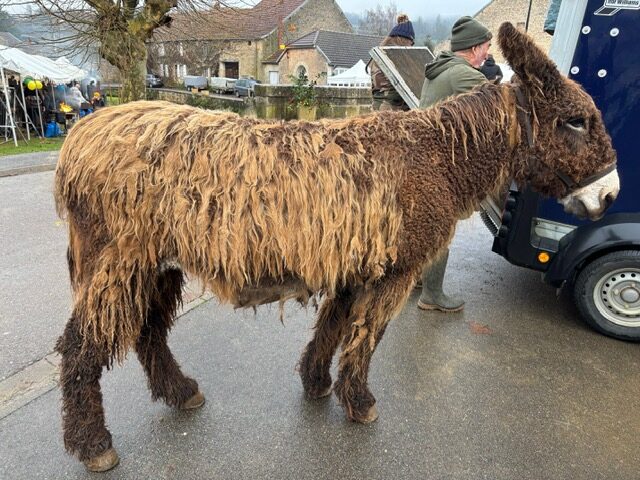
A magnificent Poitou donkey, purebred, was there too.
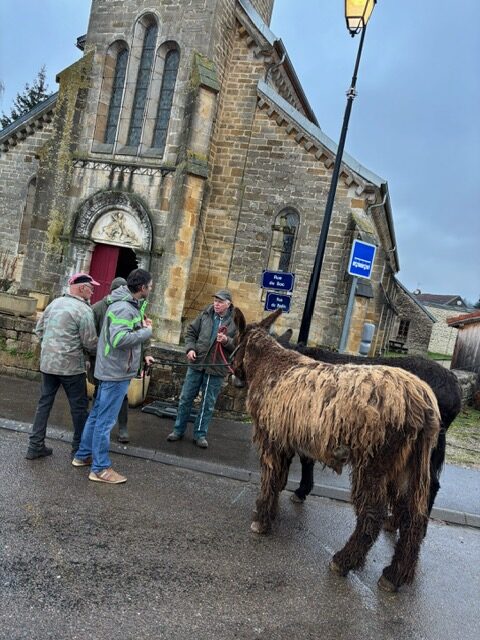
The Poitou donkey, commonly called the Poitou jack, is a very ancient breed of donkey originating from Poitou in western France. Easily recognizable by its distinctive coat of a length uncommon in equines, it is a large donkey with strong bone structure. Its breeding was carried out over the centuries with the sole purpose of producing mules, a very lucrative activity for the region until the mid-20th century. Threatened with extinction due to a lack of demand, it is the subject of several conservation plans aimed at stabilizing the breed’s numbers and ensuring its survival.
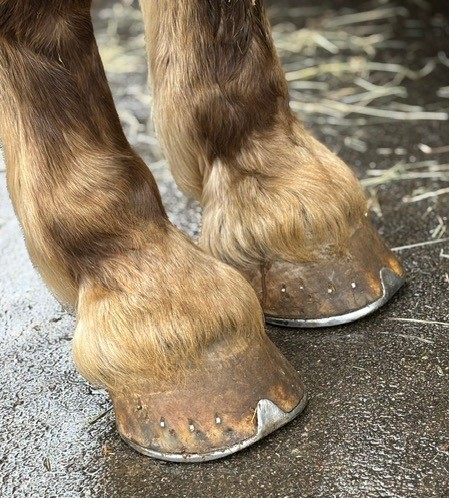
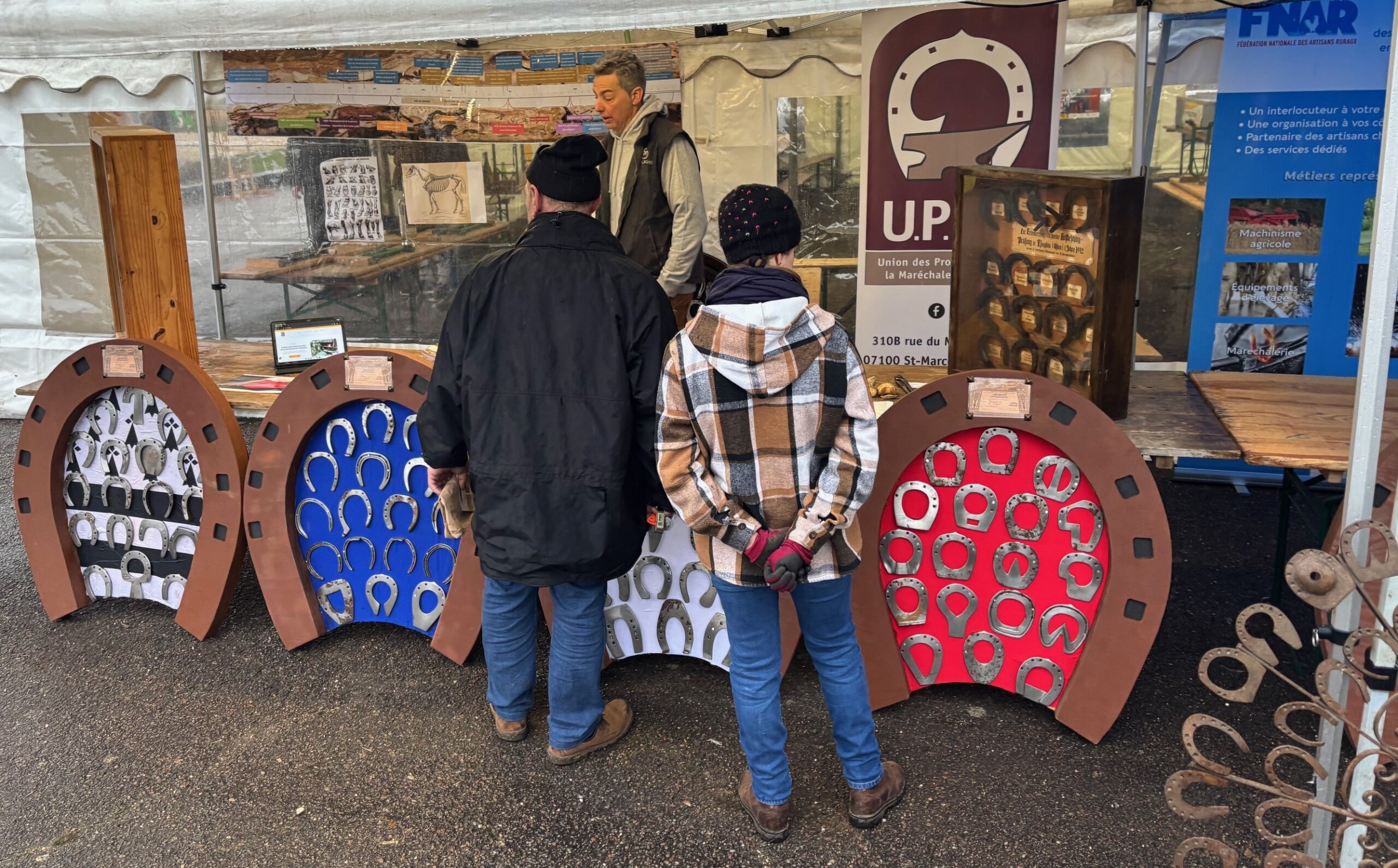
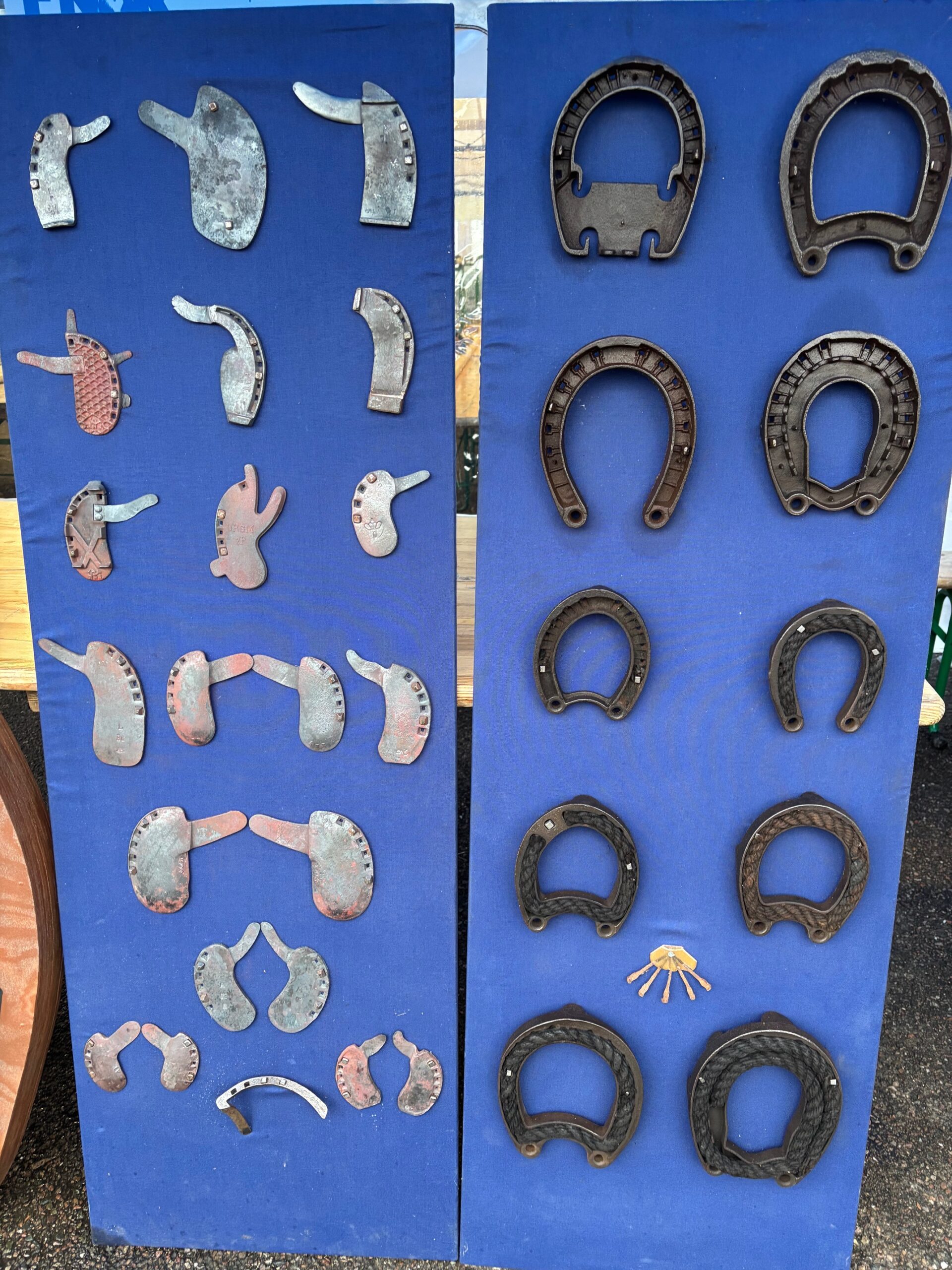
A farrier exhibition completed the activities
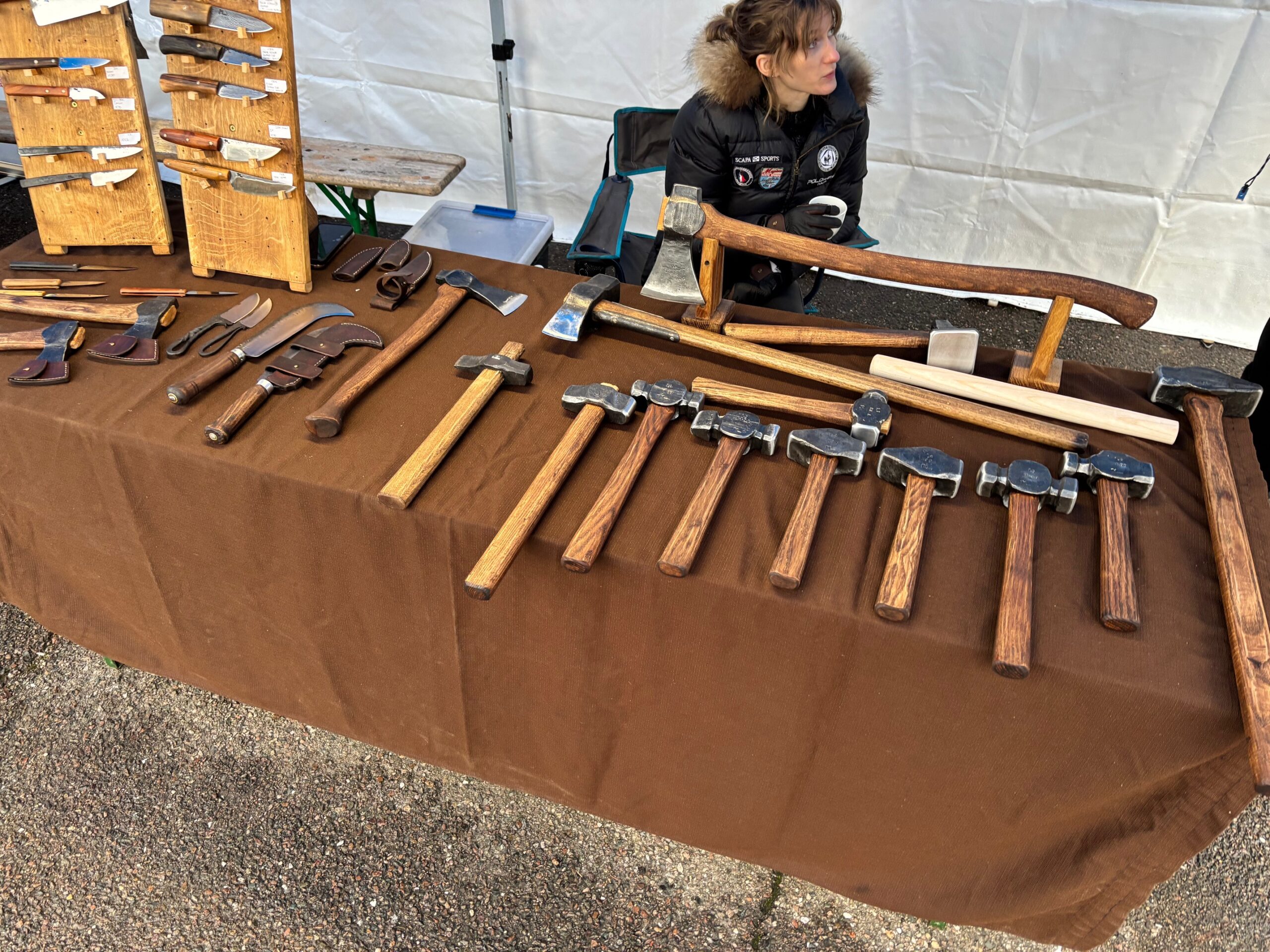
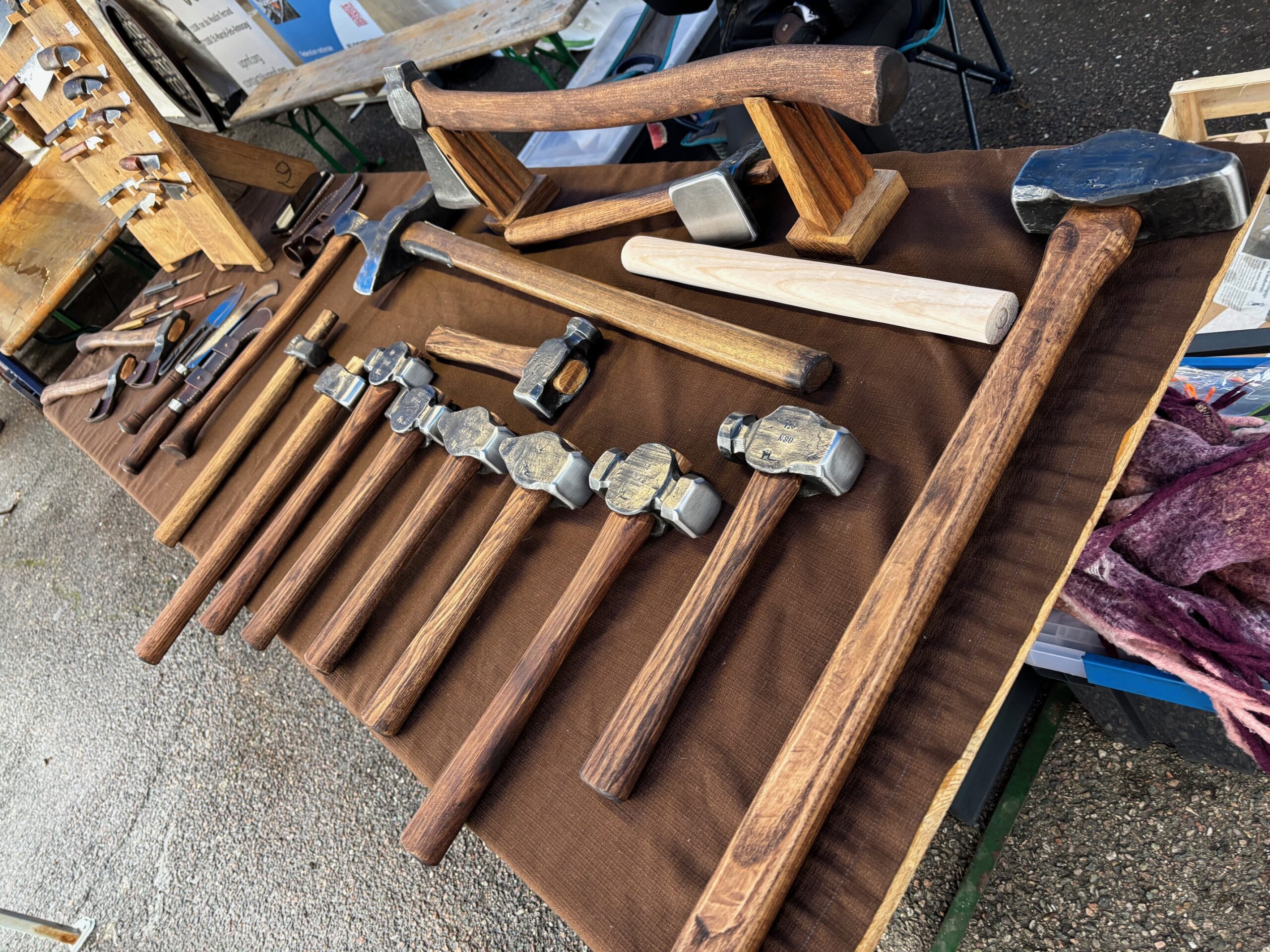
And a producer of traditional tools, hammers and mallets, is showcasing a wonderful collection for sale
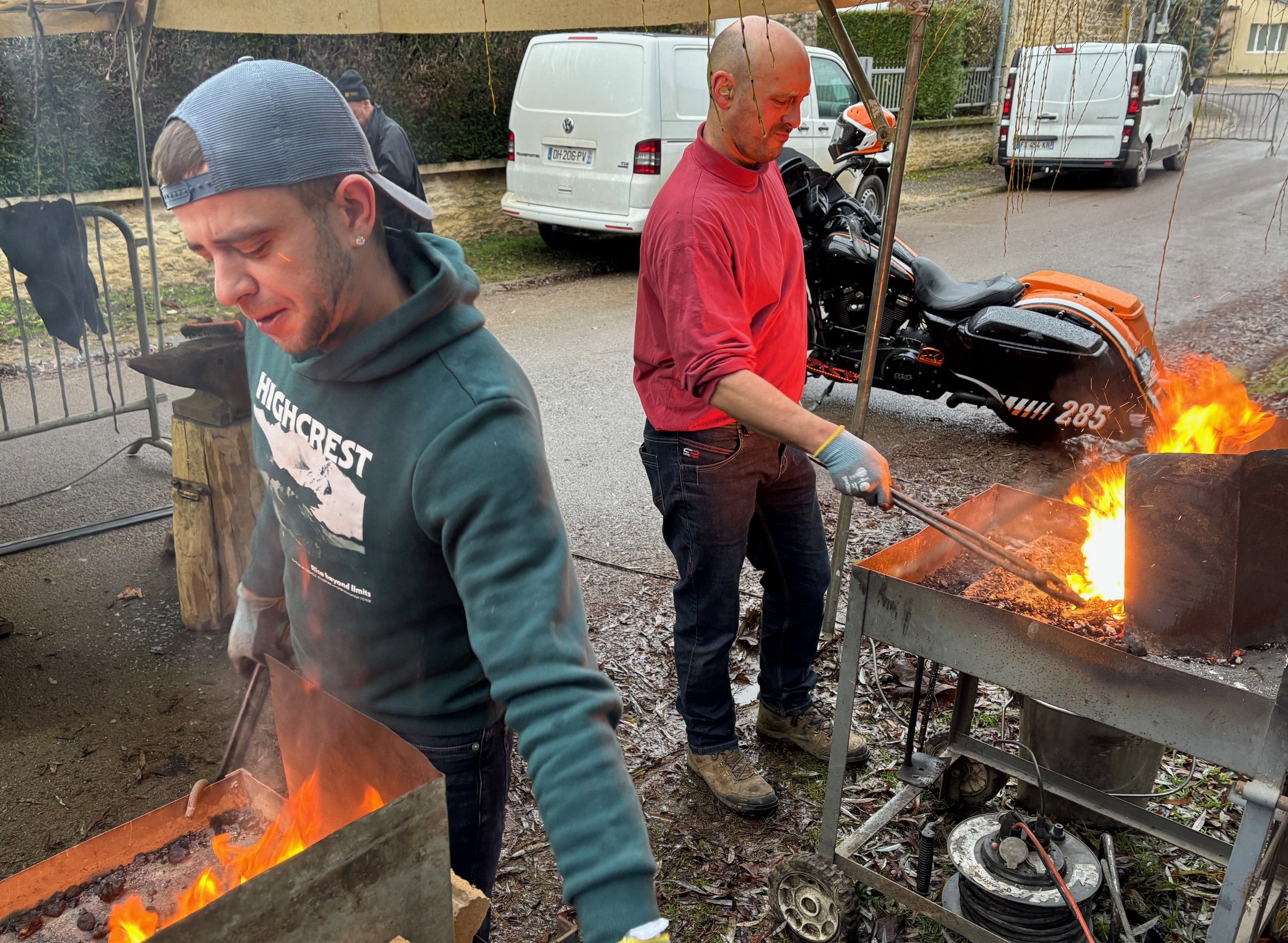
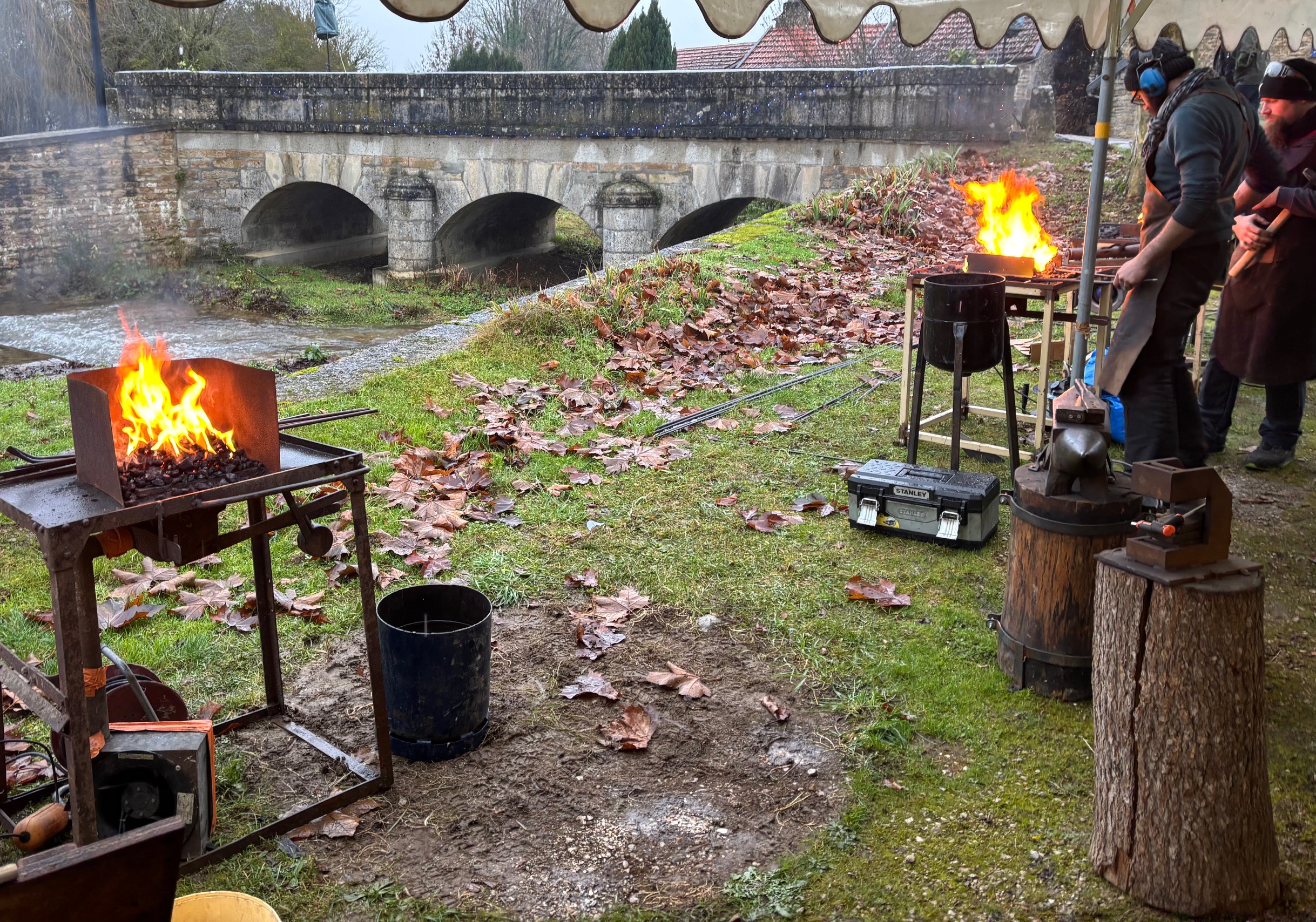
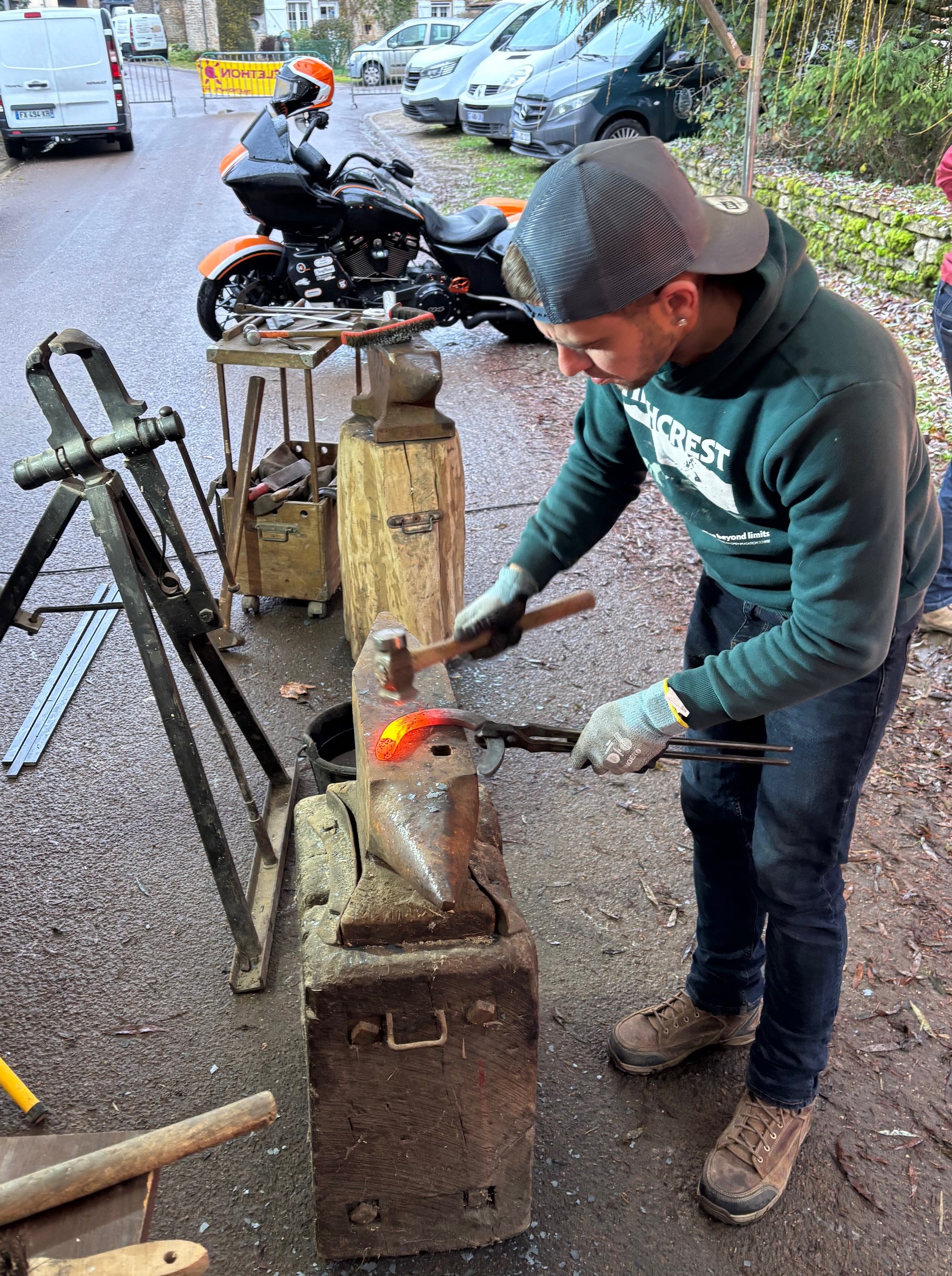
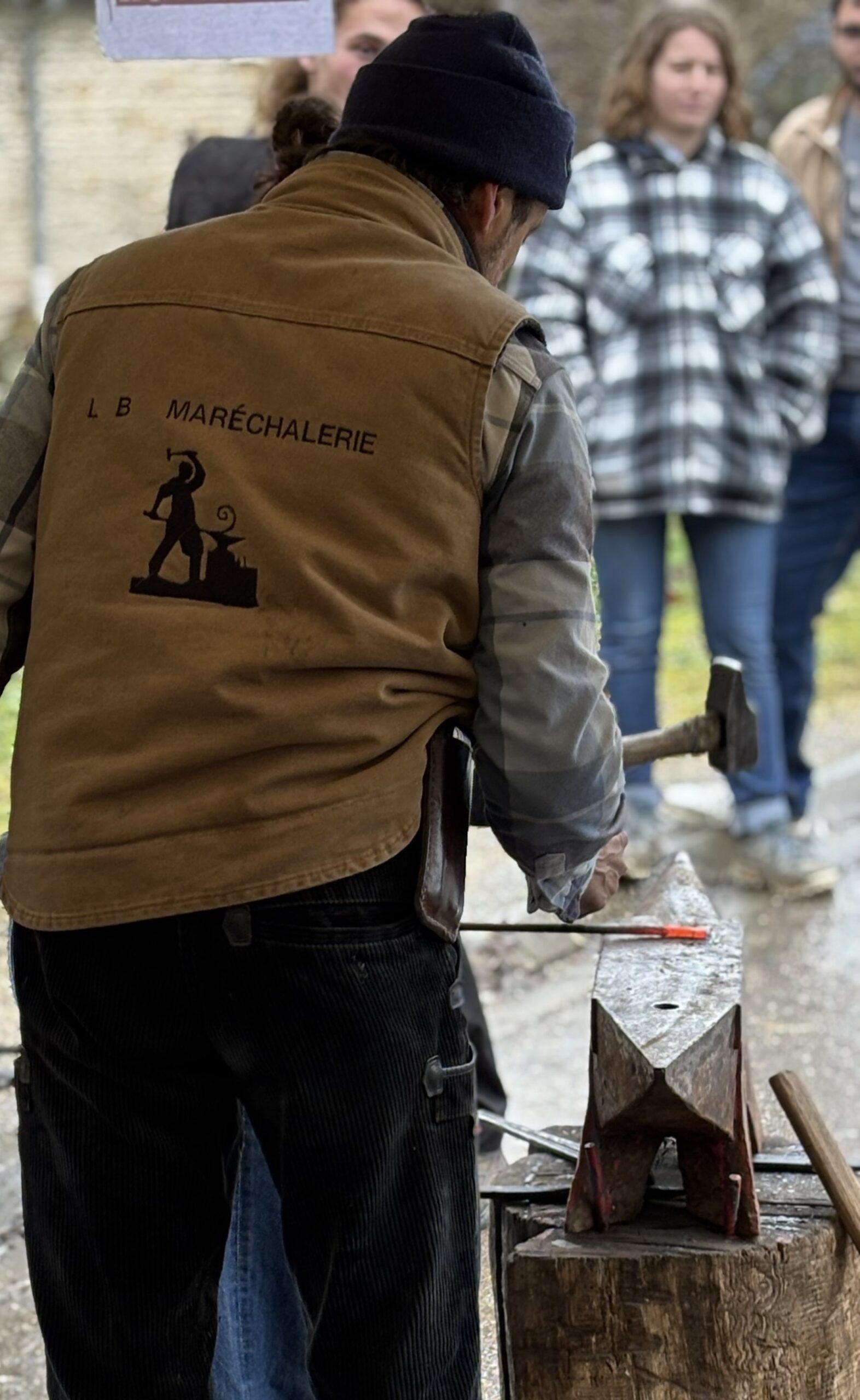
And in the meantime, the farriers are working
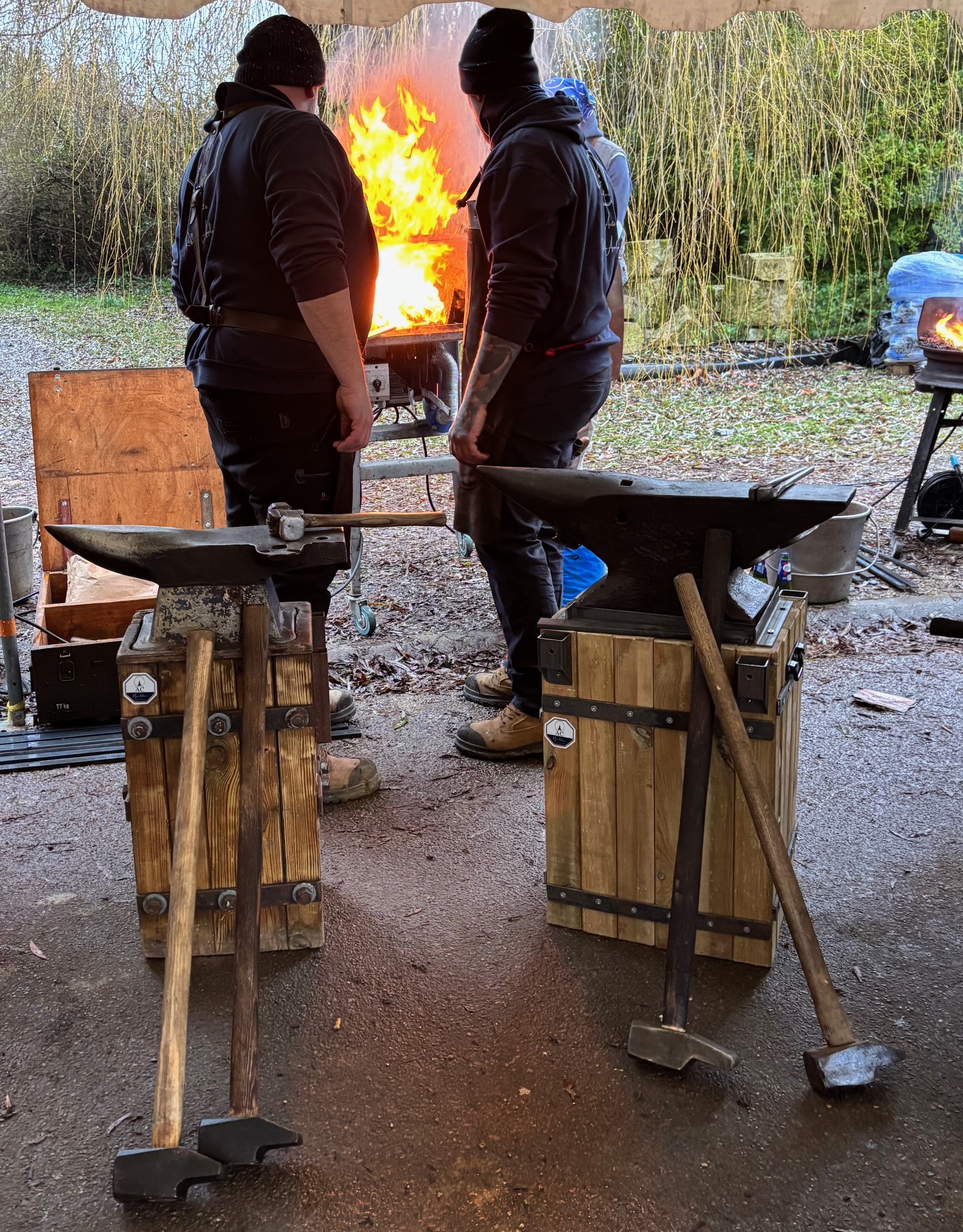
In the heat of the forges …
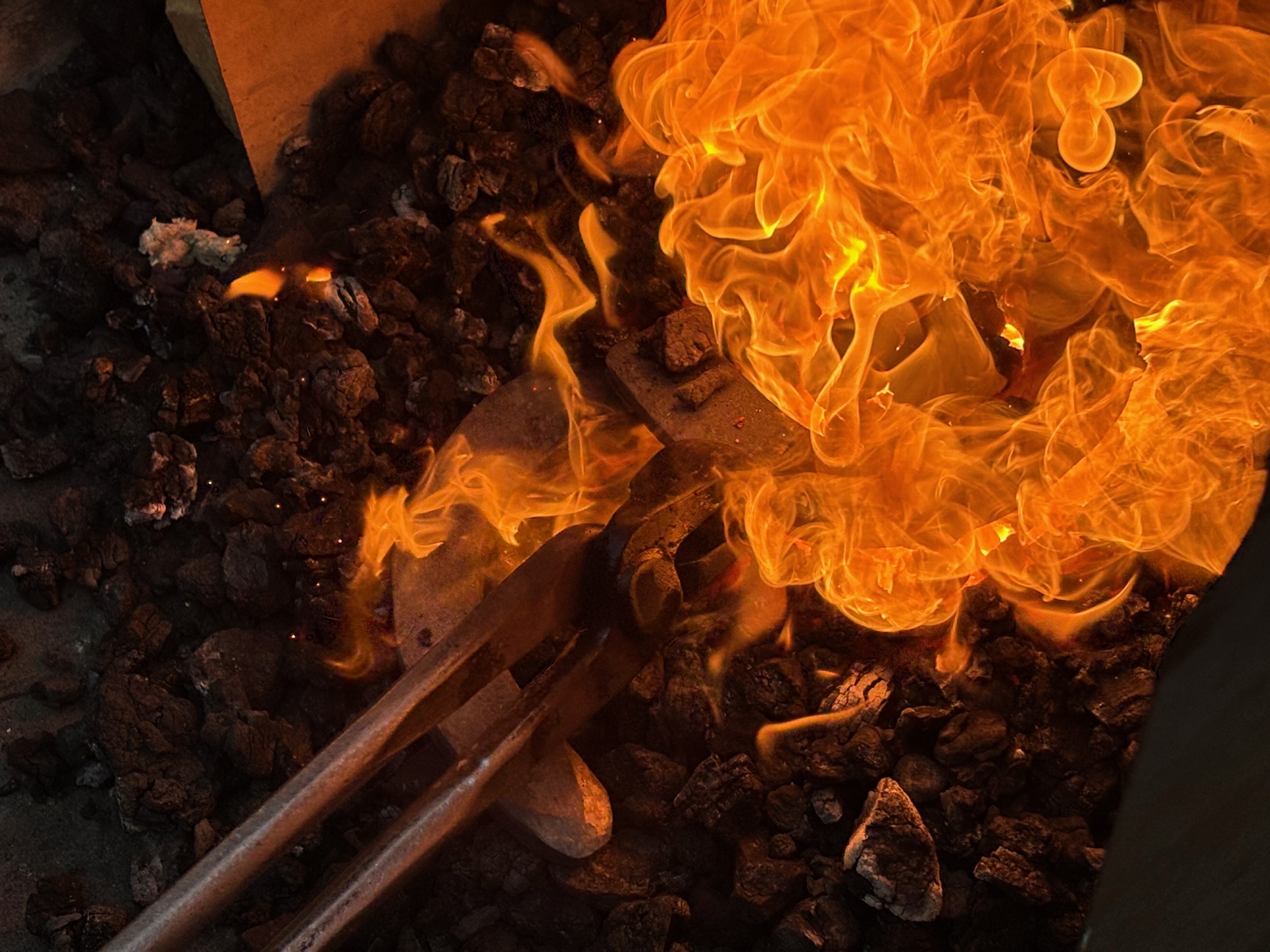
In the smoke …
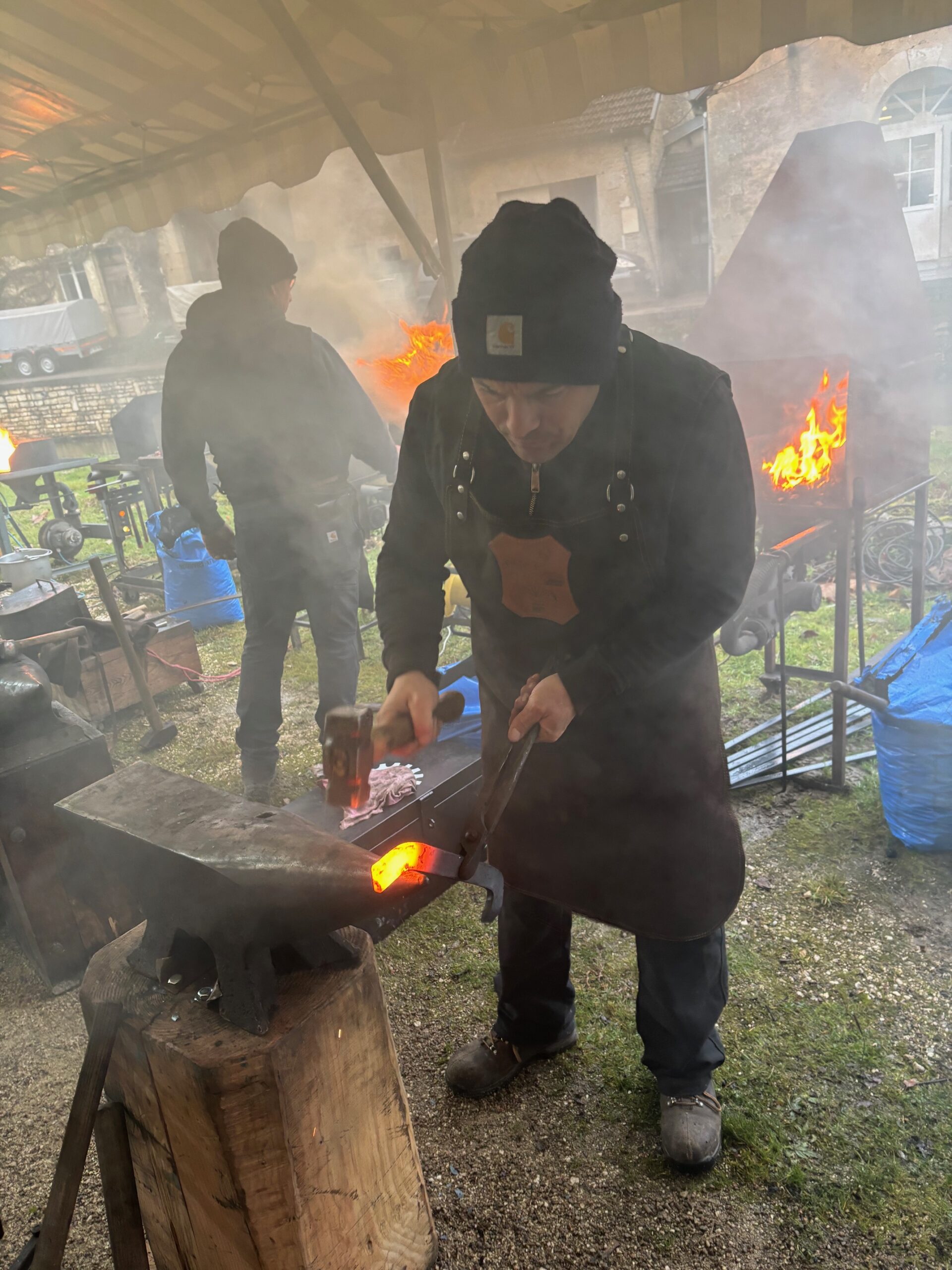
… and the sound of hammers on anvils.
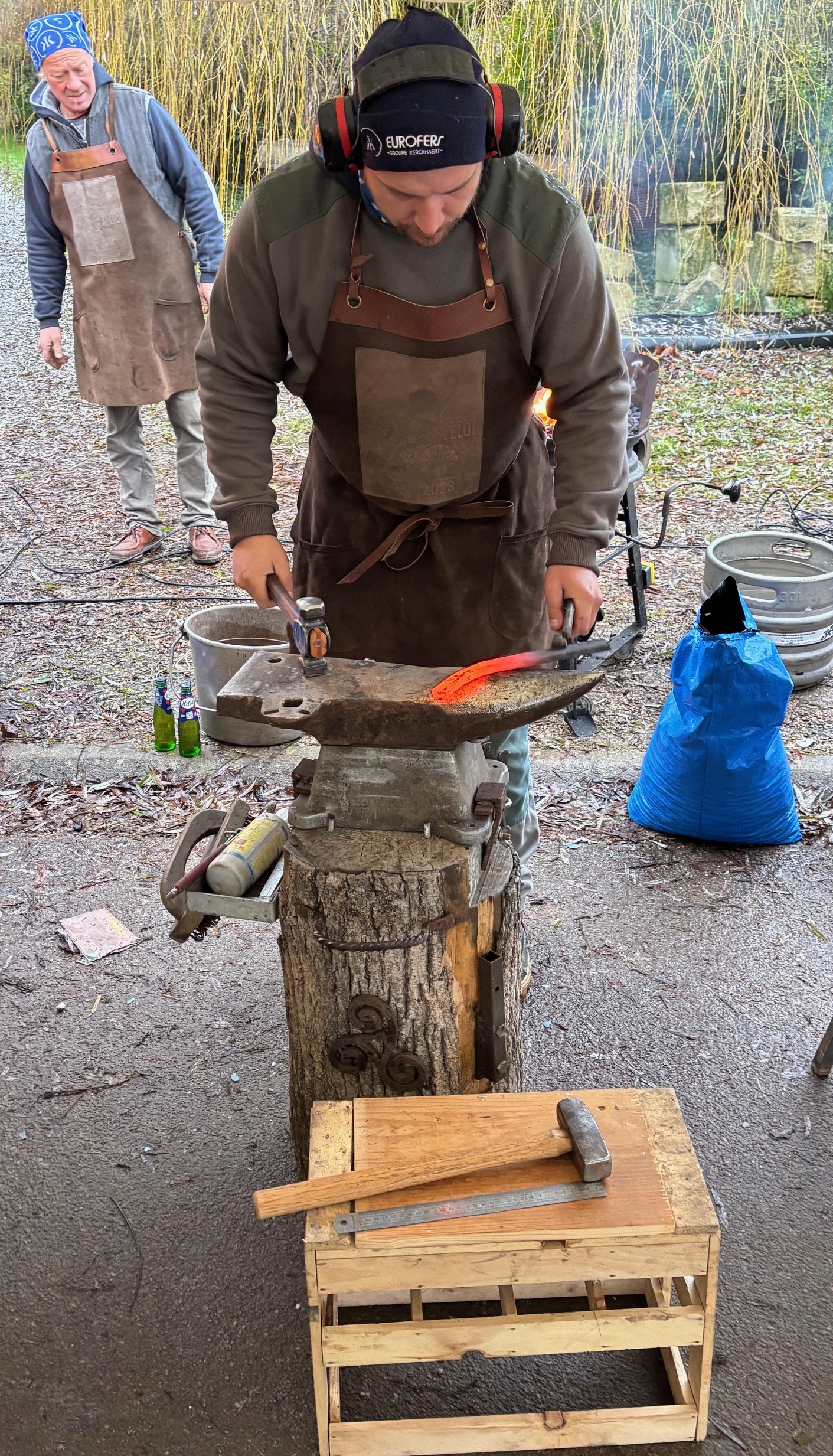
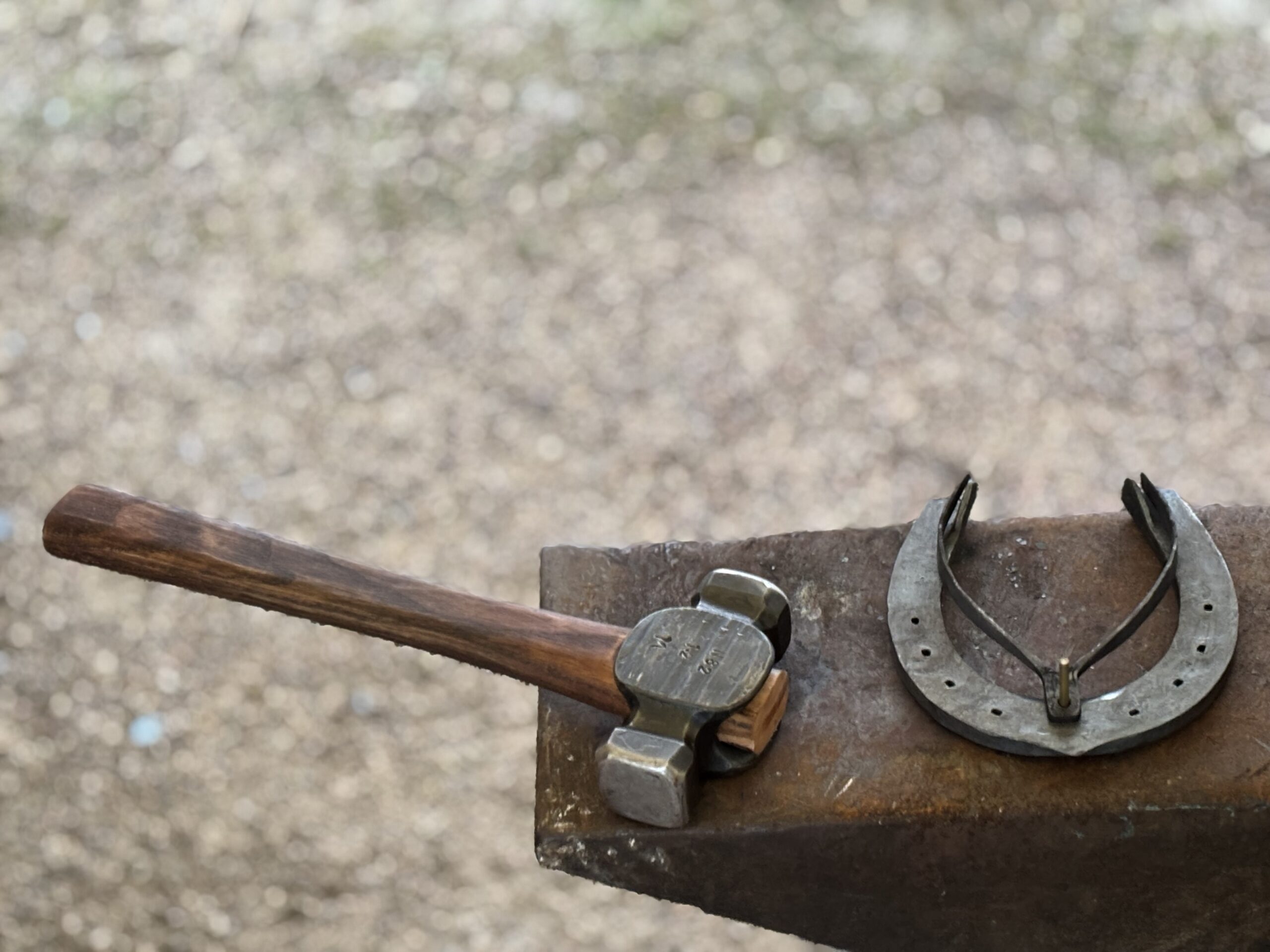
The tradition of farriers is here, alive and preserved.
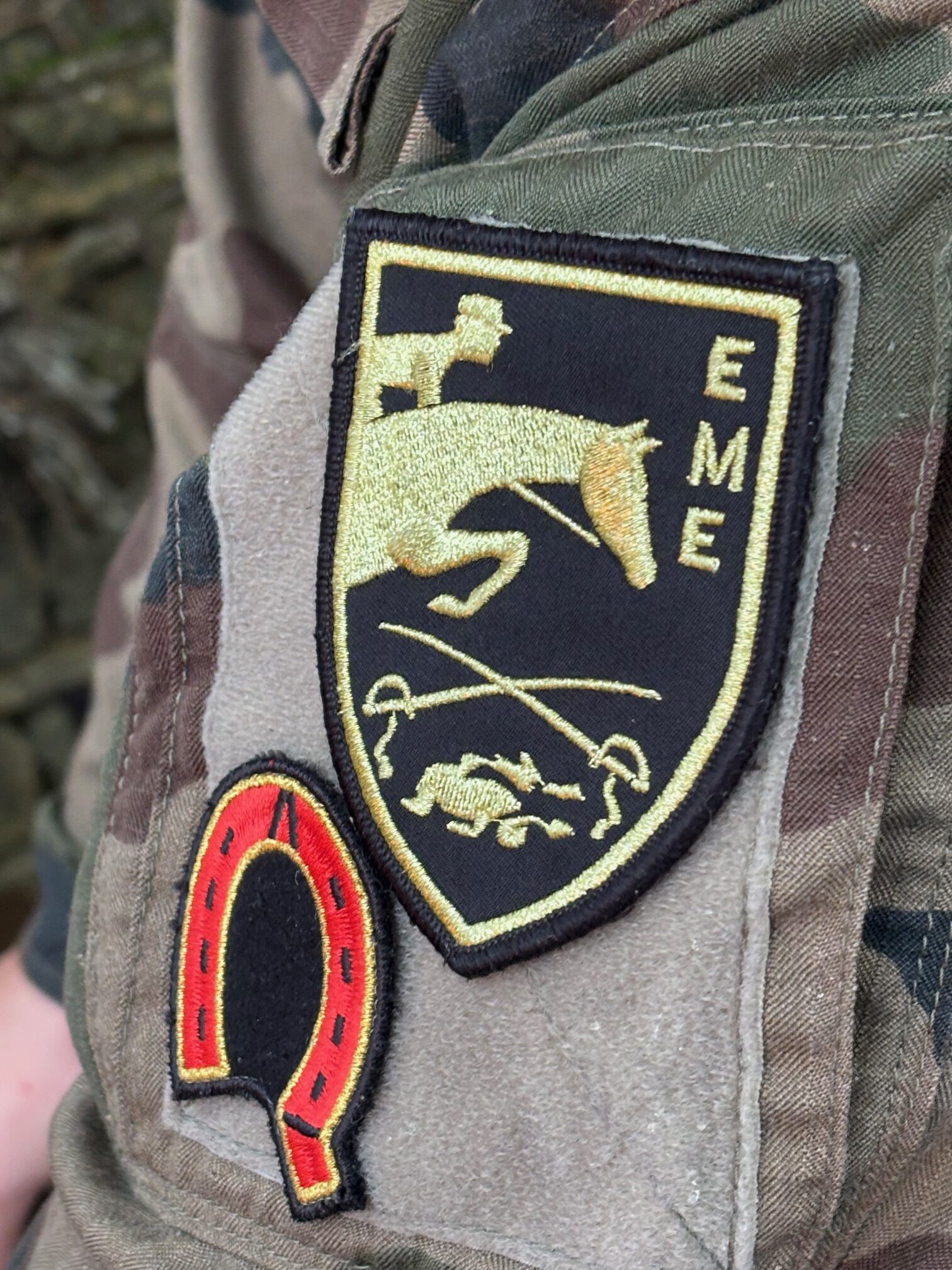
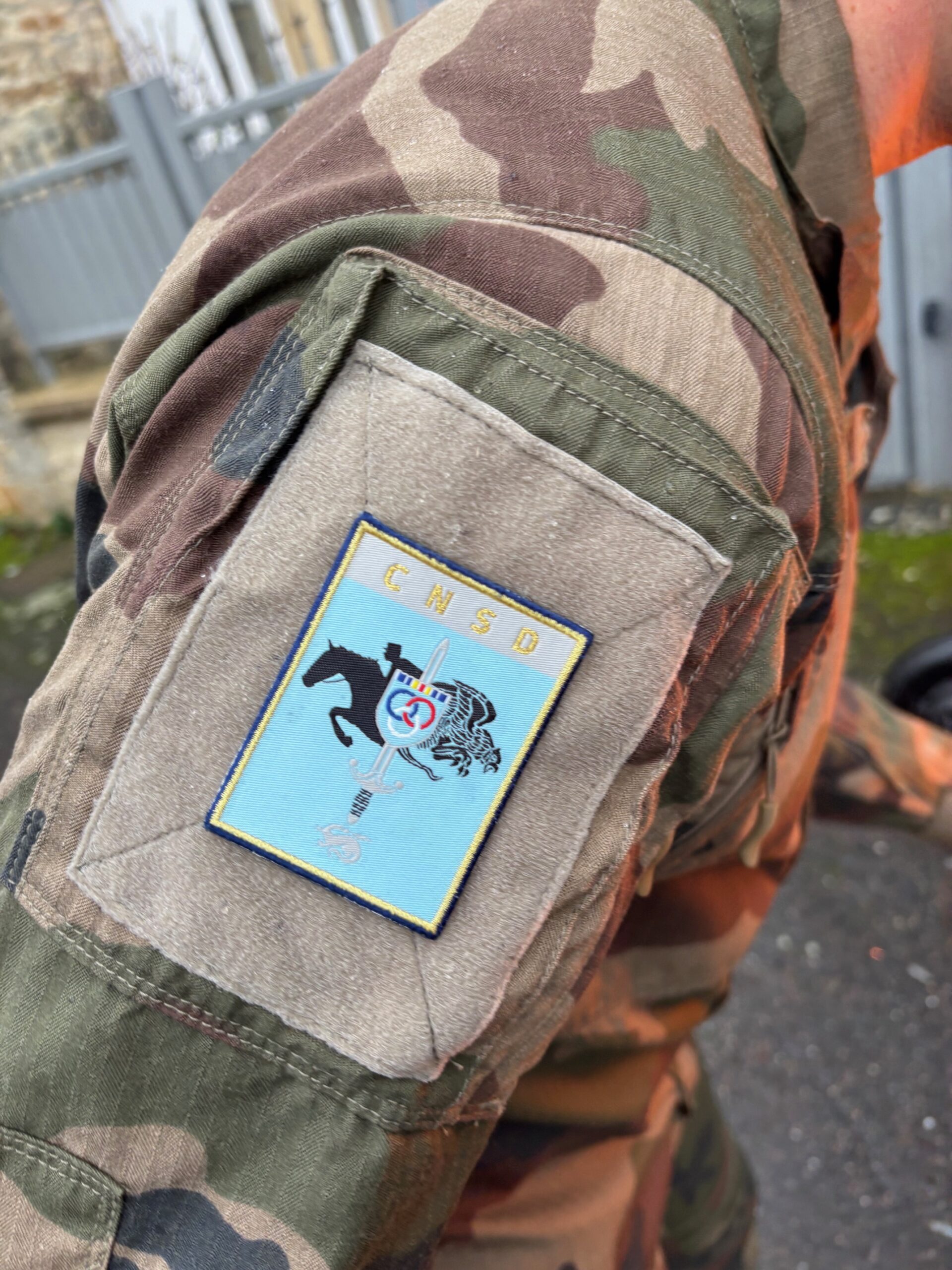
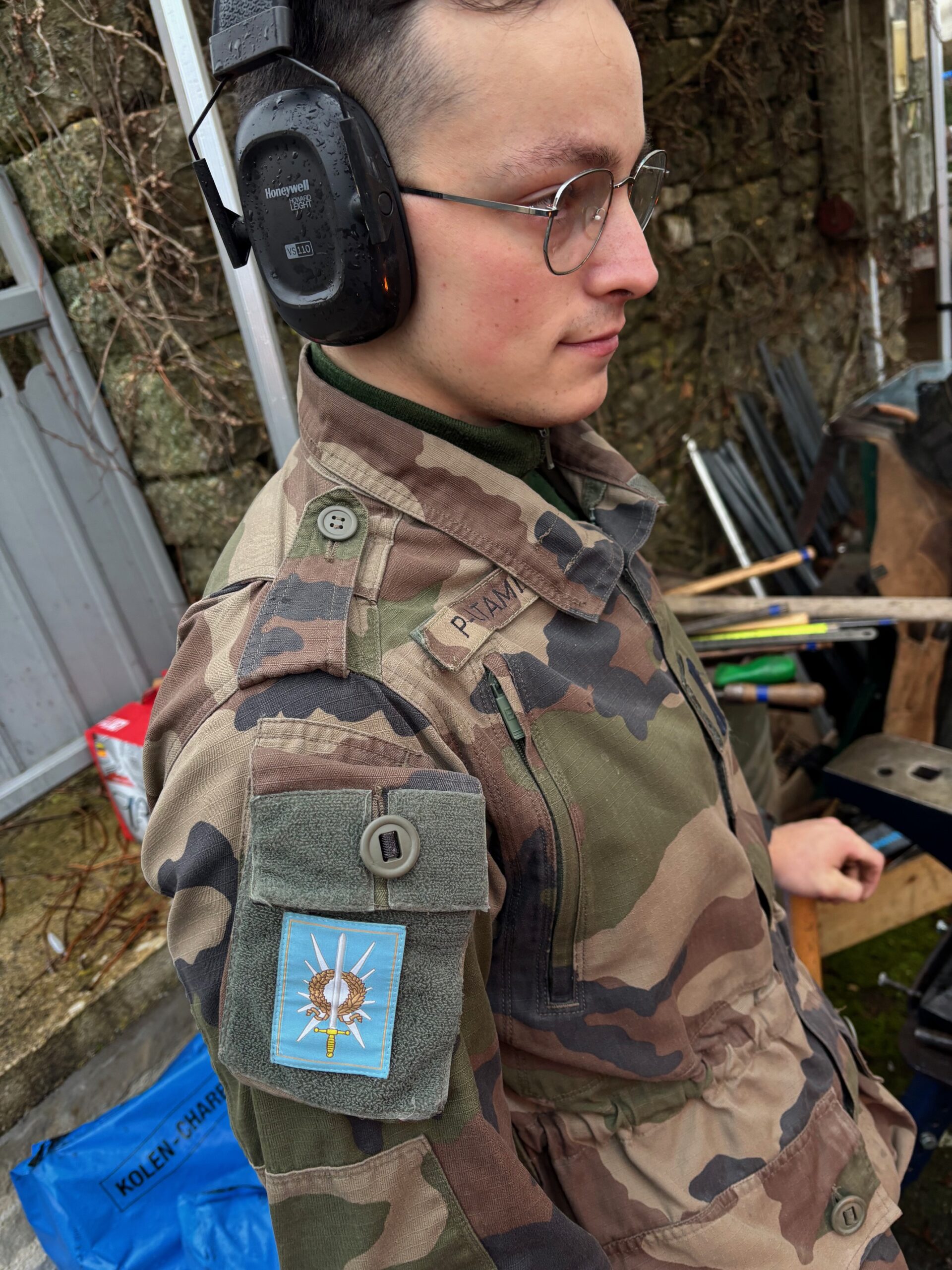
The French Army is also present …
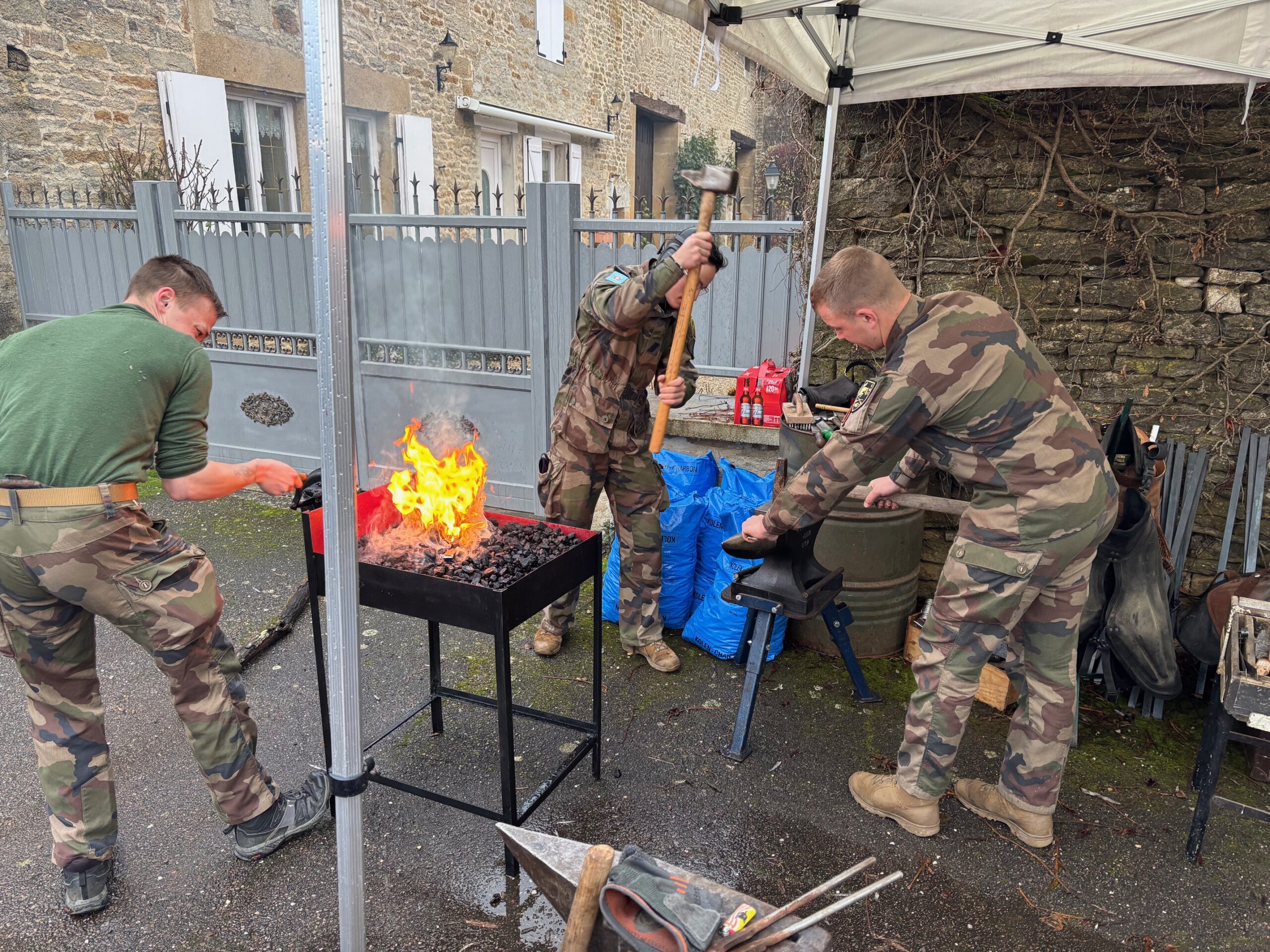
A great keeper of the tradition of cavalry / farriery.
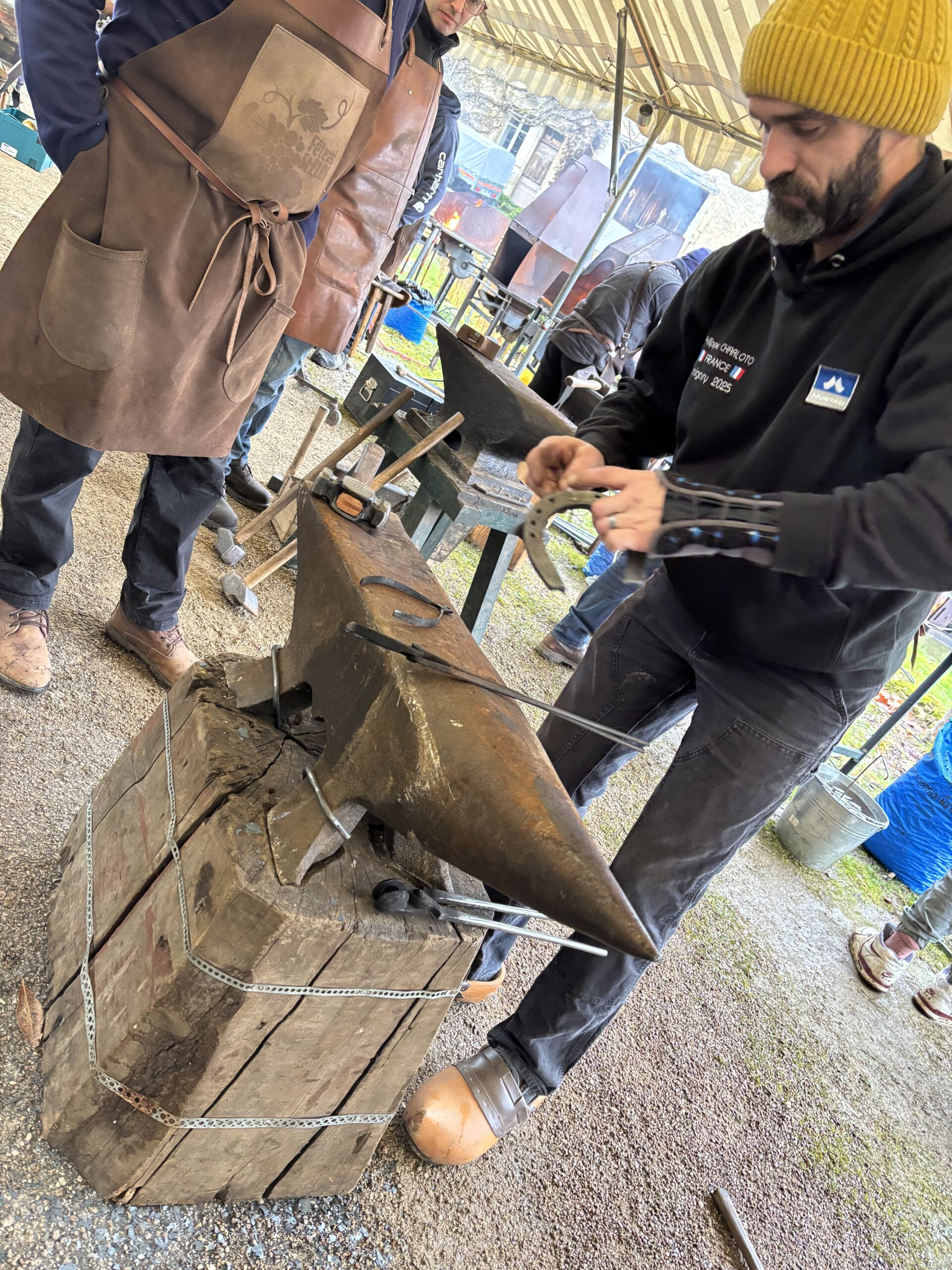
And some even go so far as to keep the tradition alive by wearing clogs
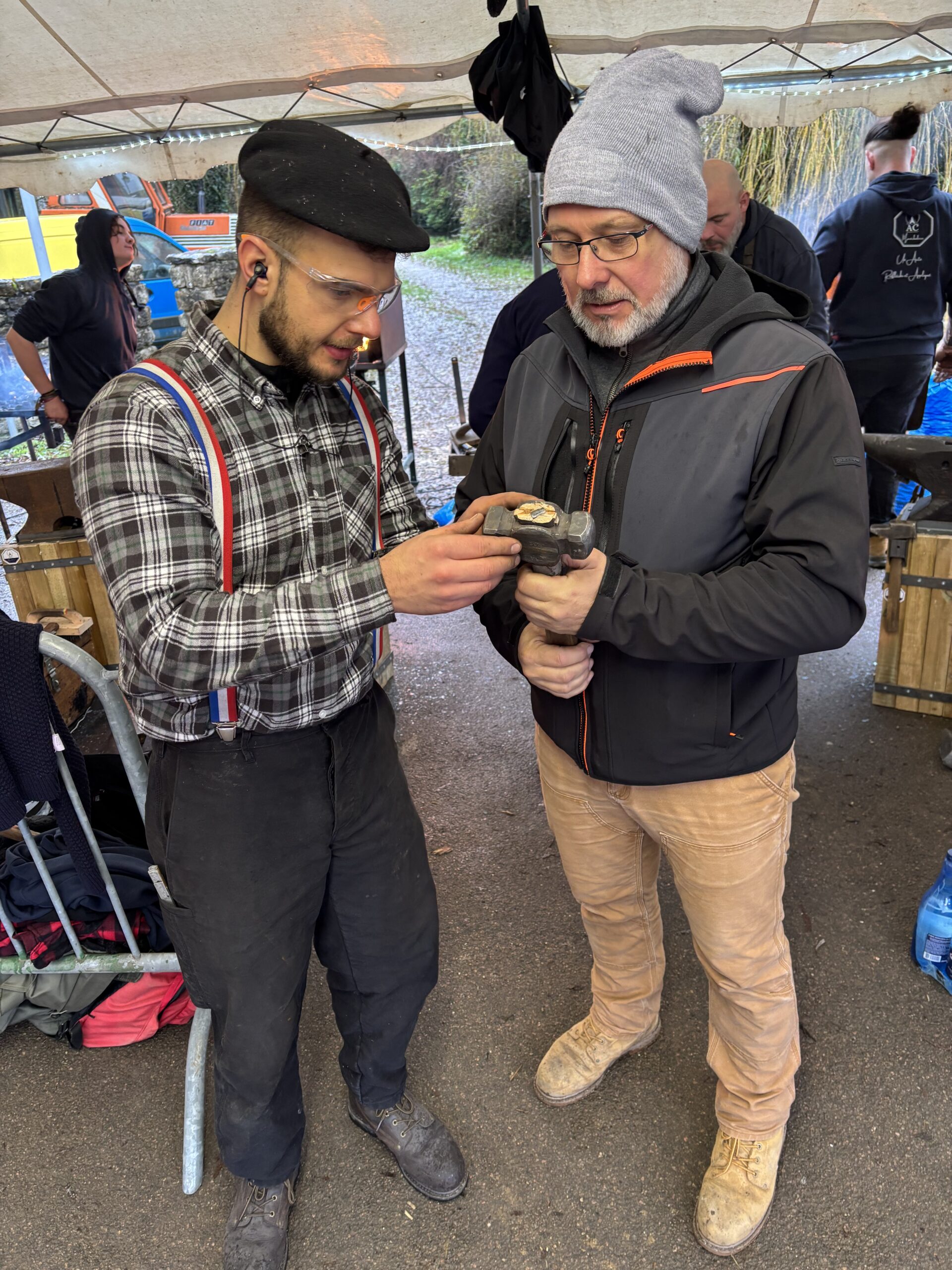
And of course, it’s also the time to share knowledge about each other’s tools. The young people are passionate; they question the elders, who are proud and happy to pass on their knowledge.
And even if recruiting new apprentices remains difficult, the passion for this very specific profession still attracts young people.
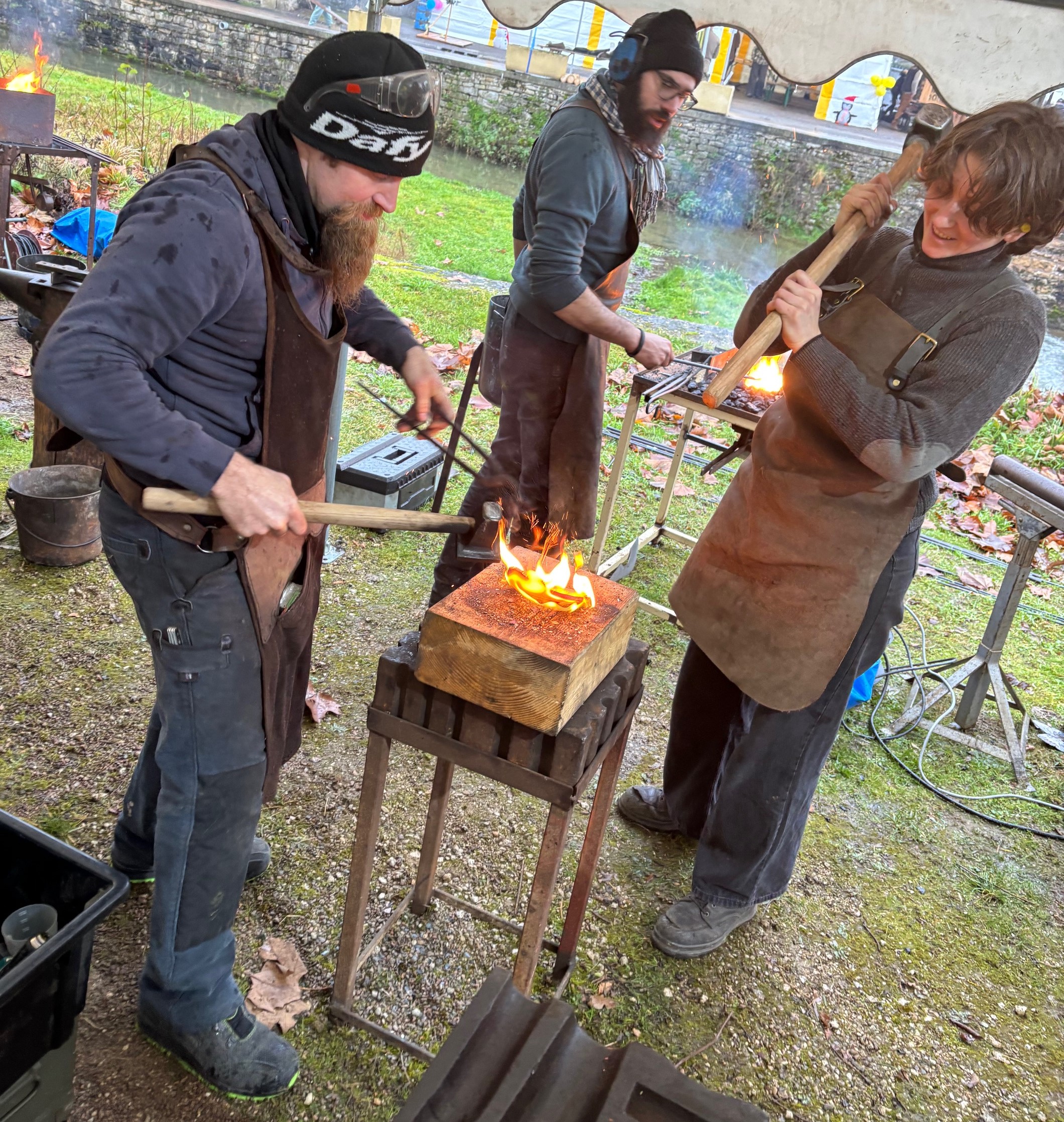
And especially very young girls who start apprenticeships around the age of 17 and are able to work like professionals by the time they are 22, like Victoria.
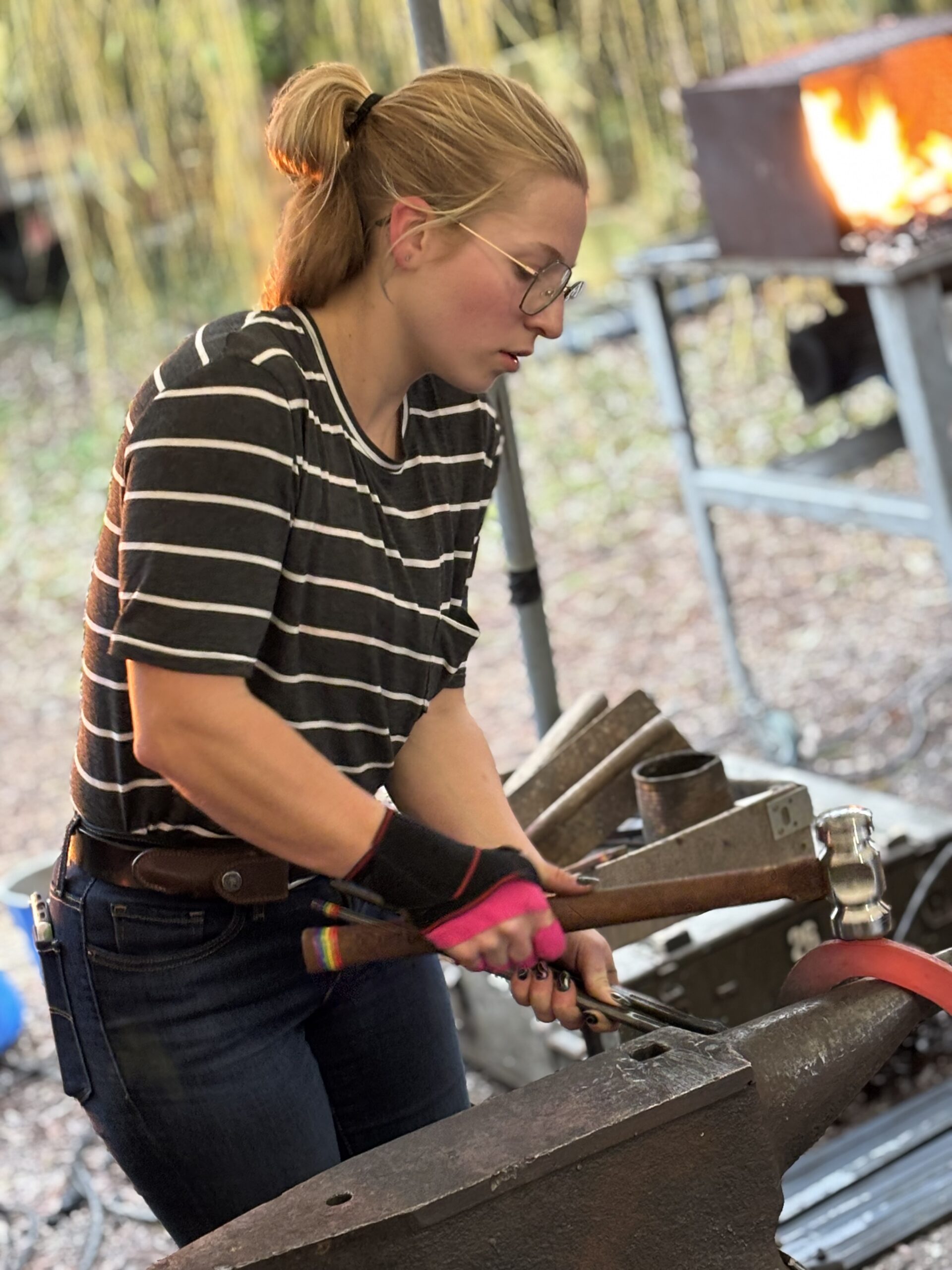
The sight of the work of these fire and iron workers fascinated me; I spent a memorable day in an indescribable atmosphere.
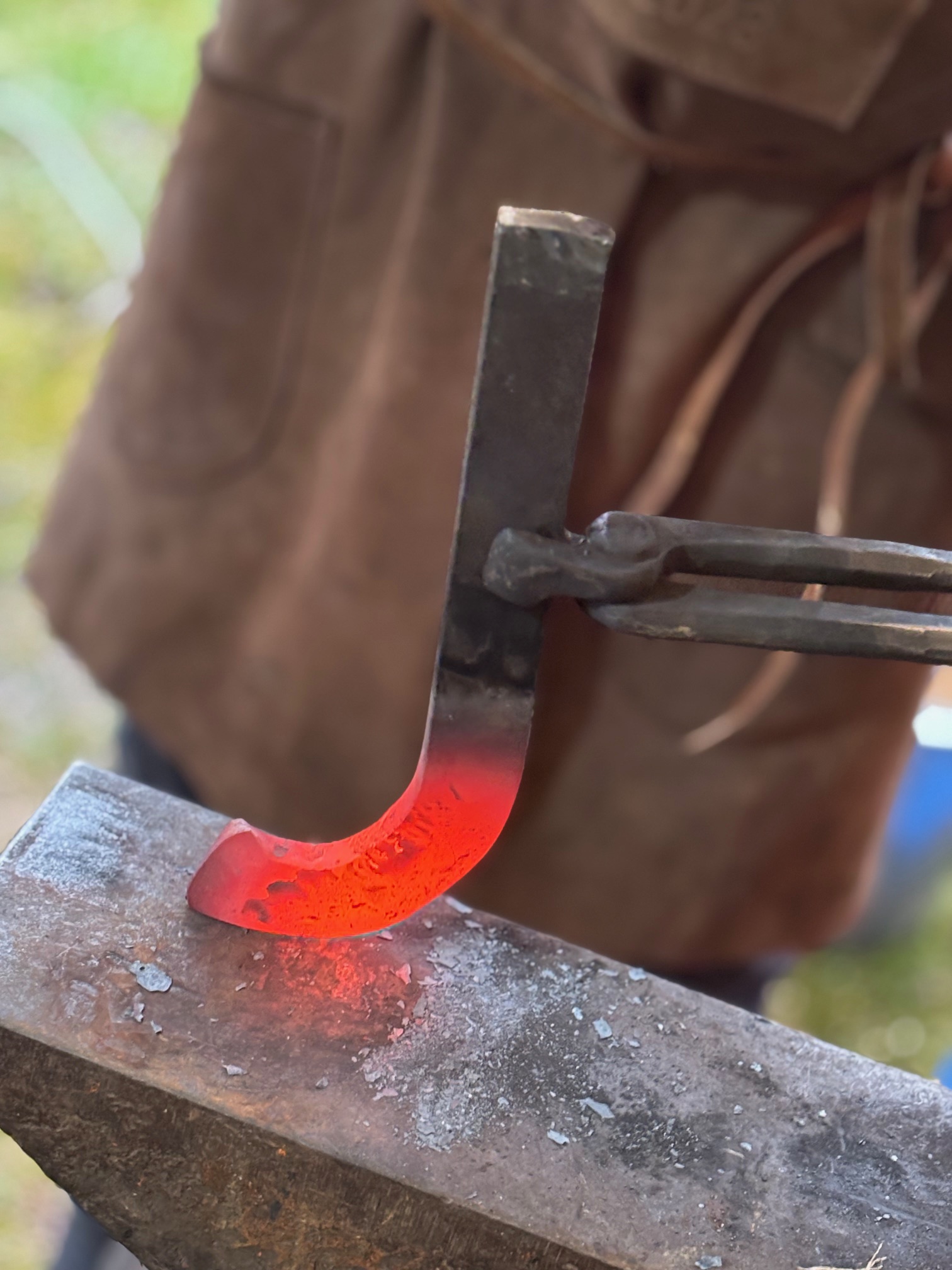
I couldn’t stay until the next day to see the final collective work that was created. I am looking forward to the 2026 edition, which I hope to be able to attend on both days.
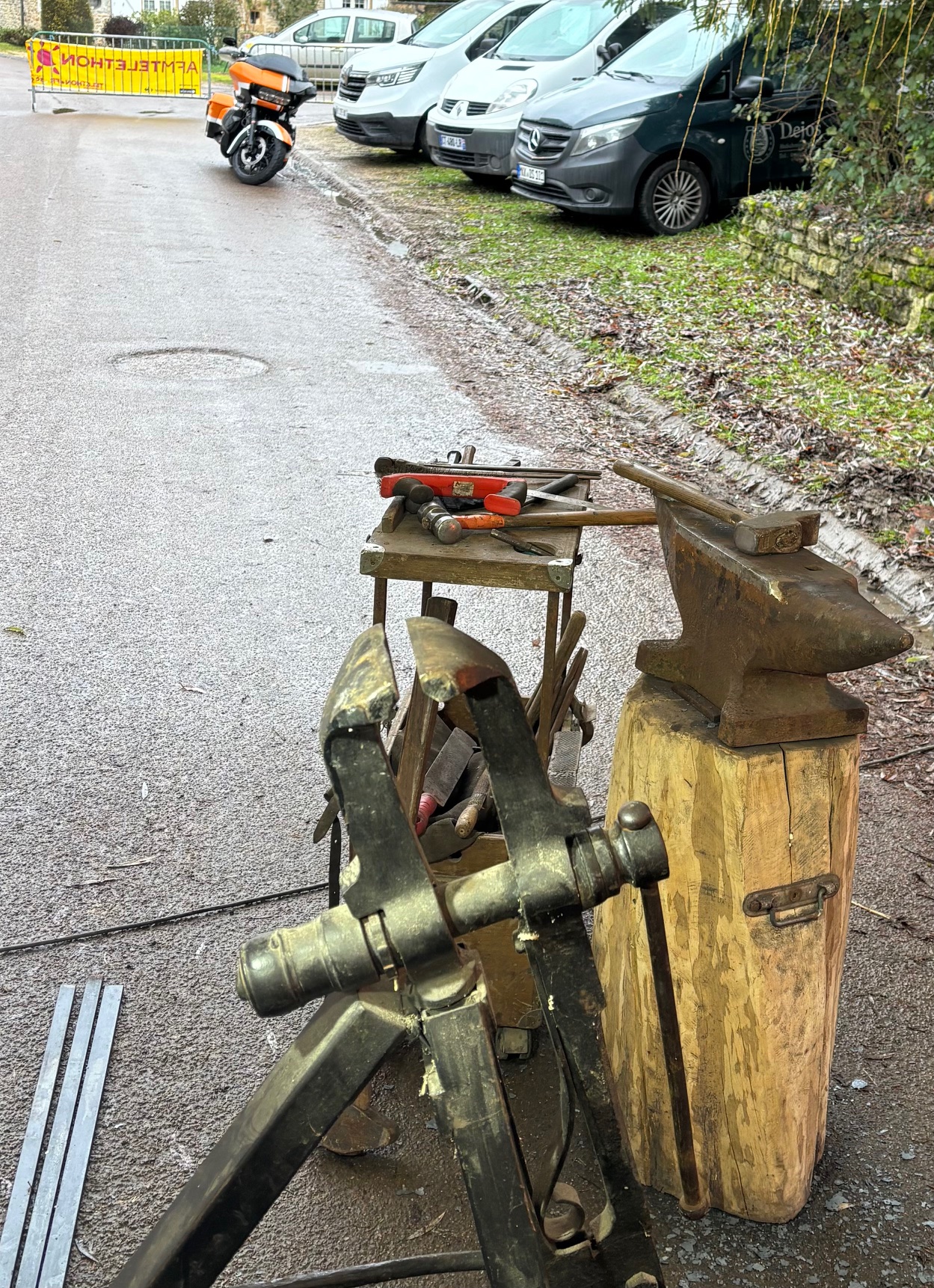
It was time to hit the road and go back home.
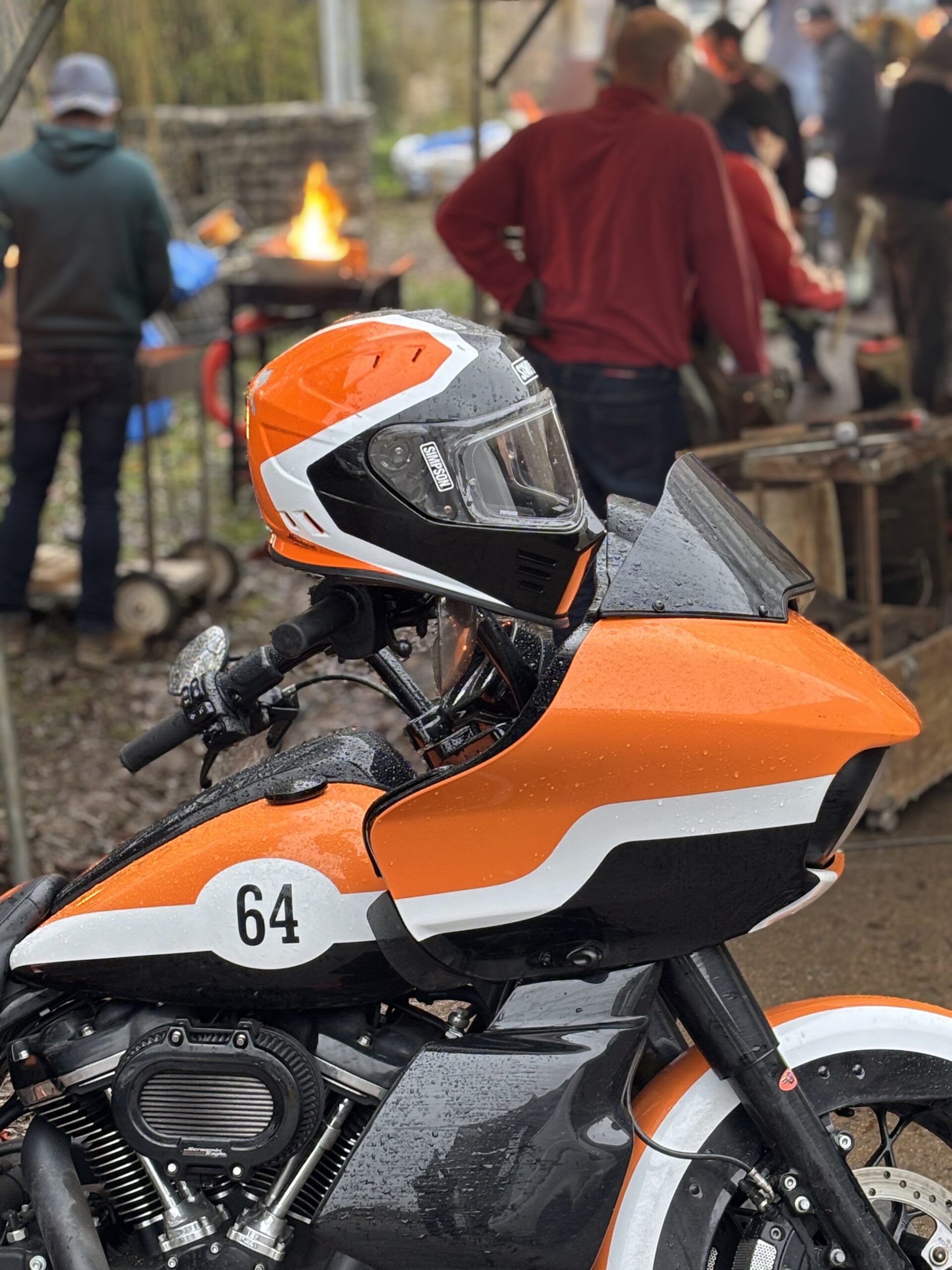
A 4-hour drive, and luckily, the sun was with me
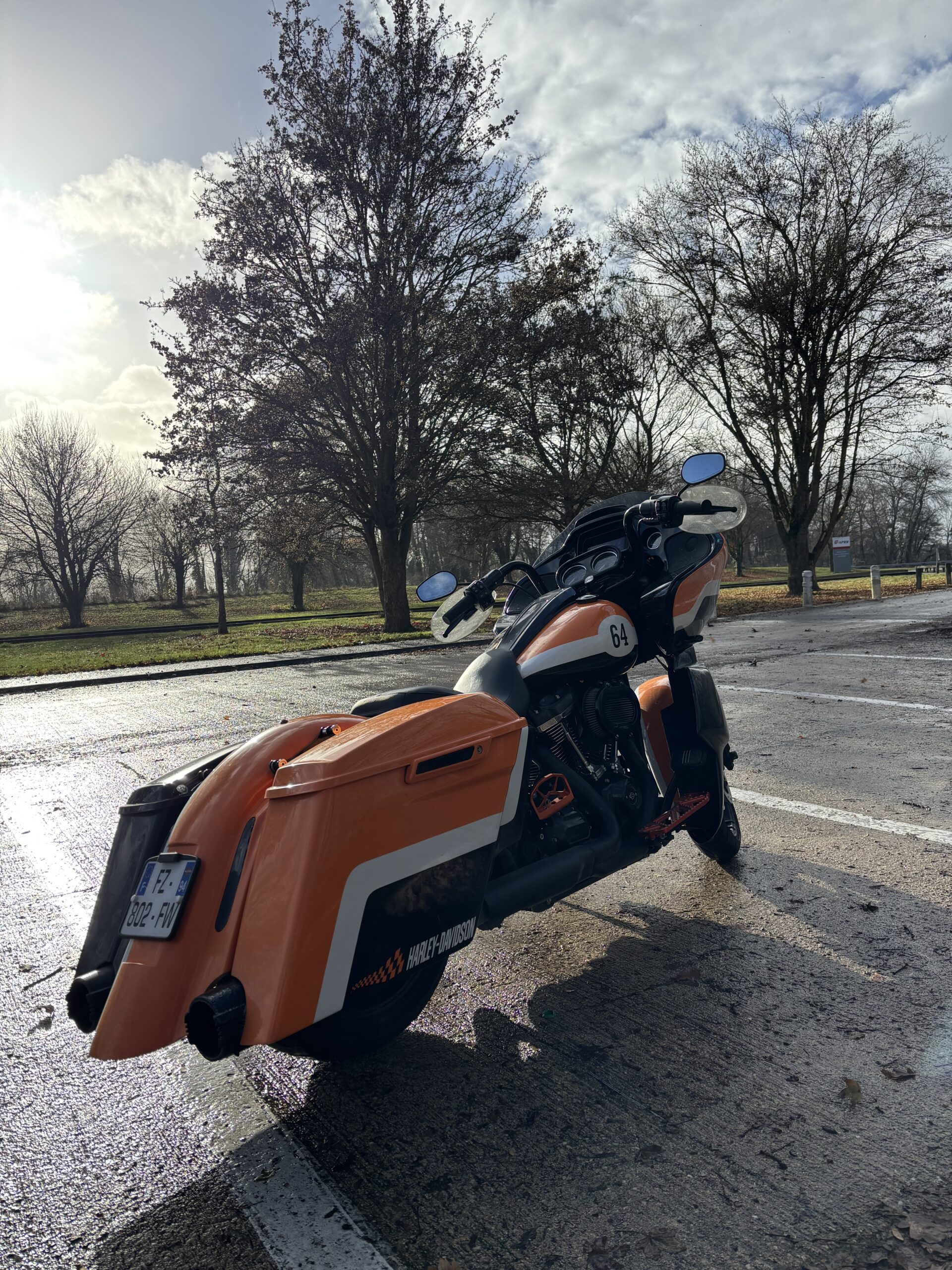
See ya soon on the road, who knows?!?
Hervé, your French biker friend.



More Stories
MY HARLEY-DAVIDSON ROADGLIDE CHEESE RIDE TO CAMEMBERT, FRANCE
FRENCH BIKER AND AMERICAN AVIATORS
MY RIDE TO THE PICASSIETTE’S HOUSE IN FREEZING TEMPS 🥶